Discover Campeche: Colorful Streets Behind Old Walls
Travel guide · editorialPastel-colored colonial houses, massive bastions, and a malecón where the sun sinks into the Gulf: a trip to Campeche takes you to one of the best-preserved fortress cities in the Americas. The capital of the state of the same name is an ideal choice for a relaxed vacation on the Yucatán Peninsula.
Pirates, Walls, and World Heritage
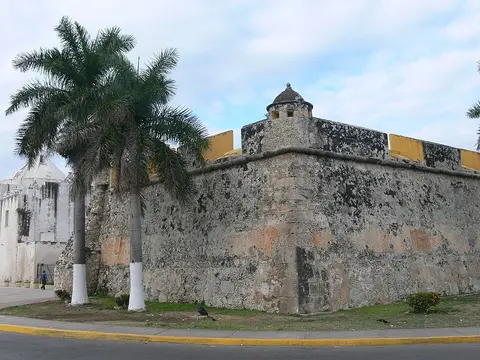
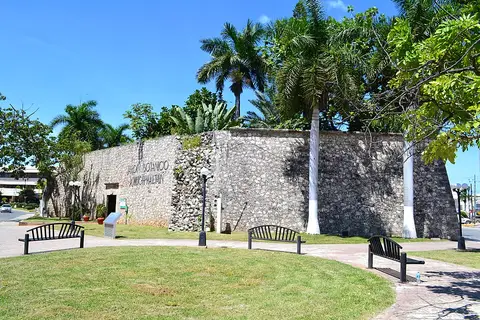
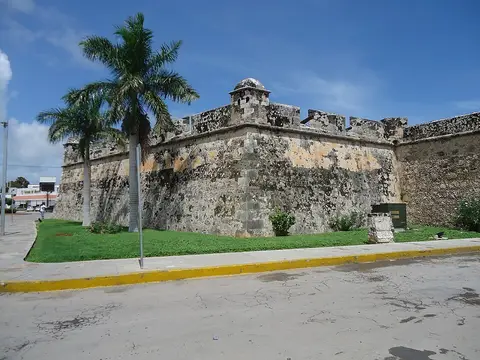
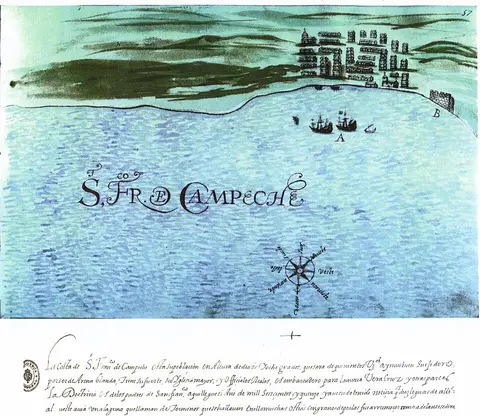
The Spanish founded San Francisco de Campeche in 1540 on the site of the Maya settlement of Ah Kin Pech. As the peninsula's most important port, the city attracted pirates such as Laurens de Graaf and Henry Morgan, who plundered it repeatedly in the 17th century. In response, the Spanish Crown had a hexagonal city wall with eight bastions built starting in 1686. Large sections of it still stand today, and since 1999 the historic fortified city has been a UNESCO World Heritage Site. The bastions now house small museums covering topics such as seafaring, weapons, and Maya stelae.
Sights in Campeche
The heart of the old town in the Zona Centro is the Parque Principal with its pavilion, flanked by the Cathedral of Our Lady of the Immaculate Conception, whose two towers are illuminated in the evening. Calle 59 is a pedestrian street and fills with tables at night. You can walk a stretch of the wall via the Puerta de Tierra, the Land Gate; several evenings a week there is a light and sound show there. Two forts sit above the city: in the Fuerte de San Miguel, the Museum of Maya Architecture displays jade masks from Calakmul, while the Fuerte de San José el Alto offers views over the rooftops and the sea. The roughly 7-kilometer-long malecón is a gathering spot for joggers, cyclists, and families in the early evening. East of the center lies the historic Samulá neighborhood, known for its church and its fiesta in July.
Eating in Campeche
Campechano cuisine is considered one of the finest in Mexico. Be sure to try pan de cazón, layered tortillas with dogfish shark, beans, and tomato sauce, as well as coconut shrimp, pámpano en escabeche, and shrimp cocktails. The Pedro Sainz de Baranda market has fruit, fish, and simple food stalls. Evenings are typically about panuchos and salbutes from street stands around the old town's small plazas, such as in the Barrio de San Francisco or Guadalupe.
Evenings in the Old Town
When the heat eases, Calle 59 fills with tables, musicians, and families. On weekends there are often concerts in the main square, and jarana dancers in white huipiles spin to brass music. A ride on the open-air tranvía, which rolls through the old town and up to the forts, is a real highlight. Later in the evening, locals gather in small bars around Calle 8 or on the malecón, where the breeze off the Gulf brings a little relief. The carnival in February is among the oldest in Mexico and traditionally ends with the symbolic burning of "Juan Carnaval."
Excursions, Getting There, and Best Time to Visit
About 50 kilometers away lies the Maya site of Edzná with its five-story pyramid, far less visited than Chichén Itzá. Farther south, the Calakmul Biosphere Reserve beckons with pyramids in the middle of the rain forest. Campeche has a small airport with connections to Mexico City and is a stop on the Tren Maya, which links the city with Mérida, Cancún, and Palenque; ADO buses also run regularly. The old town is best explored on foot. The best time to visit is from November to April, when it is dry and less humid. Campeche is considered one of Mexico's safest states and is well suited to relaxed days without the crowds.