Discovering Yamagata: Mountain Temples, Snow Monsters, and Imoni
Travel guide · editorialMore than a thousand stone steps climb the mountainside to a temple that clings to the rock like a swallow's nest – and in winter, the fir trees on Mount Zaō turn into white giants. A trip to Yamagata combines mountain scenery, hot springs, and hearty home cooking that is especially prized in northern Japan.
Yamadera and the Poet Bashō
The best-known sight lies northeast of the city: Risshaku-ji Temple, or Yamadera for short, founded in 860. The climb of roughly a thousand steps takes you past moss-covered statues and small halls up to the Godaidō observation deck, which looks out over the valley. In 1689, Matsuo Bashō passed through here on his journey to the north and wrote his famous haiku about the stillness into which the song of the cicadas seeps into the rock. A stone along the path commemorates it. From Yamadera Station, it is only a few minutes to the foot of the mountain.
Zaō Onsen and the Snow Monsters
Southeast of the city lies the spa town of Zaō Onsen, with strongly sulfurous springs that turn the water milky. In winter, Zaō is a popular ski area, but many people come for the juhyō: ice and snow coat the fir trees near the summits so thickly that they form bizarre shapes known as snow monsters. A cable car takes you right into the middle of them, and in the evening they are illuminated. In summer, hikes lead to Okama crater lake with its turquoise water.
Sights in Yamagata City
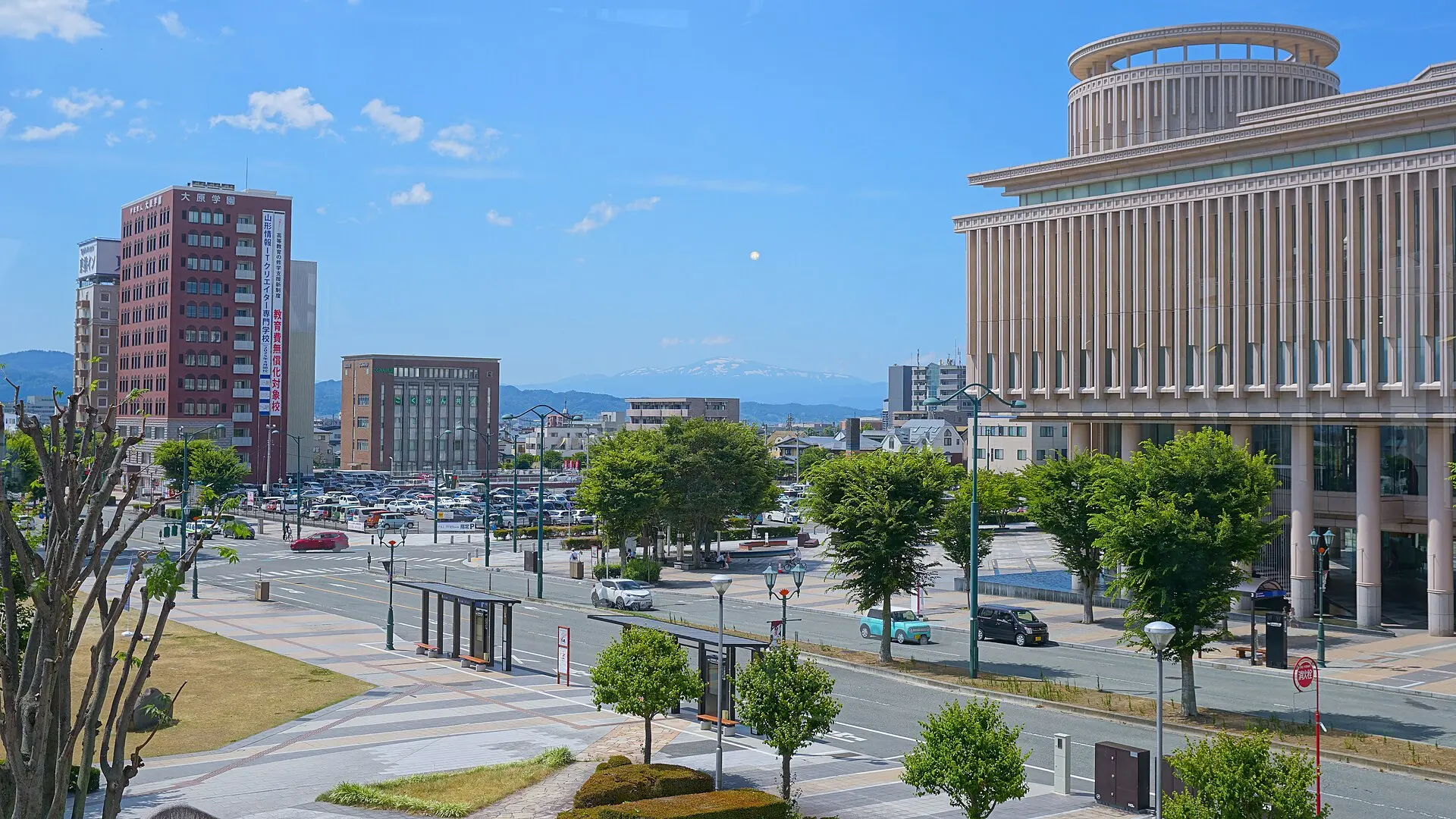
In the city center, Kajō Park recalls the former castle of the Mogami lords; the east gate has been faithfully rebuilt, and hundreds of cherry trees bloom here in April. The Bunshōkan, the former prefectural office building in Neo-Renaissance style from 1916, is free to enter and showcases magnificent interiors. In early August, thousands of people dance through the streets at the Hanagasa Festival wearing straw hats decorated with flowers. Film lovers know Yamagata for its international documentary film festival, held every two years in October.
Eating in Yamagata and the Best Time to Visit
In fall, locals gather on the riverbank for imoni-kai: a stew of taro, beef, konnyaku, and leeks, seasoned with soy sauce, is cooked up. At the big Imoni Festival in September, an excavator stirs a cauldron six meters in diameter. Other specialties include Yamagata beef, cold ramen, and, in June, the Satō Nishiki cherry variety, for which the prefecture is famous throughout the country. The Yamagata Shinkansen gets you here from Tokyo in about two and a half hours. The best times to visit are early summer and fall; January and February are ideal for the snow monsters.
Onsen and Day Trips in the Area
Yamagata is a good base for hot springs beyond Zaō. About an hour to the north lies Ginzan Onsen, a spa town with wooden inns from the Taishō era on both sides of a narrow river, especially famous in the snow and in the evening glow of its gas lamps. Farther afield, the three sacred mountains of Dewa Sanzan beckon, where Yamabushi mountain ascetics still practice their rituals today. In the valley between Yamagata and Tendō, shōgi pieces are painted by hand, a popular souvenir. Wine lovers will find a visit to nearby Kaminoyama worthwhile, with small wineries growing grapes in the valley's mild climate.