



Yamagata Prefecture: Mountain Temples, Cherries, and Snow Monsters
Travel guide · editorialA vacation in Yamagata Prefecture is a journey into rural Tōhoku, just as Bashō experienced it more than 300 years ago on his "Narrow Road to the Deep North." A cliffside temple above a valley, an onsen village lit by gas lamps, the sacred mountains of the mountain ascetics, and the snow monsters of Mount Zaō shape the landscape. Add to that cherries, rice, and beef of exceptional quality.
Landscape and Location
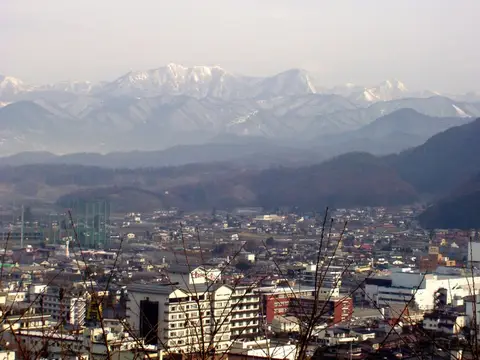
Yamagata lies in the west of the Tōhoku region, framed by the Ōu Mountains to the east and the Sea of Japan to the west. The Mogami, the prefecture's "mother river," flows through it from south to north and empties into the sea at Sakata. Along its course lie a series of basins: Yonezawa in the south, Yamagata with Tendō, Higashine, and Sagae in the middle, and Shinjō in the north. In the west lies the Shōnai Plain with Tsuruoka and Sakata, towered over by the volcano Chōkai. Winters bring heavy snow, and summers in the basins are hot.
Sights in Yamagata Prefecture
Risshaku-ji, known as Yamadera for short, clings to a rock face northeast of Yamagata. You climb roughly 1,000 stone steps through cedar forest to halls and pavilions, and from the Godaidō you look out over the valley. It was here that Bashō wrote his haiku about the chirping of cicadas seeping into the rock. Ginzan Onsen, a hot-spring resort with wooden inns from the Taishō era lining a river, looks enchanted in winter under snow and gaslight. On Mount Zaō, the juhyō form between January and February: trees encrusted with ice and snow that look like monsters and are illuminated at night. The emerald-green crater lake Okama lies on the border with Miyagi.
Dewa Sanzan and the Coast
The three sacred mountains of Dewa Sanzan—Haguro, Gassan, and Yudono—have been the center of Shugendō for more than 1,400 years, a mountain faith that blends Shintō and Buddhism. On Haguro, a staircase of 2,446 stone steps leads through cedars past a five-story pagoda that is designated a National Treasure. The yamabushi, the mountain ascetics, offer visitors experiences such as meditation under waterfalls. Tsuruoka is a castle town and a UNESCO City of Gastronomy. Sakata was a wealthy rice port; the Sankyo warehouses with their zelkova-lined avenue are a reminder of that era, and the Honma family was once the richest family in Japan.
Cities and Towns
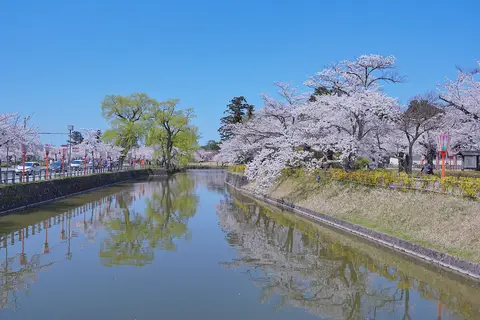
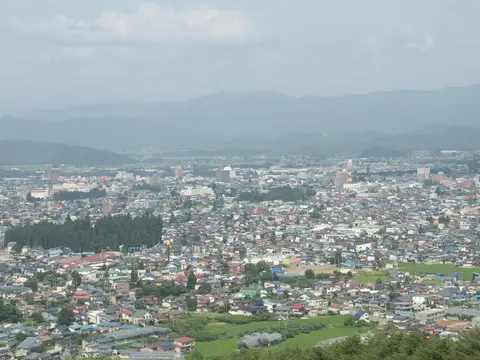
Yamagata City has Kajō Park, the Bunshōkan, a magnificent former prefectural office building from 1916, and an internationally acclaimed documentary film festival. Yonezawa was the seat of the Uesugi lords; the Uesugi Shrine stands on the former castle grounds. Tendō produces most of Japan's shōgi pieces, and in April people in costume play a living shōgi game on a large field. Sagae and Higashine are centers of cherry cultivation. On the Mogami River you can take traditional boat rides on which boatmen sing folk songs.
Food and Drink
Yamagata produces about three quarters of Japan's sweet cherries; the Satō Nishiki variety is a coveted gift. Yonezawa beef is one of the three great wagyu brands and is eaten as sukiyaki or steak. Imoni, a stew of taro, beef, and leeks, is cooked on riverbanks in autumn; at the big Imoni Festival in Yamagata, an excavator stirs a pot six meters in diameter. Hiyashi ramen, cold noodle soup, was invented here. Add to that Tsuya-hime rice, Dadacha beans from Tsuruoka, and robust sake from more than 50 breweries. The shōjin ryōri of the mountain ascetics at Haguro is a vegetarian temple cuisine made from mountain herbs.
Getting There and Best Time to Visit
The Yamagata Shinkansen branches off the Tōhoku Shinkansen at Fukushima and reaches Yamagata in about two and a half hours from Tokyo; it also stops at Yonezawa and Tendō. Yamagata Airport near Higashine and Shōnai Airport serve Tokyo. You can reach Yamadera from Yamagata in about 20 minutes on the Senzan Line. The best times to visit are June and July for the cherry harvest, October for autumn foliage, and January to February for snow monsters and snowy onsen. Hiking on Gassan is possible from July to September, and in spring you can even still ski there.