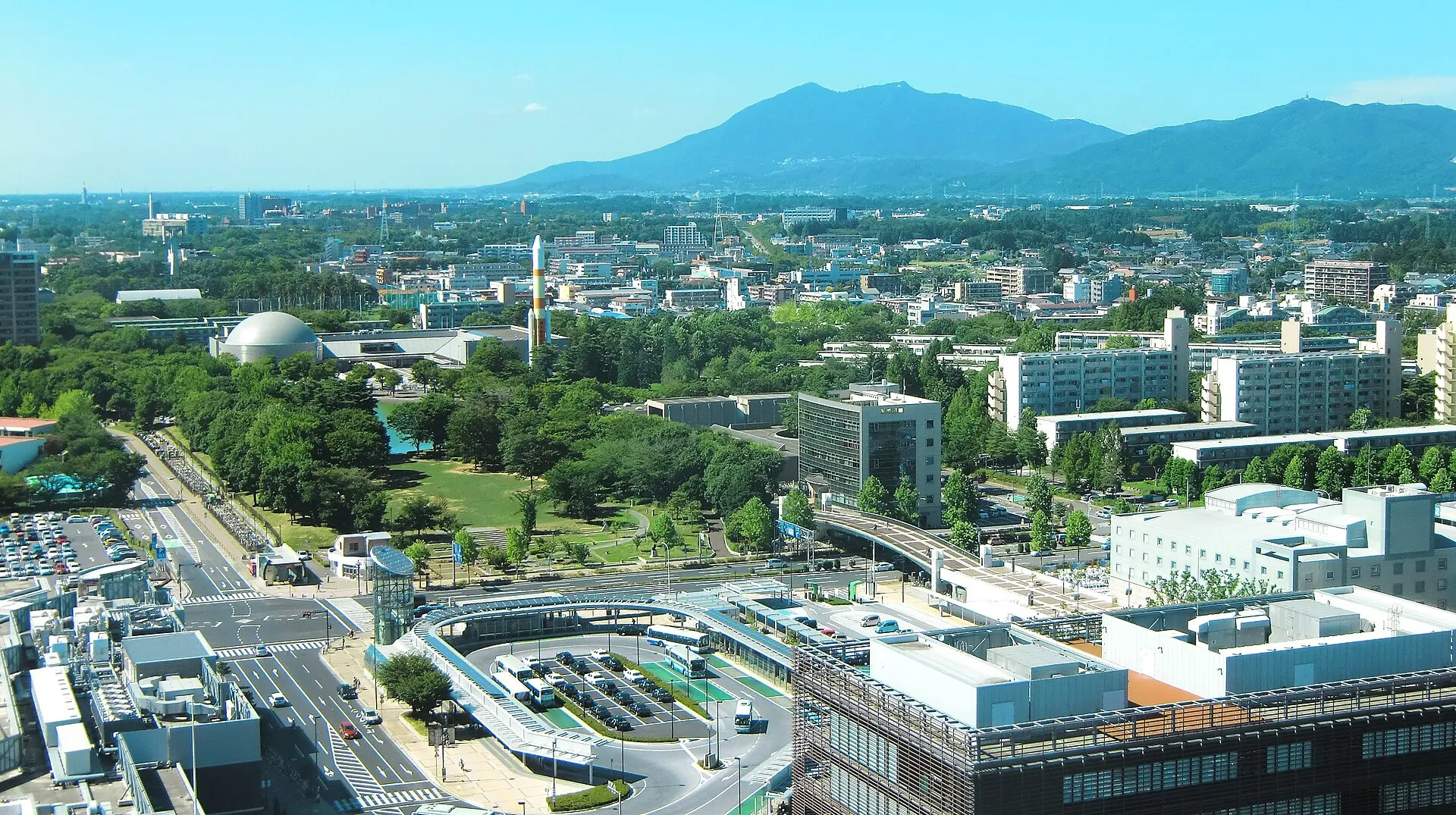
Discover Tsukuba: Space Flight, Research, and a Twin-Peaked Mountain
Travel guide · editorialA real rocket rises into the sky outside the space center, and in the background looms a two-peaked mountain that poets were already singing about in the 8th century. A trip to Tsukuba combines hands-on science, hiking, and a pleasantly green, carefully planned city, just 45 minutes from Akihabara.
A City Built for Research
In the 1960s, the government decided to relocate state research institutes out of overcrowded Tokyo. On fields and forests northeast of the capital, the science city of Tsukuba took shape, complete with the university of the same name, dozens of institutes, and broad pedestrian and bike paths. In 1985, the city hosted a world's fair devoted to science and technology, which shaped its image. Today, thousands of researchers work in Tsukuba, including Nobel laureates, and the city has a high share of international residents. The Tsukuba Center Building by Arata Isozaki, with its sunken plaza, is considered an icon of Japanese postmodernism.
Sights in Tsukuba
The best-known attraction is the Tsukuba Space Center of the Japanese space agency JAXA. An H-II rocket lies outside, while inside the exhibition shows satellites and a model of Kibō, Japan's module on the ISS; on guided tours you can see the control center where astronauts are supported. The Geological Museum of the AIST research institute displays rocks and fossils from all over Japan, and at the Museum of Maps and Surveying you can walk across a giant aerial map of the country. The KEK high-energy accelerator and the Expo Center with its large planetarium are also open to visitors. The Botanical Garden of the National Museum of Nature and Science invites you to stroll among greenhouses and woodlands.
Mount Tsukuba
To the north rises Mount Tsukuba, with its twin peaks Nantai and Nyotai, known as the male and female peaks, a sacred mountain since ancient times. Tsukubasan Shrine stands at its foot, and from there a funicular and a cable car lead up, as do hiking trails through beech forest and rock formations. From the top you can see across the Kantō Plain all the way to Tokyo, and on clear days to Mount Fuji. As a souvenir, you can buy Gama no Abura, an ointment once advertised as being made with toad fat; street vendors still perform the traditional sales spectacle today. In spring, plum groves bloom on the slopes.
Food, Getting There, and Best Time to Visit
Tsukuba's international population makes its restaurants wonderfully varied: besides ramen and soba, you'll find cuisines from India, Nepal, Korea, and Europe. Local specialties from the surrounding area include hoshi-imo, dried sweet potato strips, and Hitachi beef. The Tsukuba Express takes about 45 minutes from Akihabara, and buses run from the station to the mountain. The best times to visit are spring and fall, when hiking is pleasant and foliage colors the slopes.
A Green City for Cyclists
From the start, Tsukuba was planned with its own network of pedestrian and bike paths that connect the university, institutes, and residential neighborhoods without a single crossing. With a rental bike, you can explore the city at a relaxed pace. The Tsukuba-Kasumigaura Cycling Road follows a former railway line at the foot of the mountain and extends to Lake Kasumigaura, Japan's second-largest lake. Along the way you'll pass rice fields, small villages, and old train stations that now serve as rest stops.