About Shinjuku L Tower
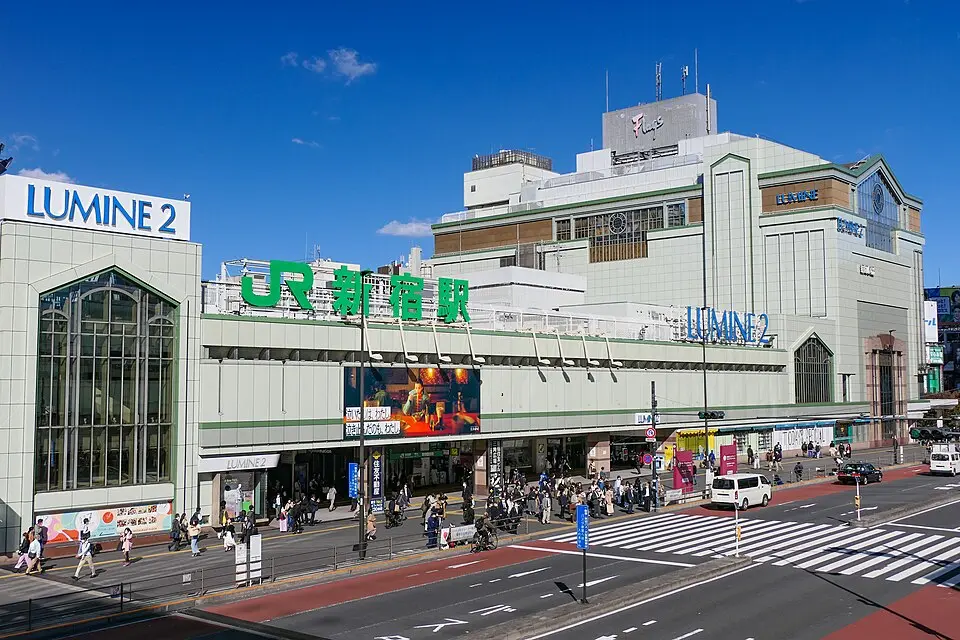
Shinjuku Station in Tokyo is far more than a transportation hub. It is the pulsing heart of the Japanese capital and the busiest train station in the world. With an average of around 3.59 million passengers a day, it serves as the central link between the densely populated city wards and the suburbs of the western Tama area. The complex straddles the boundary between the wards of Shinjuku and Shibuya and combines five separate railway and subway stations in one enormous structure, all connected by a labyrinth of underground passages, above-ground arcades, and shopping centers. For visitors, this place is a fascinating example of the extreme density and complexity of urban life in Asia, where millions of people transfer, shop, and continue on their way every day in the tightest of spaces.
The history of the site goes back to the late 17th century, when a post station was built on the Kōshū Kaidō, one of the five main roads of the Edo period. That settlement grew into the town of Naitō-Shinjuku, which was incorporated into Tokyo in 1920. Actual rail service began in 1885, when Nippon Tetsudō, Japan's first private railway company, opened the station. The original wooden station building stood on the spot now occupied by the Lumine EST Shinjuku department store. In the early years the area was still rural, and only a few passengers used the line. The real boom came only after the devastating Great Kanto Earthquake of 1923, when many people moved from the destroyed downtown districts to the more stable areas in western Tokyo.
This demographic shift led to a rapid rise in passenger numbers and made Shinjuku the busiest station in Japan. The city's infrastructure was expanded massively to cope with the growing crowds. In 1927, the private railway company Odakyū Dentetsu opened its line to Odawara, linking the station with the popular vacation regions of Hakone and Shōnan. This new connection secured the station's status as a central transfer point. In the 1930s, the urban planner Kenzaburō Kondo drew up plans for a comprehensive redesign of the area; although these were interrupted by World War II, they shaped the basic outlines of later development.
During the war, the station suffered heavy damage from air raids, leading to temporary closures and relocations of terminals. After the war, a period of rapid reconstruction and expansion began. In the 1950s and 1960s, new subway lines were connected, tunnel stations were built beneath the existing tracks, and modern station buildings were erected. The national railway was privatized in 1987, and its share of the station is now operated by JR East. These decades of continuous expansion turned the station into a huge, multilayered complex spread across several levels, blurring the boundaries between public space, transportation infrastructure, and commercial use.
Architecturally, the station is an impressive ensemble of steel, concrete, and glass. Its centerpiece is the JR East facility, which sits in a natural hollow in the terrain and runs north to south. Here the circular Yamanote Line crosses the Chūō Main Line, which heads west. The platforms are reached via four large concourses, including the underground North and Central Passages as well as ground-level halls at the main exits. The complexity of the layout is underscored by the fact that, without ever leaving the complex, you can reach a total of 52 platforms in five different railway and subway stations. The entire complex has well over 200 exits, which makes finding your way around a particular challenge for first-time visitors.
Numerous large department stores and shopping centers are clustered around the JR East grounds, adding a broad range of shopping and dining to what the station itself offers. On the east side, the ten-story Lumine EST Shinjuku dominates with more than 300 shops specializing in women's fashion, accessories, and restaurants. At the southwest corner stands the eleven-story Lumine 1, while Lumine 2 at the southeast corner mainly offers household goods. In the JR Shinjuku Miraina Tower, one of the skyscrapers that define the western part of the district, NEWoMan houses a wide selection of fashion boutiques and food shops. These commercial offerings are designed to shorten travelers' waiting times and turn the station into a place where you want to linger.
West of the JR station lies the Odakyū Dentetsu facility, above whose underground tracks rises the 16-story Odakyu Department Store. This department store covers a wide range of goods and groceries and is linked by pedestrian bridges to the annex building Odakyu Halc, which sells sporting goods and electronics. Farthest west, above the tracks of Keiō Dentetsu, stands the nine-story Keiō Department Store, which caters to a more budget-conscious clientele. This vertical use of space, with shopping centers standing directly above the platforms, is characteristic of Tokyo's stations and makes the most of scarce urban land.
Shinjuku Station is the capital's most important rail junction, where nine rail lines operated by three different railway companies meet. Alongside the dense city and suburban service, long-distance travel plays a minor role, with the exception of the Chūō Main Line, which offers connections to Kōfu and Matsumoto. The Narita Express runs regularly between the station and Tokyo Narita Airport. The Odakyū Line leads to the Shōnan and Hakone regions, while the Keiō Line runs into the western part of Tokyo Prefecture. In addition, three subway lines serve the station, including the Marunouchi Line, the Shinjuku Line, and the Ōedo Line, which extend the network further into downtown and the surrounding wards.
One special feature of the station is the so-called "double stop" situation that arises from the immense size of the complex. On some lines, trains stop at two different points within the station, allowing passengers to get off closer to their particular exit. The Ōedo Line, for example, has two separate subway stations beneath the station, Shinjuku and Shinjuku-Nishiguchi, which count as independent stations. This arrangement can be confusing for tourists, since both stations carry the name Shinjuku but offer different entrances and transfer options.
The area around the station reflects the diversity of Tokyo. Shops and office buildings are concentrated on the east side, while the Kabukichō neighborhood northeast of the station is known as an entertainment and red-light district. On the west side, Nishi-Shinjuku defines the scene with its skyscrapers, including the Tokyo Metropolitan Government Building. The Sendagaya district to the southeast is known for Shinjuku Gyoen park, which offers a calm contrast to the hectic station area. This mix of bustling activity, cultural attractions, and green oases makes Shinjuku a place that brings together the many facets of modern Tokyo in a very small space.
For visitors, Shinjuku Station is an experience that overwhelms and fascinates the senses at the same time. The underground passages are alive with crowds of people heading purposefully to their destinations, while the shopping centers lure you in with colorful window displays and the smell of freshly prepared food. The architecture, with its high halls, clean lines, and efficient use of space, demonstrates Japanese precision and order. Despite its complexity and enormous size, the station remains a well-functioning system that gets millions of people to their destinations safely and on time every day. It is not just a place of transit but a living microcosm of the Japanese metropolis.
At a glance
- Category
- Sight › Historic sites
- Rating
- no reviews yet · write a review
- Address
- —
Tokyo, Japan - District
- Nishi-Shinjuku 1
- Phone
- —
- Website
- —
- —
- Coordinates
- 35.69162° N · 139.69916° E
- Data quality
- confidence 0.71
- Identifier
- ID 9ea59012-28d…
Location & surroundings
Toggle layersRatings & comments
none yetNear Shinjuku L Tower
closest 5 per category · 2 kmHotels
More:Historic sites in Tokyo (3,145)All sights in Tokyo (3,603)
274 places within 2 km loaded.
You need a free account to leave reviews and photos – that keeps comments genuine and lets you edit them later.