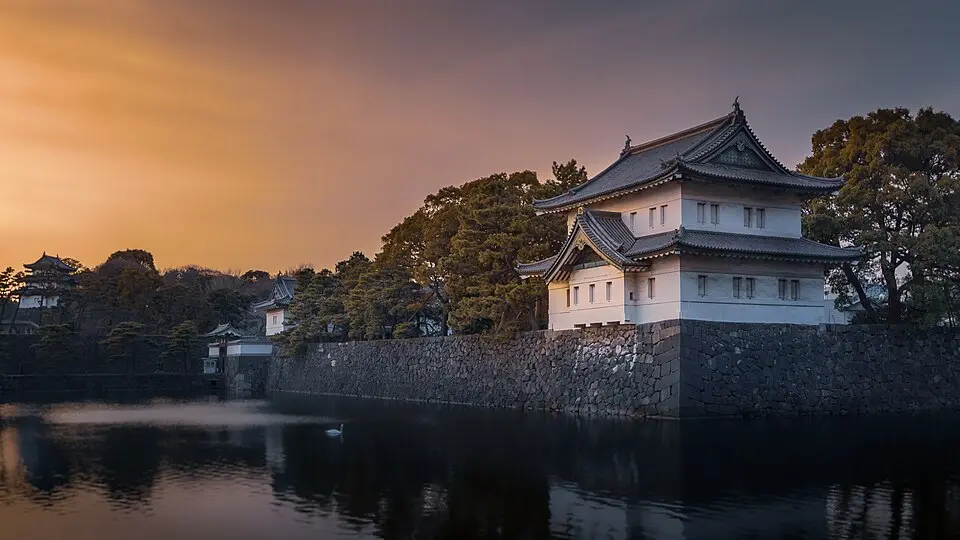
About Tokyo Imperial Palace
The Imperial Palace in Tokyo is the current residence of the Japanese emperor and stands in the Chiyoda district on the grounds of the former Edo Castle. The site's history began with the Meiji Restoration, when the imperial court was moved from Kyoto to Edo. After a fire in 1873, a new residence in a mixed Japanese-Western style was built by 1888. During World War II, the buildings were destroyed by bombing and were rebuilt in a modern style by 1968. The grounds also house the Imperial Household Agency as well as the three sanctuaries of the palace, which serve as the emperor's personal Shintō shrines. These include the Hall of the Imperial Ancestral Spirits and the Place of Reverence, where a replica of the legendary mirror Yata no Kagami is kept. You can enter the inner grounds without registration on certain holidays, while the East Gardens are open year-round. Access is via the historic stone bridge Seimon-ishibashi and the iron Nijūbashi, which was designed by the German engineer Wilhelm Heise.
At a glance
- Category
- Sight › Historic sites
- Rating
- no reviews yet · write a review
- Address
- 千代田1-1
100-8111 Tokyo, Japan - District
- Chiyoda
- Phone
- +819113332570
- Website
- sankan.kunaicho.go.jp
- —
- Coordinates
- 35.68250° N · 139.75210° E
- Data quality
- confidence 0.80
- Identifier
- ID a5a8abe1-ad8…
Part of the tour
Tokyo in One Day: The Great Classics for Your First Visit →Location & surroundings
Toggle layersFAQ about Tokyo Imperial Palace
quick answersWhat is the Imperial Palace in Tokyo?
The Imperial Palace (Tokyo Imperial Palace) in Tokyo is the current residence of the Emperor of Japan. It sits in the Chiyoda district on the grounds of the former Edo Castle. The complex also includes the Imperial Household Agency and the Three Palace Sanctuaries, which serve as the emperor's personal Shintō shrines. These include the Hall of the Imperial Ancestral Spirits and the Place of Reverence, which houses a replica of the legendary mirror Yata no Kagami.
How old is the Imperial Palace in Tokyo?
The current buildings of the Imperial Palace in Tokyo were completed in a modern style by 1968. Its history as the imperial seat began with the Meiji Restoration, when the imperial court was moved from Kyōto to Edo. After a fire in 1873, a new residence in a mixed Japanese-Western style was built by 1888. It was destroyed by bombs in World War II and subsequently rebuilt.
Can you visit the Imperial Palace in Tokyo?
Yes, parts of the Imperial Palace in Tokyo are open to visitors. You can visit the East Gardens all year round. On certain public holidays, you can enter the inner grounds without registering in advance.
Which bridges lead to the Imperial Palace in Tokyo?
You reach the Imperial Palace in Tokyo via the historic stone bridge Seimon-ishibashi and the iron Nijūbashi. The Nijūbashi was designed by the German engineer Wilhelm Heise.
What can you see around the Imperial Palace in Tokyo?
Right near the Imperial Palace in Tokyo, you'll find more historic buildings of the palace grounds. travelguide195 lists, among others, the Fushimi-yagura (伏見櫓) watchtower about 231 meters away and the Chōwa-den (長和殿) palace hall about 140 meters away. Within a 500-meter radius, travelguide195 lists around 29 restaurants. The Imperial Palace is also part of the tour "Tokyo in a Day: The Great Classics for Your First Visit."
Ratings & comments
none yetNear Tokyo Imperial Palace
closest 5 per category · 2 kmHotels
More:Historic sites in Tokyo (3,145)All sights in Tokyo (3,603)
300 places within 2 km loaded.
You need a free account to leave reviews and photos – that keeps comments genuine and lets you edit them later.
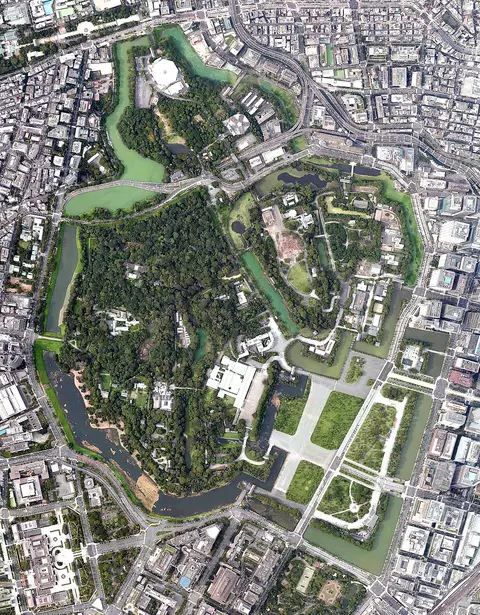
Surrounded by a series of moats and high walls, the site of the former Edo Castle has been the official residence of the Japanese imperial family since 1868. Reputedly the most expensive square kilometre in the world, which during the height of Japan's bubble was estimated to be worth slightly more than California. The inner palace gardens and buildings are closed to the general public except on the second day of the New Year (January 2) and the Emperor's birthday (February 23), when the imperial family makes a public appearance, and the emperor gives a speech to his assembled subjects. However, foreigners can also apply online to join a free guided tour (M-F at 10:00 and 13:30). If you're feeling lucky, you can also try just showing up at the Imperial Household Agency office located in the northwest corner of the Imperial Palace Park, which is open 09:00-12:00, 13:00-14:00; if there's space, you can join a tour on the same day. Tours are conducted only in Japanese, but electronic audio guides (in English) will be lent to foreign visitors free of charge. At the end of the tour, visitors wishing to enter the East Gardens (see next entry) will be given entrance cards and allowed through to the gardens via a private gate, allowing them to bypass the lines at the main Ōte-mon entrance; pay attention to the announcement in Japanese and queue up as directed.
Source: Wikivoyage, „Tokyo/Chiyoda“ · authors per page history · CC BY-SA 4.0 · as of 1/13/2020