About 深大寺 Jindaiji
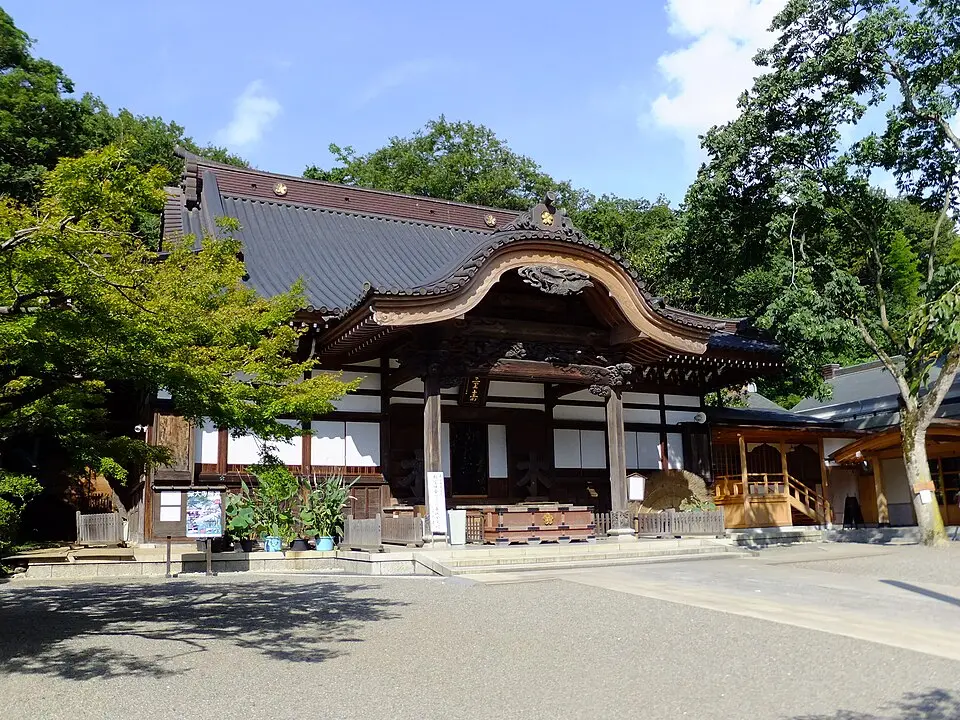
Jindai-ji is a historic Tendai temple in Chōfu, Tokyo, whose founding dates back to the year 733. Legend tells of a young woman who was grateful to the water deity Jinja Daiō and built the site to honor this sacred figure. The complex is laid out in a semicircle on a rise that you reach via a flight of stairs and a main gate built in the Yakui style. At its center stands the main hall, which was rebuilt in the early 20th century after a major fire in the 19th century. Of particular significance is the Shakadō, which houses a bronze sculpture group from the Hakuhō period that is now considered a National Treasure of Japan. You can also visit the Gansandaishidō, which was popular in the Edo period for prayers for good fortune, as well as the monks' quarters and the guesthouse. In the rear part of the grounds you will find the Kaisandō, dedicated to the temple's founder, a cemetery, and another hall for the veneration of Jinja Daiō, which can be reached through a side exit.
At a glance
- Category
- Sight › Historic sites
- Rating
- no reviews yet · write a review
- Address
- —
Tokyo, Japan - District
- Chofu
- Phone
- —
- Website
- ja.wikipedia.org
- info@jindaiji.info
- Coordinates
- 35.66733° N · 139.54971° E
- Data quality
- confidence 0.79
- Identifier
- ID ae516e4d-ed9…
Location & surroundings
Toggle layersFAQ about 深大寺 Jindaiji
quick answersWhat is Jindai-ji in Tokyo?
Jindai-ji (深大寺) is a historic Tendai Buddhist temple in the Chōfu district of Tokyo, Japan. It was founded in 733. The complex is laid out in a semicircle on a rise, which you reach via a flight of stairs and a main gate built in the Yakui style.
What legend is told about the founding of Jindai-ji?
According to legend, Jindai-ji in Tokyo's Chōfu district traces back to a young woman who was grateful to the water deity Jinja Daiō. She is said to have built the site to honor this deity. To this day, there is a separate hall for the worship of Jinja Daiō at the back of the temple grounds, which you can reach through a side exit.
What can you see on the grounds of Jindai-ji?
On the grounds of Jindai-ji in Tokyo, you can visit several halls and buildings, most notably the main hall, which was rebuilt in the early 20th century after a major fire in the 19th century. Of particular significance is the Shakadō, which houses a bronze sculpture group from the Hakuhō period that is considered a National Treasure of Japan. You will also find the Gansandaishidō, which was popular in the Edo period for prayers for good fortune, the monks' quarters, the guest house, the Kaisandō dedicated to the temple's founder, and a cemetery.
What can you see around Jindai-ji?
Right near Jindai-ji in Tokyo's Chōfu district, there are more historic sites. travelguide195 lists, for example, the ruins of Jindaiji Castle (深大寺城跡) about 280 meters away and the eastern approach path, Jindaiji Higashi-Sandō (深大寺東参道), about 310 meters away. If you like museums, you will find the Cimatti Museum about 850 meters away.
Are there restaurants near Jindai-ji?
Yes, there are several places to eat around Jindai-ji in Tokyo's Chōfu district. travelguide195 lists 23 restaurants within 500 meters of the temple. That way, you can easily combine your visit with a meal in the area.
Ratings & comments
none yetNear 深大寺 Jindaiji
closest 5 per category · 2 kmHotels
Cocktail bars
None within 2 km.
More:Historic sites in Tokyo (3,145)Sights in Chofu (33)All sights in Tokyo (3,603)
98 places within 2 km loaded.
You need a free account to leave reviews and photos – that keeps comments genuine and lets you edit them later.
This temple of the Tendai sect, constructed in 733, is nearly the oldest in the Tokyo area, second only to Sensoji in Asakusa. Although the temple building itself is modest, the surrounding village of food stands, soba restaurants and waterwheels evokes an image of Edo-period Japan, and makes Jindaiji Temple a hidden gem in suburban Tokyo. The temple complex houses a bronze statue of Shaka Nyorai, a Buddha. The statue is said to date from around 700, and is housed in a separate concrete building.
Source: Wikivoyage, „Chofu“ · authors per page history · CC BY-SA 4.0 · as of 1/10/2016