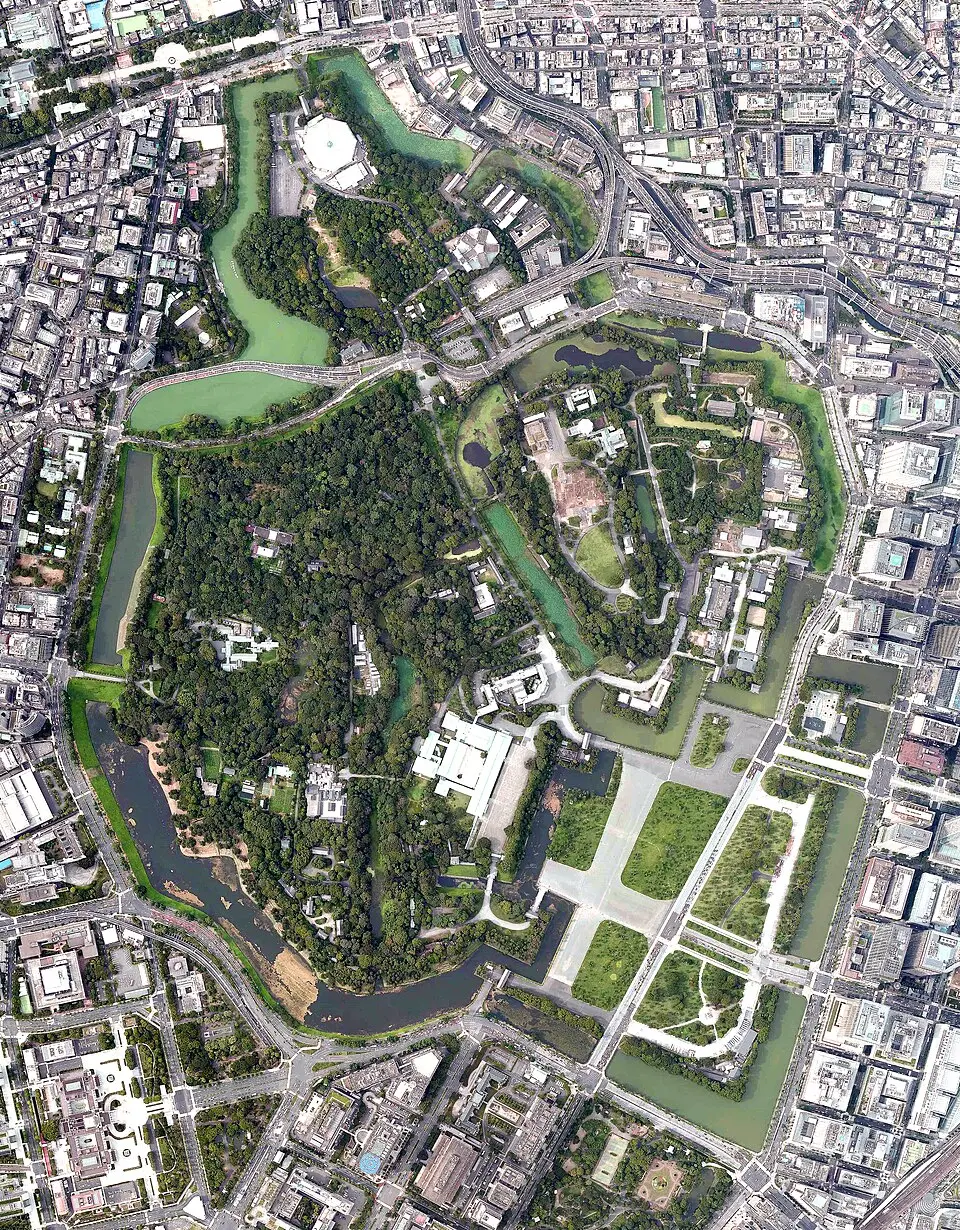
About Edo Castle Ruins
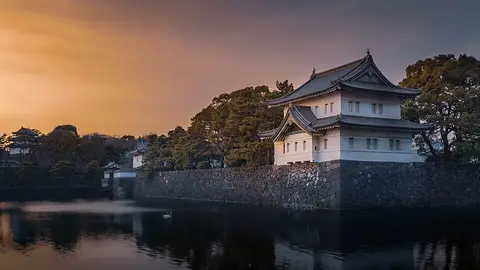
The ruins of Edo Castle lie in Tokyo's Chiyoda district, in the heart of the city, and today form the historic core of the Imperial Palace. Originally built in 1457 by the military strategist Ōta Dōkan, the complex fell into disrepair after his death until Tokugawa Ieyasu expanded it in the late 16th century as a strategically important seat for his shogunate. From here, Japan was governed during the Edo period, from 1603 to 1867. The castle followed the typical pattern of Japanese fortresses and consisted of the central main enclosure, Honmaru, on a spur of high ground, along with several surrounding outer baileys. These areas were protected by deep moats, high ramparts, defensive towers, and fortified gates. In front of the castle proper lived the shogun's most important retainers, whose estates were likewise separated by walls and moats. The entire complex was enclosed by an inner moat that could only be crossed at controlled entry points.
At the center of the Honmaru once stood the shogun's great residence, which had several inner courtyards and was divided into a front section with audience halls and a strictly secluded rear living quarter, the Ōoku. The famous main keep, the Tenshukaku, was also part of the complex. Built in 1606, it stood more than 50 meters (about 165 feet) tall and was considered the highest tower of its kind in Japan. After the great fire of 1657, however, it was not rebuilt, since the political situation under the Tokugawa regime was stable. Another historic spot is the Matsu no Ōrōka, a connecting corridor where the incident that led to the well-known story of the 47 Rōnin took place in 1701. A memorial stone stands at the site today.
After the Meiji Restoration in 1868, the castle was peacefully handed over to the emperor and renamed the Imperial Castle. The emperor first took up residence in the western section, before the present-day Imperial Palace was completed in 1888. The eastern and northern parts of the former castle grounds are now open to the public and serve a variety of purposes. In 1963, the site was designated a Special Historic Site. Many street names in Tokyo, such as Ōtemachi and Marunouchi, still recall the castle's original layout and its gates. Visitors can explore the ruins and gardens and get a sense of the former grandeur of this central seat of power in Japan.
At a glance
- Category
- Sight › Historic sites
- Rating
- no reviews yet · write a review
- Address
- 1-1 Chiyoda
100-8111 Tokyo, Japan - District
- Chiyoda
- Phone
- +81332131111
- Website
- ja.wikipedia.org
- —
- Coordinates
- 35.68808° N · 139.75457° E
- Data quality
- confidence 0.41
- Identifier
- ID 0ad0a5be-fb3…
Location & surroundings
Toggle layersRatings & comments
none yetNear Edo Castle Ruins
closest 5 per category · 2 kmMuseums
More:Historic sites in Tokyo (3,145)All sights in Tokyo (3,603)
293 places within 2 km loaded.
You need a free account to leave reviews and photos – that keeps comments genuine and lets you edit them later.