Discovering Sendai: Date Masamune, Gyūtan, and Tanabata
Travel guide · editorialUnder the leafy canopy of zelkova trees along Jōzenji-dōri, students sit on benches, and above the city Date Masamune rides in bronze – Sendai feels greener and more relaxed than you would expect from a city of a million people. For a city trip to northern Japan, Sendai is the ideal starting point. A vacation in Sendai combines samurai history, grilled beef tongue, and excursions to the island-studded bay of Matsushima.
The City of the One-Eyed Dragon
Sendai's history begins in 1600, when Date Masamune, nicknamed "the One-Eyed Dragon" because he had lost an eye, had his castle built on Aoba Hill. The ambitious lord even sent a delegation to Rome and made Sendai the capital of one of Japan's wealthiest domains. The city center was heavily destroyed in World War II; the Sendai of today, with its broad tree-lined avenues that earned it the nickname "City of Trees," was built afterward. On March 11, 2011, the tsunami hit the coast in Wakabayashi Ward hard; Arahama Elementary School is now a memorial that tells the story of the day of the disaster and of the rebuilding.
Sights in Sendai
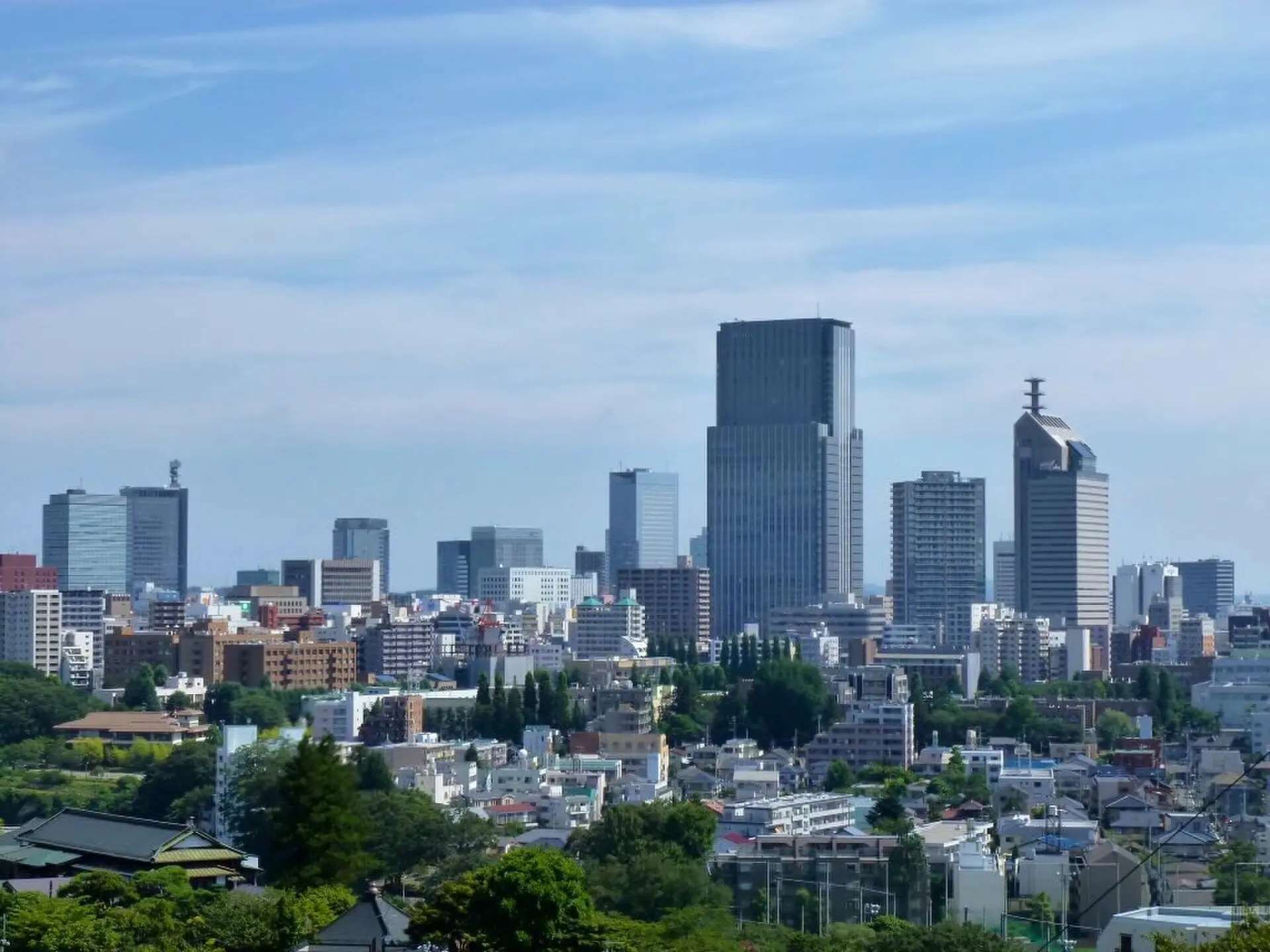
Only walls remain of the castle itself, but the viewpoint on the castle hill with the equestrian statue of Date Masamune offers the best view over Aoba Ward. Not far away, in the forest, stands Zuihōden, the lord's mausoleum: a magnificent structure painted in black, gold, and vivid colors, faithfully reconstructed after being destroyed in the war. The Ōsaki Hachiman Shrine, with its lacquered main hall, is a National Treasure. Architecture fans make the pilgrimage to the Sendai Mediatheque by Toyo Ito, whose glass facade and tubular supports are a landmark of modern Japanese architecture. The Loople hop-on-hop-off bus conveniently connects the main stops. To see the city from above, head up to the observation floor of the AER building at the station, from which you can see all the way to the Pacific on a clear day. In spring, Nishi Park with its cherry trees is a popular spot for hanami picnics, and along the Hirose River, which winds through the city in loops, riverside paths invite you to stroll.
Festivals: Tanabata and the Avenue of Lights
From August 6 to 8, Sendai celebrates what is probably Japan's most spectacular Tanabata festival. Then huge, handmade paper streamers hang in the covered shopping streets around Ichibanchō, reaching nearly to the ground and swaying with every breath of air. On the evening before, there is a big fireworks display. In December, the SENDAI Hikari no Pageant turns the zelkova trees along Jōzenji-dōri into a tunnel of hundreds of thousands of lights, and in September the Jōzenji Streetjazz Festival fills streets and squares with music.
Eating in Sendai: Gyūtan and Zunda
The signature specialty is gyūtan, thickly sliced beef tongue grilled over charcoal and served with barley rice, oxtail soup, and pickled vegetables. At the station there is a whole alley of gyūtan restaurants. For something sweet, try zunda: mochi or milkshakes made with a bright green paste of mashed edamame. Add to that sasakama, fish cakes shaped like bamboo leaves, and fresh seafood from the nearby port of Shiogama. Miyagi Prefecture is also a well-regarded sake region, and many izakaya serve local breweries.
Nightlife in Kokubunchō
Kokubunchō is considered the largest entertainment district in all of northeastern Japan. Among high-rises with dozens of bars per building, you'll find izakaya, yakitori grills, karaoke, and small music bars. Right next door, along the Ichibanchō and Chūō arcades, you can shop during the day and go out to eat in the evening. Baseball fans can catch a home game of the Tohoku Rakuten Golden Eagles at Rakuten Mobile Park in Miyagino Ward.
Getting Around Sendai and Day Trips
The Tōhoku Shinkansen reaches Sendai from Tokyo in about 90 minutes. From Sendai Airport, a train line runs to the main station in about 25 minutes. Two subway lines serve the city, supplemented by buses. Among the best day trips is Matsushima, a bay with more than 200 pine-covered islets that counts as one of Japan's three classic landscapes – reachable by train in about 40 minutes. The hot springs of Akiu Onsen and Sakunami Onsen lie within the city limits, and the mountain temple Yamadera in neighboring Yamagata Prefecture is a good hour away. The best times to visit are early summer and fall; August brings Tanabata, and winters are cold but rarely deeply snowed in.