Hiroshima Prefecture: Remembrance, Islands and Miyajima
Travel guide · editorialIf you're planning a vacation in Hiroshima Prefecture, you probably think first of August 6, 1945 – and then discover a city that has deliberately committed itself to peace and to life. Around Hiroshima you'll also find the floating torii gate of Miyajima, the island world of the Seto Inland Sea and harbor towns with temples on the hillsides. That makes the prefecture one of the most important stops on any trip to Japan.
Landscape and Location
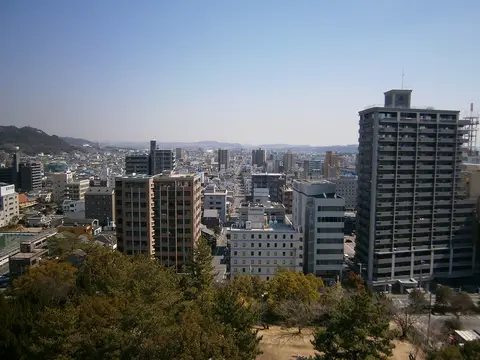
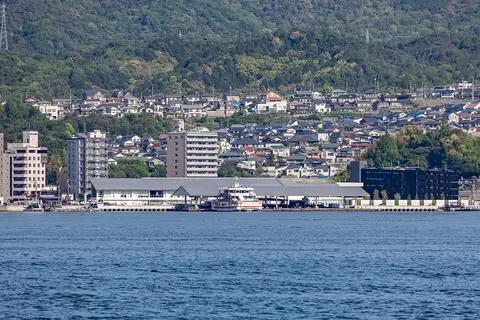
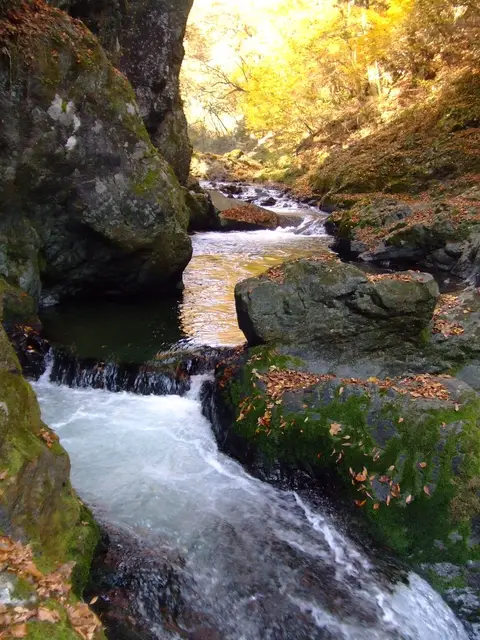
The prefecture lies in western Honshū between the Seto Inland Sea to the south and the Chūgoku Mountains to the north. The coastline is rugged and dotted with numerous islands, including Etajima, Ōmishima and Ikuchijima, some of which can be reached by bridge. In the north, around Miyoshi and Shōbara, you'll find hills, forests and snow in winter; the Sandankyō Gorge offers hiking trails past waterfalls. The climate along the coast is mild and fairly dry. Fukuyama, the prefecture's second-largest city, has a rebuilt castle right next to the train station and is known for its roses, which bloom in May during the Rose Festival. Miyoshi in the north is famous for summer cormorant fishing and for the sea of clouds that settles over the basin on autumn mornings.
Sights in Hiroshima Prefecture
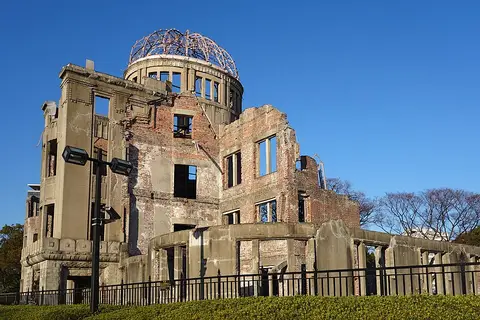
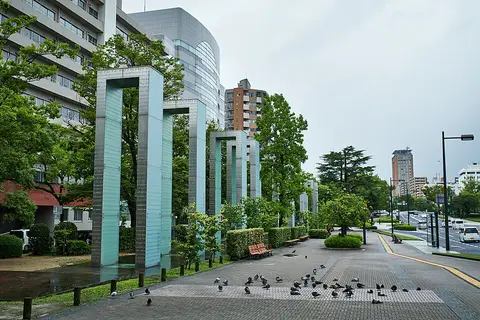
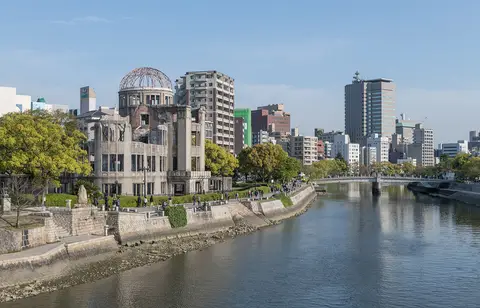
In Peace Memorial Park in the center of Hiroshima stands the Atomic Bomb Dome, the ruin of the former Industrial Promotion Hall, which has been a UNESCO World Heritage Site since 1996. The Peace Memorial Museum documents the destruction and the suffering of the survivors through personal belongings; the Children's Peace Monument, adorned with thousands of colorful paper cranes, honors Sadako Sasaki. Just 30 minutes away lies the island of Miyajima with the Itsukushima Shrine, whose red torii appears to float in the sea at high tide. Tame deer wander the lanes of the island, and a ropeway takes you up Mount Misen. In Hiroshima itself, Shukkei-en Garden and the reconstructed castle, whose original was destroyed by the bomb, are well worth a visit.
Hiroshima Destinations on the Coast
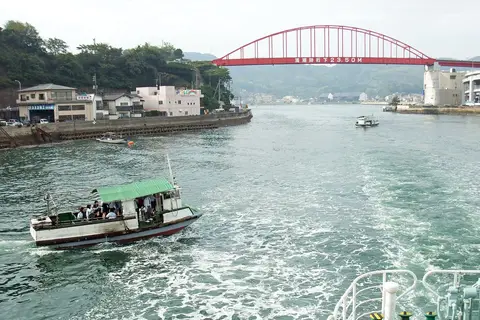
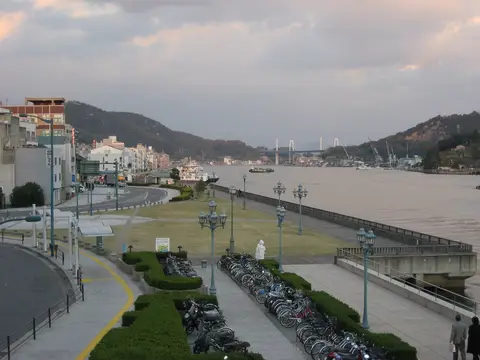
Onomichi is a harbor town on steep slopes, with a temple trail winding past 25 sanctuaries; cats populate the stairways, and filmmakers such as Yasujirō Ozu shot movies here. From Onomichi starts the Shimanami Kaidō, a cycling route of about 43 miles (70 km) across six islands to Imabari on Shikoku, one of the most beautiful bike routes in the world. Tomonoura near Fukuyama is an old port with wooden houses and a tide observatory, said to have inspired Ghibli's "Ponyo." Kure was Japan's largest naval port; the Yamato Museum displays a large model of the battleship of the same name. Hundreds of wild rabbits live on Ōkunoshima, and Takehara preserves an old town of sake and salt merchants' houses.
Food and Drink
Hiroshima-style okonomiyaki is layered differently than in Osaka: thin batter, cabbage, bean sprouts, pork belly, noodles and egg, topped with a sweet sauce. At Okonomimura, a multistory building full of food stalls, you can compare the variations. Oysters from Hiroshima Bay account for most of Japan's production; in winter, you eat them grilled on Miyajima. Momiji manjū, maple-leaf-shaped cakes, are the classic souvenir. Saijō in Higashihiroshima is a sake town with red-brick chimneys, whose breweries open their doors during the Sake Festival in October. Lemons from the islands add flavor to lemonade, cakes and sake cocktails.
Culture and History
The castle town of Hiroshima was founded in the late 16th century in the delta of the Ōta River and grew into a garrison town. After the atomic bombing it was rebuilt and today sees itself as a city of peace, holding a memorial ceremony and a lantern-floating ritual every year on August 6. Kagura, a dynamic dance theater with masks and costumes, is kept alive in the mountain villages of the north. The Hiroshima Museum of Art shows French Impressionists.
Getting There and Best Time to Visit
Hiroshima is a stop on the Sanyō Shinkansen; the ride takes about 90 minutes from Osaka and around four hours from Tokyo. The airport is east of the city and is connected by bus. Ferries to Miyajima depart from Miyajimaguchi and from Peace Memorial Park; a small visitor tax is charged for the island. Spring and fall are considered the best times to visit, when the maple trees in Momijidani Park on Miyajima turn red. Cyclists on the Shimanami Kaidō particularly favor April, May and October.