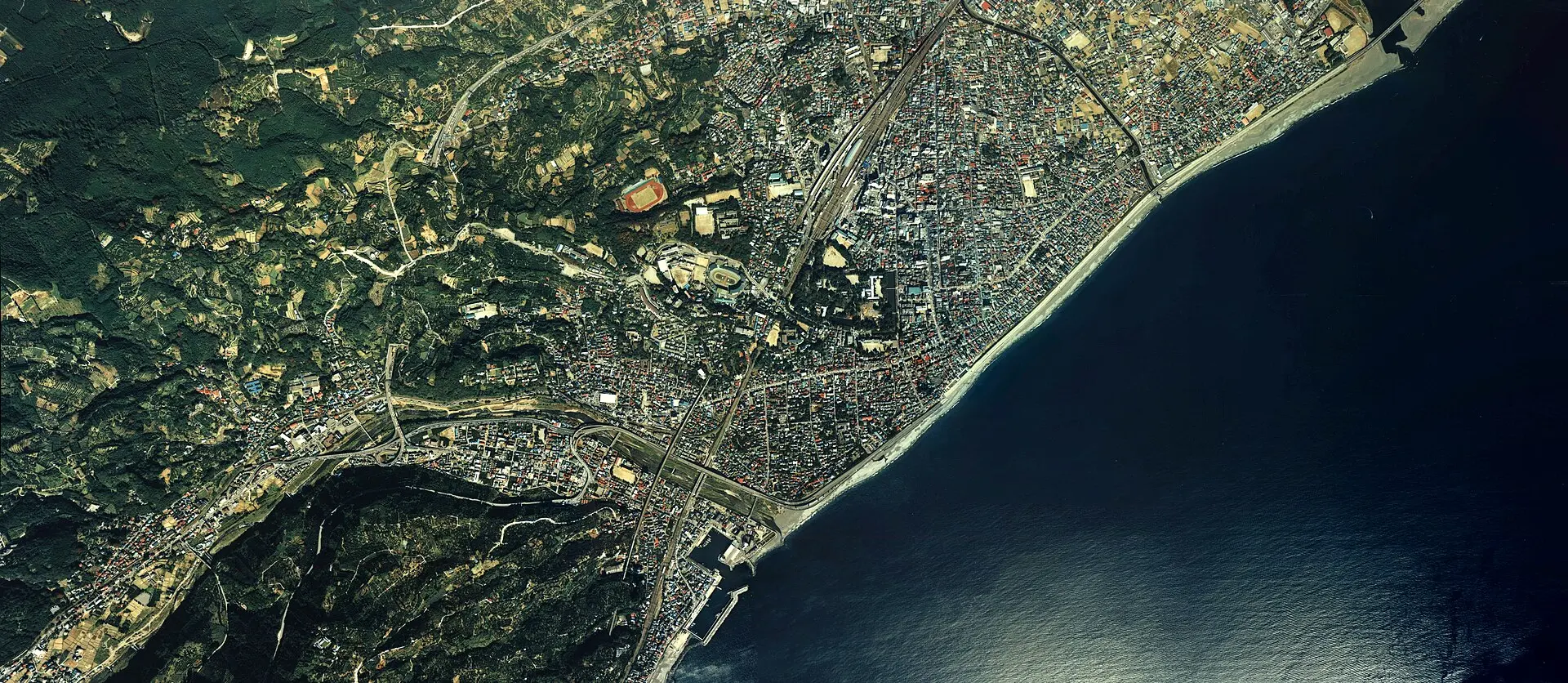
Discover Odawara: Hōjō Castle, Kamaboko, and the Hakone Gate
Travel guide · editorialFor many travelers, Odawara is just the station where you change to the mountain railway to Hakone. But if you stay for half a day on a trip to Japan, you'll discover a castle town with a proud samurai past, a fishing port, a centuries-old fish cake tradition, and a spectacular art project above Sagami Bay.
The Castle of the Hōjō
For almost a hundred years in the 15th and 16th centuries, Odawara was the seat of the Later Hōjō, who ruled large parts of the Kantō Plain from here. Their castle was considered impregnable and was surrounded by a rampart that enclosed the entire town. It was not until 1590 that Toyotomi Hideyoshi managed to force its surrender after a siege lasting several months; on a mountain opposite, he had his own castle built in a short time, the Ishigakiyama Ichiya Castle, whose stone walls still lie in the forest today. The main keep of Odawara Castle was rebuilt in 1960 and extensively renovated in 2016; inside, exhibitions show armor, swords, and the history of the Hōjō, and from the top floor you can look out over the sea as far as the Miura Peninsula.
Sights in Odawara
In the castle park, cherry trees bloom in spring, and hydrangeas and irises bloom in the moat in June. The Hōtoku Ninomiya Shrine commemorates Ninomiya Sontoku, a 19th-century agrarian reformer from Odawara, whose statue, with a bundle of firewood on his back and a book in his hand, once stood at many schools across Japan. In the southwest of the city lies the Enoura Observatory of the artist Hiroshi Sugimoto, an ensemble of gallery, stage, tea house, and gardens on a hillside above the sea, aligned with the positions of the sun at the winter and summer solstices. In February, thousands of plum trees bloom in Soga Bairin against the backdrop of Mount Fuji.
Eating in Odawara: Kamaboko and Umeboshi
Odawara is famous for kamaboko, steamed fish paste on small wooden boards, which has been made here since the Edo period from the catch of Sagami Bay. Along the old Tōkaidō and on Kamaboko Street, long-established shops sell their products, and at some workshops you can try your hand at shaping it yourself. The plums of Soga Bairin are made into umeboshi, salt-pickled plums. At Hayakawa fishing port, restaurants serve kaisen-don topped with horse mackerel, tuna, and shirasu. One curiosity is the shop Uirō, family-owned since the 16th century, which sells a medicine of the same name as well as a sweet rice confection.
A Stroll Through the Old Town
Between the castle and the sea, it's worth taking a walk along the former Tōkaidō, where merchant houses, old pharmacies, and shops selling Hakone wood marquetry line up one after another. In the Kamaboko-dōri district by the sea, the workshops of the fish cake makers stand close together, some with small museums. Not far from the station are the graves of Hōjō Ujimasa and his brother Ujiteru, who were forced to commit suicide after the defeat of 1590. In the evening, locals gather in the izakaya around the station over fresh fish and regional sake.
Getting There, Excursions, and Best Time to Visit
Odawara is only about 35 minutes from Tokyo by Shinkansen; for a more leisurely trip, take the Odakyū Romancecar from Shinjuku. From here, the Hakone Tozan Railway runs up into the mountains to onsen, museums, and Lake Ashi. The best times to visit are February for the plum blossoms, spring with cherry blossoms at the castle, and autumn. In May, the Hōjō Godai Festival takes place, in which a parade in armor commemorates the five generations of the Hōjō, and in summer fireworks and beaches along the coast are a draw.