Discovering Nagasaki: Harbor, Dejima, and Remembrance
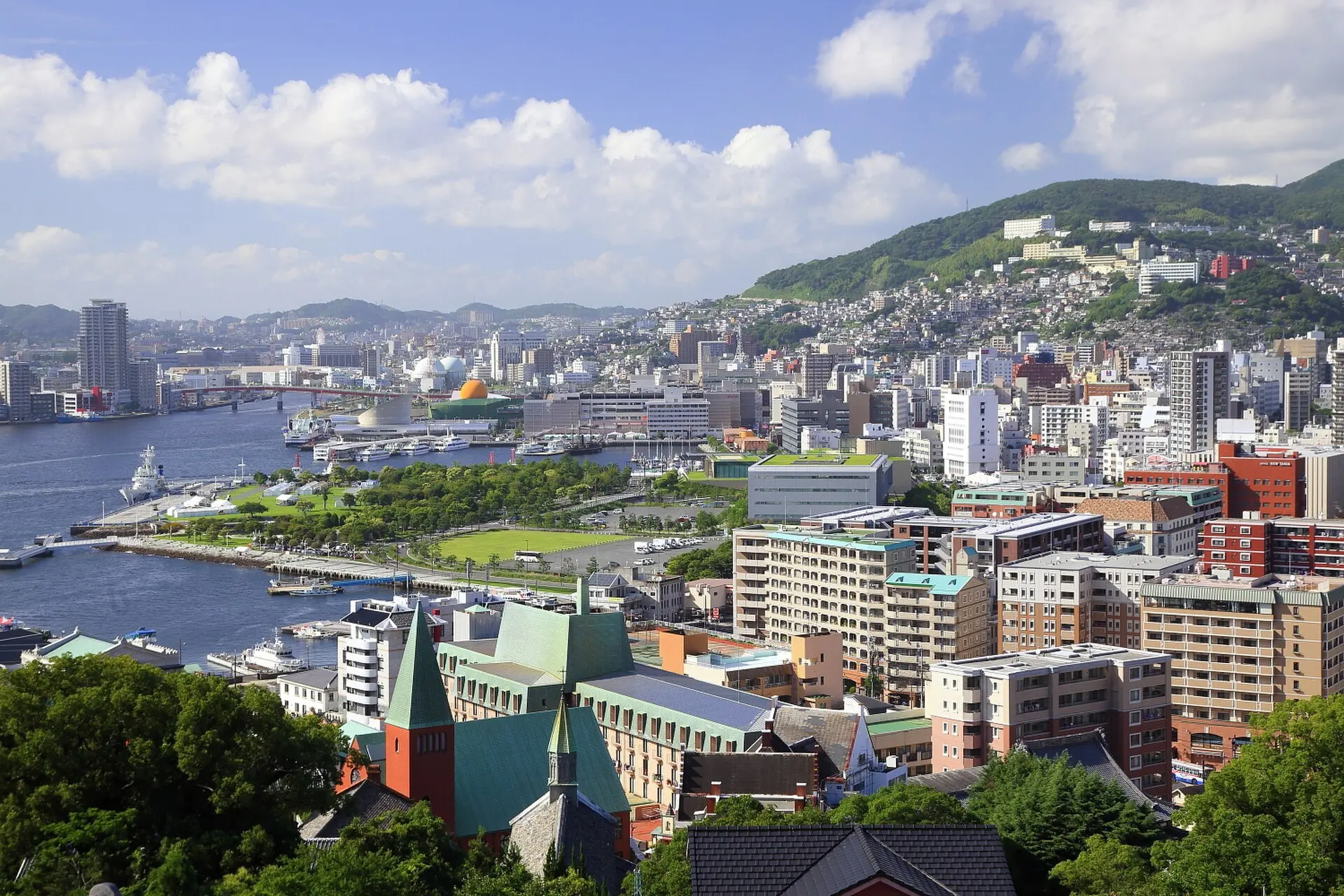
Travel guide · editorialFew cities in Japan stayed open to the world for as long as Nagasaki. If you visit it on a trip through Kyūshū, you'll find Chinese temples, European merchant villas, churches, and a site commemorating August 9, 1945, on the steep slopes around the harbor bay.
A Window to the World
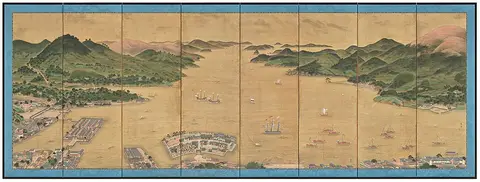
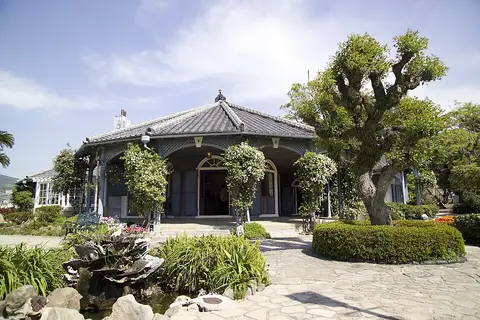
Portuguese ships began calling at the natural harbor in 1571, and Nagasaki became the center of early Christianity in Japan. After Christianity was banned, the city remained the country's only gateway to the outside world: Dutch traders were allowed to live on the artificial fan-shaped island of Dejima for more than 200 years, while Chinese merchants lived in a quarter of their own. Medicine, astronomy, and the natural sciences reached Japan through Dejima. Today the warehouses and residential buildings there have been faithfully reconstructed. On the slope of Minami-Yamate stand Ōura Church, built in 1864 and the oldest surviving church in Japan, and Glover Garden with its villas of Western merchants from the Meiji era.
Peace Park and Atomic Bomb Museum
At 11:02 a.m. on August 9, 1945, an atomic bomb exploded over the Urakami district, killing tens of thousands of people instantly. A black monolith marks the hypocenter, and the Atomic Bomb Museum documents the destruction with harrowing testimonies. In Peace Park, the towering Peace Statue points its right hand to the sky. The rebuilt Urakami Cathedral still displays stone figures bearing burn marks. A visit takes time and quiet reflection.
Sights in Nagasaki
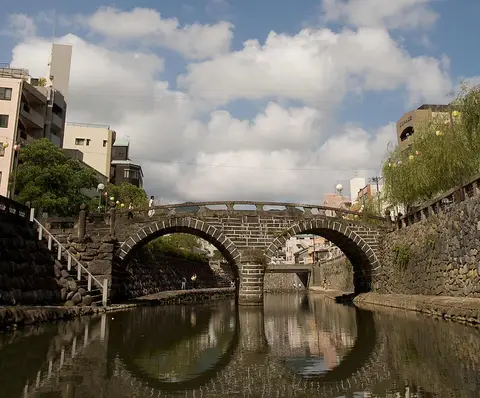
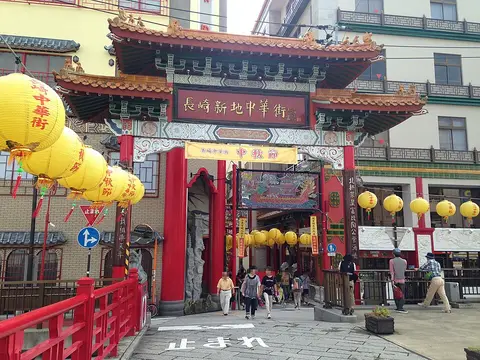
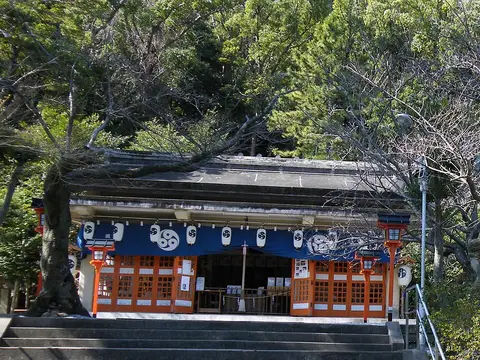
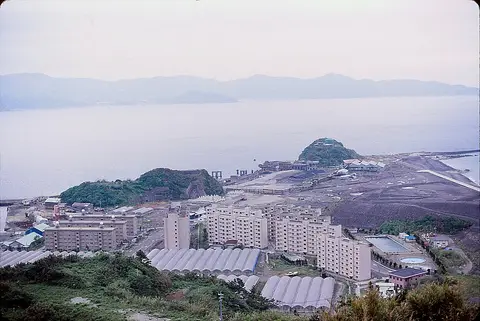
The stone Megane Bridge from 1634, whose arches form a pair of spectacles with their reflection in the river, is a popular photo spot. At Sōfuku-ji Temple, Chinese Ming-style architecture shines in red. Boat tours head to the abandoned coal island of Hashima, nicknamed Gunkanjima (Battleship Island) for its silhouette; it is part of the World Heritage site of Meiji-era industrial revolution sites. In the evening, a cable car climbs Mount Inasa, whose nighttime view over the harbor and hillsides ranks among the most famous in Japan. In October, dragons and ship floats dance at the Nagasaki Kunchi festival at Suwa Shrine, and at Chinese New Year thousands of lanterns light up the city.
Eating in Nagasaki
You can taste the city's mixed history: Champon, a noodle soup with seafood, pork, and vegetables, originated in Shinchi Chinatown, as did sara udon with crispy noodles. Castella, the Portuguese-inspired sponge cake, is the classic souvenir. Turkish rice combines pilaf, cutlet, and spaghetti on a single plate. Shippoku, a banquet served at round tables, blends Japanese, Chinese, and Western influences. Fresh fish comes from the waters off the rugged coast, and the prefecture is one of Japan's most important fishing regions. In the evening, locals head to the Shianbashi district, the old entertainment quarter with izakaya, bars, and small snack bars where it's easy to strike up a conversation. The Hamano-machi shopping arcade next door is the city's busiest shopping street during the day.
Getting Around and Best Time to Visit
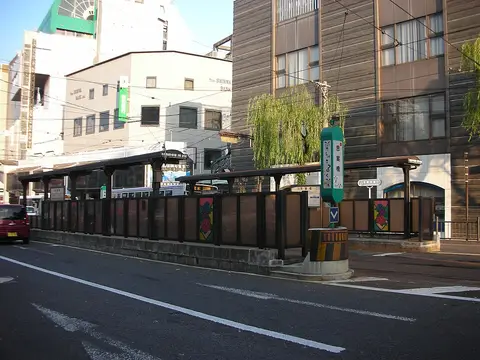
Nagasaki Airport (NGS) sits on an island in Ōmura Bay, and buses reach the city center in about 45 minutes. Since 2022, the Nishi-Kyūshū Shinkansen has connected the city with Takeo-Onsen, where you can transfer to trains for Fukuoka. In the city, the streetcars are inexpensive and convenient, but many sights lie on hillsides that you climb on foot via staircases. The best times to visit are spring and fall; summer is humid and rainy. Good day trips include the Huis Ten Bosch theme park near Sasebo, a replica of a Dutch town with canals and windmills, and the Gotō Islands with their remote churches of the Hidden Christians, reached by ferry or high-speed boat. To the east, Mount Unzen beckons with its steaming springs, along with the castle town of Shimabara.