Discover Matsumoto: Crow Castle, the Alps, and Art
Travel guide · editorialWhen snow-capped peaks rise behind a black castle keep, you're in Matsumoto. The city in the heart of Nagano Prefecture is ideal for a city break with mountain views: compact, surprisingly rich in culture, and the gateway to some of Japan's most beautiful high-mountain destinations.
Crow Castle
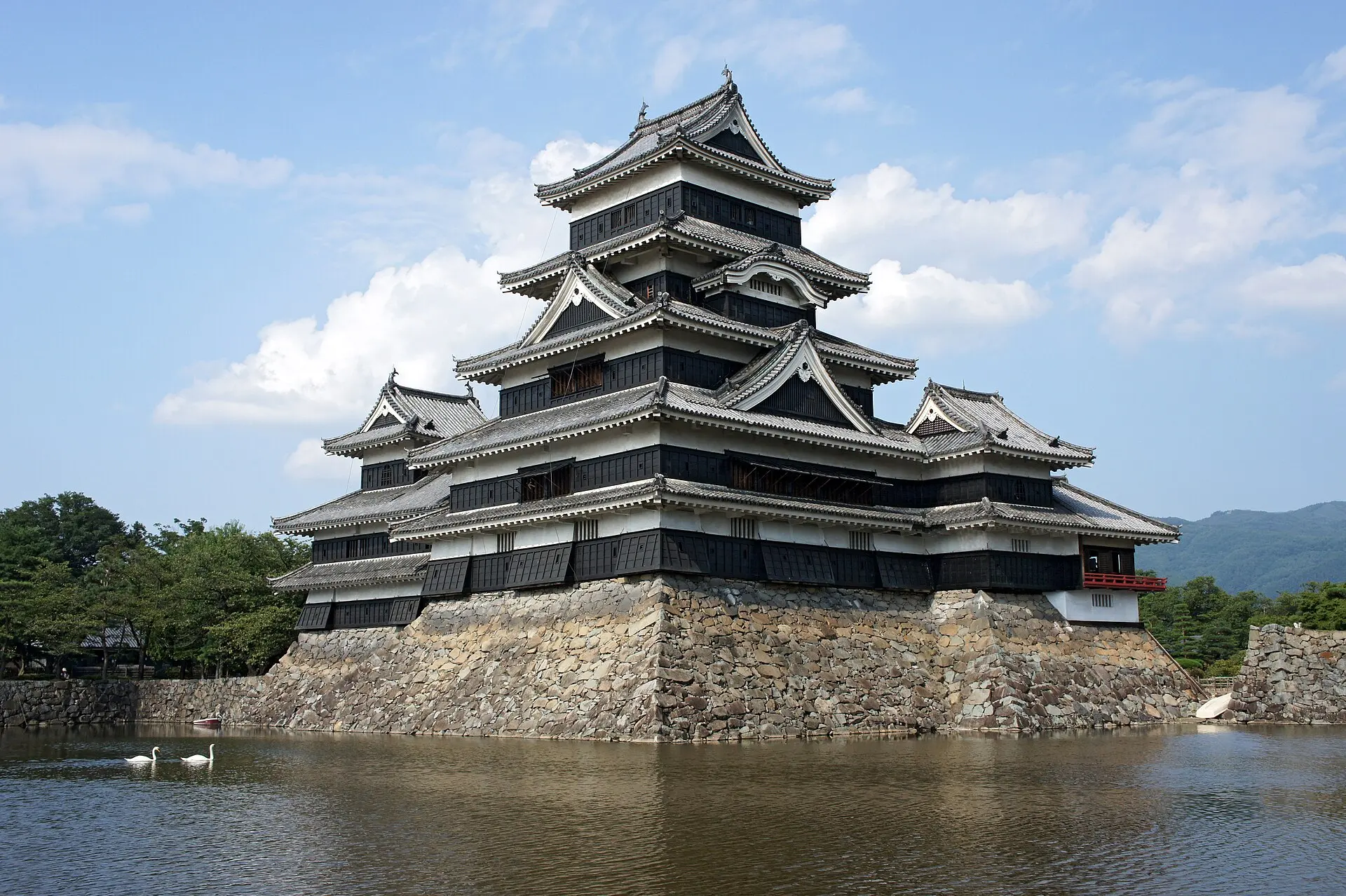
Matsumoto Castle was built in the late 16th century and is one of the few castles in Japan whose original main keep has survived; it is one of five castles designated as National Treasures. Because of its black-lacquered wooden cladding, it is known as Karasu-jō, or Crow Castle. Inside, steep wooden staircases lead up through six floors, past arrow slits and weapon collections. The keep is especially beautiful when reflected in the moat, in April beneath cherry blossoms. North of the castle stands the Kaichi School, built in 1876, a building in a pseudo-Western style that was also declared a National Treasure in 2019.
Sights in Matsumoto
Between the station and the castle lie two streets with real character. Nawate-dōri along the Metoba River is decorated with frog figures and packed with small snack stands and secondhand shops. Across the river stretches Nakamachi, where white storehouses with black lattice plasterwork, known as kura, now house cafés, craft shops, and sake stores. The city's art museum honors Yayoi Kusama, who was born here, with a collection of her own; even the polka-dotted facade and the flower sculpture at the entrance catch the eye. The Japan Ukiyo-e Museum on the edge of town holds one of the largest woodblock print collections in the country. In May, the craft scene gathers at the Crafts Fair Matsumoto in Agatanomori Park.
Food and Culture
Shinshū soba, made from buckwheat grown on the highland plateaus, is a must here. Sanzoku-yaki, chicken marinated in garlic and deep-fried, is a local specialty, as is basashi, raw horse meat sashimi, which not everyone cares to try. Clear spring water feeds fountains in the old town and sake breweries. Every summer, the Seiji Ozawa Matsumoto Festival draws classical music lovers; it was founded by the conductor Seiji Ozawa.
City Life and History
Matsumoto grew up as a castle town of the lords of the Ishikawa and, later, Toda families, and its layout, with artisan quarters and temple districts, is still recognizable today. The city museum next to the castle tells the story of silkworm farming and of trade along the Salt Road, which linked the inland region with the Sea of Japan. Fountains splash throughout the city center, and locals fill bottles with water from them. In the evening, Matsumoto is relaxed: small bars, jazz cafés, and izakaya are scattered through the alleys east of the station and along the river. Many climbers spend the night here before setting off and swap route tips over a beer.
Getting Around and Day Trips
The Azusa limited express connects Matsumoto with Shinjuku in about two and a half hours; the Shinano runs from Nagoya. The small Shinshū-Matsumoto Airport (MMJ) has domestic connections. In the city you get around on foot or by bus. The best time to visit is May through October, when the Kamikōchi valley, with its view of the Hotaka peaks, is accessible by bus. Private cars are banned there, which is exactly what makes the hikes along the clear Azusa River so peaceful. Other excursions lead to the hot-spring village of Shirahone, the Norikura Highlands, or the Utsukushigahara Plateau.