Discover Himeji: The White Heron Castle
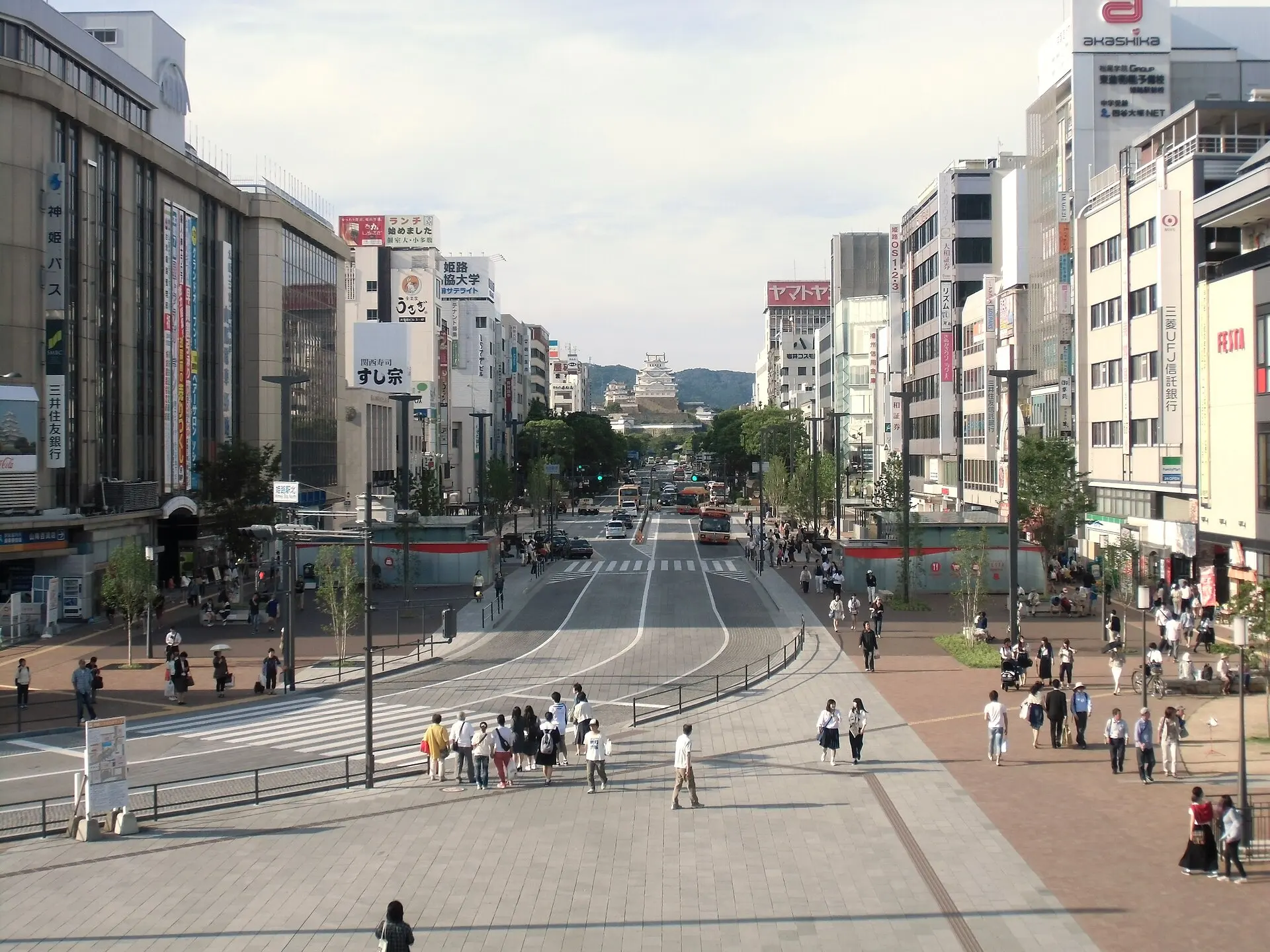
Travel guide · editorialYou can see it the moment you leave the train station, at the end of the wide boulevard: the white castle that brings most visitors to Himeji. You can plan a trip to Himeji as a day trip from Osaka or Kyōto, but if you stay longer, you'll discover a temple mountain, gardens, and a distinctive oden culture alongside the World Heritage site.
Himeji Castle: The White Heron Above the City
Himeji Castle was one of the first sites in Japan to be added to the UNESCO World Heritage List, in 1993. It took its present form in the early 17th century under Ikeda Terumasa; the five-story main keep and numerous outbuildings have survived wars, earthquakes, and the air raids of 1945. Because of its brilliant white plaster walls, it is known as Shirasagi-jō, the White Heron Castle, and since the major restoration that ended in 2015, it shines especially bright. The route up leads through a maze of gates, walls, and arrow slits designed to confuse attackers. Visitors who don't live in Himeji have paid a considerably higher admission fee since 2026; early in the morning is the quietest time to visit.
Things to See in Himeji
Just west of the castle lies Kōko-en, a complex of nine Edo-style gardens laid out in 1992 on the foundations of former samurai residences. North of the moat, the Hyogo Prefectural Museum of History and the art museum, housed in a red-brick building that was once a military depot, round out a visit. About half an hour away, a cable car climbs Mount Shosha to Engyō-ji temple, whose imposing wooden halls in the forest served as a backdrop for the film "The Last Samurai."
Eating in Himeji
Himeji oden is eaten with ginger-soy sauce, either drizzled over the top or served as a dip. For breakfast, locals at cafés order almond toast, toasted bread with almond butter, a local specialty. The region also produces sake from the Harima Plain, oysters from the Harima Sea, and Ibo-no-Ito, fine somen noodles from the west of the prefecture. Restaurants and izakaya in Himeji are found mainly in the Miyuki-dōri and Omizosuji arcades between the station and the castle.
Excursions Around Himeji
Himeji makes a good base for excursions into the Harima region. In Tatsuno, a small castle town, light soy sauce has been brewed for centuries; a museum in an old brewery tells the story, and the town's lanes have earned it the nickname Little Kyōto. Farther west lies Akō, home of the famous 47 Rōnin, whose tale of revenge lives on at Ōishi Shrine and in the remains of the castle. Kōbe, with its harbor and Chinatown, is only a little over half an hour away by rapid train.
Festivals, Getting Around, and the Best Time to Visit
On October 14 and 15, the Nada Kenka Matsuri takes place in the Shirahama district, a brawling festival in which bearers smash heavy shrine palanquins against one another. By Shinkansen, Himeji is reachable from Shin-Ōsaka in about 30 minutes and from Kyōto in just under an hour; the nearest airports are Kōbe (UKB), Itami (ITM), and Kansai (KIX). It's about a 15-minute walk from the station to the castle. Late March and early April, when the cherry trees bloom around the castle, is the most beautiful but also the busiest time to visit; fall is quieter and just as pleasant. Boats to the Ieshima Islands depart from Himeji Port.