Discover Hakodate: Star Fortress, Harbor, and Night Views
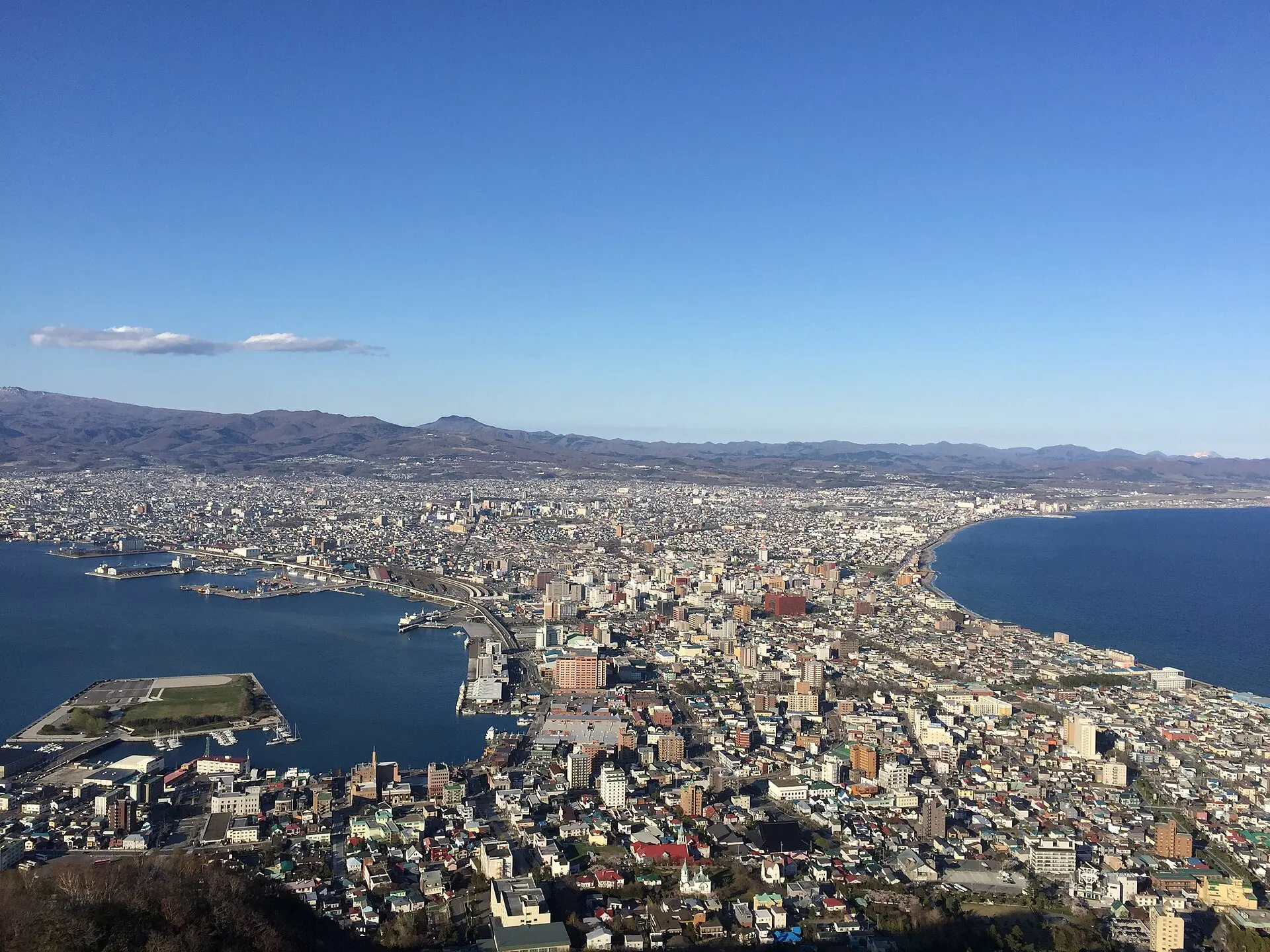
Travel guide · editorialWhen the lights flare up between two bays at dusk and the peninsula looks like a glowing hourglass, you understand why Japanese travelers head to southern Hokkaido just for this view. A trip to Hakodate combines harbor history, Western-style churches, and arguably the island's most famous fish market.
An Early Treaty Port
In 1859, Hakodate was one of the first ports Japan opened to foreign trade after two centuries of isolation. Consuls, merchants, and missionaries from Russia, Great Britain, and the United States settled here, and their legacy still shapes the Motomachi district at the foot of the mountain. The white Russian Orthodox Church of the Resurrection, the Catholic church, and the former Hakodate Ward Public Hall in light blue and yellow stand just a few steps from one another. Steep lanes like Hachiman-zaka lead down to the water and open up views of the harbor basins.
Sights in Hakodate
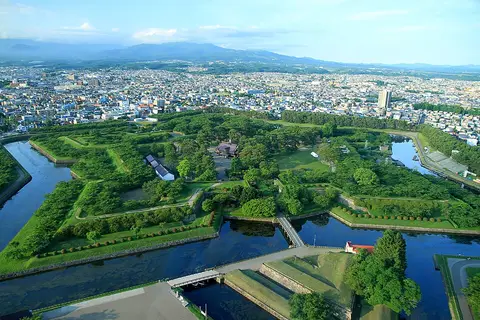
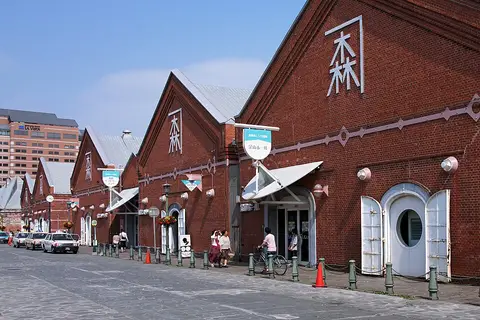
The best-known landmark is Goryōkaku, a star-shaped fortress modeled on European designs and completed in 1864. This is where the Boshin War ended in 1869, when the troops of the short-lived Republic of Ezo surrendered; the samurai Hijikata Toshizō fell in the fighting and remains a cult figure to this day. The star shape is best seen from the neighboring observation tower, and in spring it is lined with cherry blossoms. Mount Hakodate can be reached in just a few minutes by cable car; the night view is considered one of the most beautiful in Japan. At the harbor, the red-brick Kanemori warehouses now house shops and cafés.
Eating in Hakodate: Morning Market and Salt Ramen
Getting up early pays off: the morning market next to the train station opens at dawn, and the stalls serve bowls of sea urchin, salmon roe, and crab. Especially typical is fresh squid, which you can sometimes catch yourself in tanks and which is then sliced paper-thin. Hakodate is also the home of shio ramen with a clear salt broth, which is quite different from the heavy miso soups of Sapporo. A local institution is the burger chain Lucky Pierrot, with whimsically decorated branches found only in this area.
Onsen and Excursions Nearby
The hot spring town of Yunokawa lies on the edge of the city right by the sea and can be reached by streetcar; in winter, macaques bathe in hot water in the botanical garden there. Half an hour to the north, Onuma Quasi-National Park beckons with islands in the lake and the Komagatake volcano, ideal for bike rides or canoe trips. The best time to visit runs from June to October, when it is pleasantly cool; in winter, snow and illuminations cast the brick warehouses in a special light.
Getting Around Hakodate
Hakodate Airport is only about 20 minutes from the center by bus. Since 2016, the Hokkaido Shinkansen has reached Shin-Hakodate-Hokuto Station through the Seikan Tunnel, and from there a shuttle train takes about 20 minutes to the city center. Once in town, the two streetcar lines are the most practical way to get around: they connect the station, Motomachi, Goryōkaku, and Yunokawa. Day passes are valid on streetcars and buses. If you want to go up the mountain in the evening, take the cable car early: long lines form shortly before sunset, and in fog the panorama sometimes disappears entirely. Alternatively, buses run up a mountain road, though it is closed in winter.