Discover Akita: Lantern Poles, Kiritanpo, and Sake
Travel guide · editorialBamboo poles forty feet long, hung with dozens of glowing paper lanterns and balanced on a forehead or hip: this is the image Japanese people associate with Akita. A trip to the prefectural capital on the Sea of Japan also reveals hearty winter dishes, good art, and the quiet side of northern Japan.
The Kantō Festival in August
From August 3 to 6, the Kantō-Ōdōri street turns into a stage: around 280 bamboo poles carrying thousands of lanterns in total are lifted high by men in festival dress and balanced on a hand, forehead, shoulder, or hip, accompanied by drums and flutes. The lanterns are meant to resemble bundles of rice and are an offering for a good harvest. If you aren't visiting in August, you can lift the poles yourself at the Kantō Museum and learn more about the history of the festival.
Sights in Akita
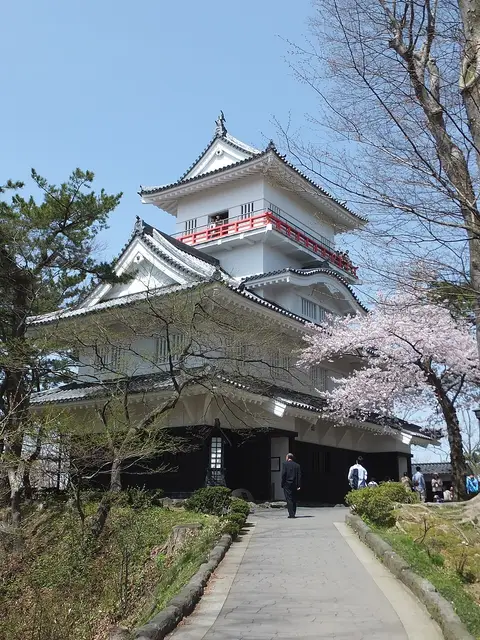
Senshū Park sits in the middle of the city on the grounds of Kubota Castle, where the Satake lords resided from the 17th century. A reconstructed watchtower offers views, and cherry blossoms bloom here in spring, followed by azaleas along the moat in June. Across the way stands the Akita Museum of Art, a building by Tadao Andō whose centerpiece is Tsuguharu Foujita's huge mural "Events in Akita." In the old district along the Asahi River, warehouses and merchant houses recall the days when Akita was an important port for the Kitamaebune trading ships. From the Port Tower Selion at the harbor, you can see all the way to Mount Chōkai on a clear day.
Eating in Akita: Kiritanpo and Sake
The best-known specialty is kiritanpo: mashed rice wrapped around cedar skewers and toasted over an open fire, then simmered in a chicken broth stew with maitake mushrooms, leeks, and burdock root. Other local favorites include hatahata, a winter sandfish, and iburigakko, smoked pickled daikon radish. Akita is one of Japan's major sake regions, and many breweries in the prefecture offer tastings. In the evening, people gather in the Kawabata district, the traditional nightlife strip with izakaya and small bars.
Getting There, Day Trips, and Best Time to Visit
The Akita Shinkansen Komachi takes just under four hours from Tokyo, and Akita Airport is about 40 minutes south of downtown. A worthwhile excursion takes you to the Oga Peninsula, home of the Namahage, demonic figures who scare lazy children at New Year's; a museum displays masks and customs. The best time to visit is between June and October. Winters bring heavy snowfall, but that is when the stew and hot sake taste best.
Akita Dogs, Markets, and Nature
The prefecture is the home of the Akita Inu, the sturdy dog breed that includes the loyal Hachikō, who waited for years at Shibuya Station in Tokyo for his deceased owner. In the city, there are occasional meet-and-greet stations where you can see the dogs up close. The market near the train station sells fish, vegetables, and specialties such as Inaniwa udon from the south of the prefecture, thin, flat noodles that are pulled by hand. Nature lovers can continue on to Lake Tazawa, the deepest lake in Japan, or to the samurai district of Kakunodate with its weeping cherry trees, both easily reached by Shinkansen.