
Akita Prefecture: Samurai Towns, Onsen, and Kanto Lanterns
Travel guide · editorialA vacation in Akita Prefecture is a journey into Japan's rural north, with samurai districts beneath weeping cherry trees, secluded hot spring villages in the forest, and the deepest lake in the country. Akita is also the home of the dog breed of the same name, whose most famous representative, Hachikō, has a monument in Tokyo. The prefecture is sparsely populated, and nature is all the more present.
Landscape and Location
Akita lies in the northwest of the Tōhoku region on the Sea of Japan. In the east, the Ōu Mountains form the border with Iwate; Mount Chōkai rises in the south, and the Shirakami Mountains, with their primeval beech forest, in the north. The Oga Peninsula juts out into the sea, and Lake Tazawa near Semboku, at more than 420 meters deep, is the deepest in Japan. Rivers such as the Omono and the Yoneshiro cross fertile rice plains around Yokote, Daisen, Yurihonjō, and Noshiro.
Sights in Akita Prefecture
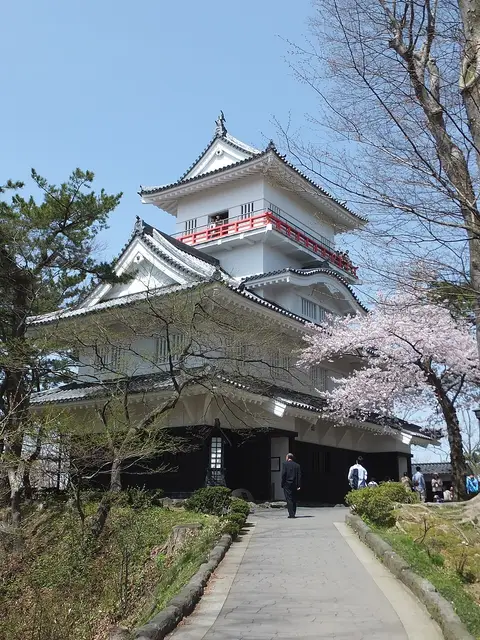
Kakunodate in Semboku preserves a samurai district with black wooden fences and manor houses, above which weeping cherry trees bloom in spring; along the Hinokinai River, cherry trees form a tunnel several miles long. Nyūtō Onsen consists of seven inns in a beech forest, including Tsurunoyu with its milky-white outdoor bath and thatched-roof buildings. On Lake Tazawa stands the golden statue of Princess Tatsuko, who according to legend was transformed into a dragon. On the Oga Peninsula, the Namahage, demons in masks and straw capes, visit homes on New Year's Eve to scare lazy children; the ritual is UNESCO intangible cultural heritage. Ōdate is home to the Akita dogs, which you can visit at the museum. In fall, the forests in the Dakigaeri Gorge near Semboku turn a brilliant red, and the Shirakami Mountains on the border with Aomori offer hikes to the Anmon Falls.
Festivals and Culture
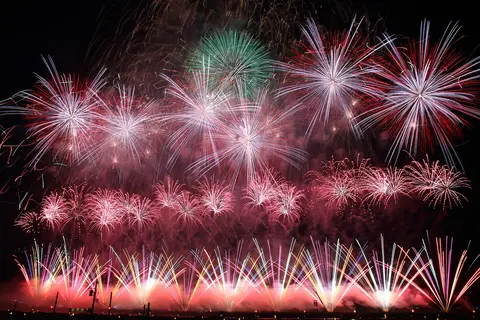
The Kanto Matsuri in Akita, held August 3–6, is among the great summer festivals of Tōhoku: performers balance bamboo poles more than 30 feet long, hung with dozens of lanterns, on their foreheads, shoulders, or hips. In February, Yokote builds kamakura, snow huts in which children treat guests to rice cakes. The Ōmagari fireworks in Daisen are among the three most important fireworks competitions in Japan. Crafts such as the kabazaiku cherry-bark work from Kakunodate and Kawatsura lacquerware remain alive today.
Food and Drink
Kiritanpo, rice sticks grilled over a fire, are cooked into a stew with chicken broth, mushrooms, and leeks. Inaniwa udon are thin, silky noodles hand-stretched in Yuzawa and counted among Japan's three great udon. Iburi-gakko, pickled daikon radish smoked over wood, and hatahata, sandfish from the Sea of Japan, are part of the winter cuisine. Yokote yakisoba is served with a fried egg and fukujinzuke. Akita is one of the great sake regions, and Akita Komachi rice is known throughout the country.
Getting There and Best Time to Visit
The Akita Shinkansen runs from Tokyo via Morioka to Akita in just under four hours, stopping at Tazawako, Kakunodate, and Ōmagari. Akita Airport serves Tokyo, Osaka, and Sapporo. For Nyūtō Onsen and Oga, you'll need a bus or rental car. The best times to visit are late April for the cherry blossoms in Kakunodate, early August for Kanto, and October for the fall foliage. In February, snow festivals and snow-covered onsen are a draw.