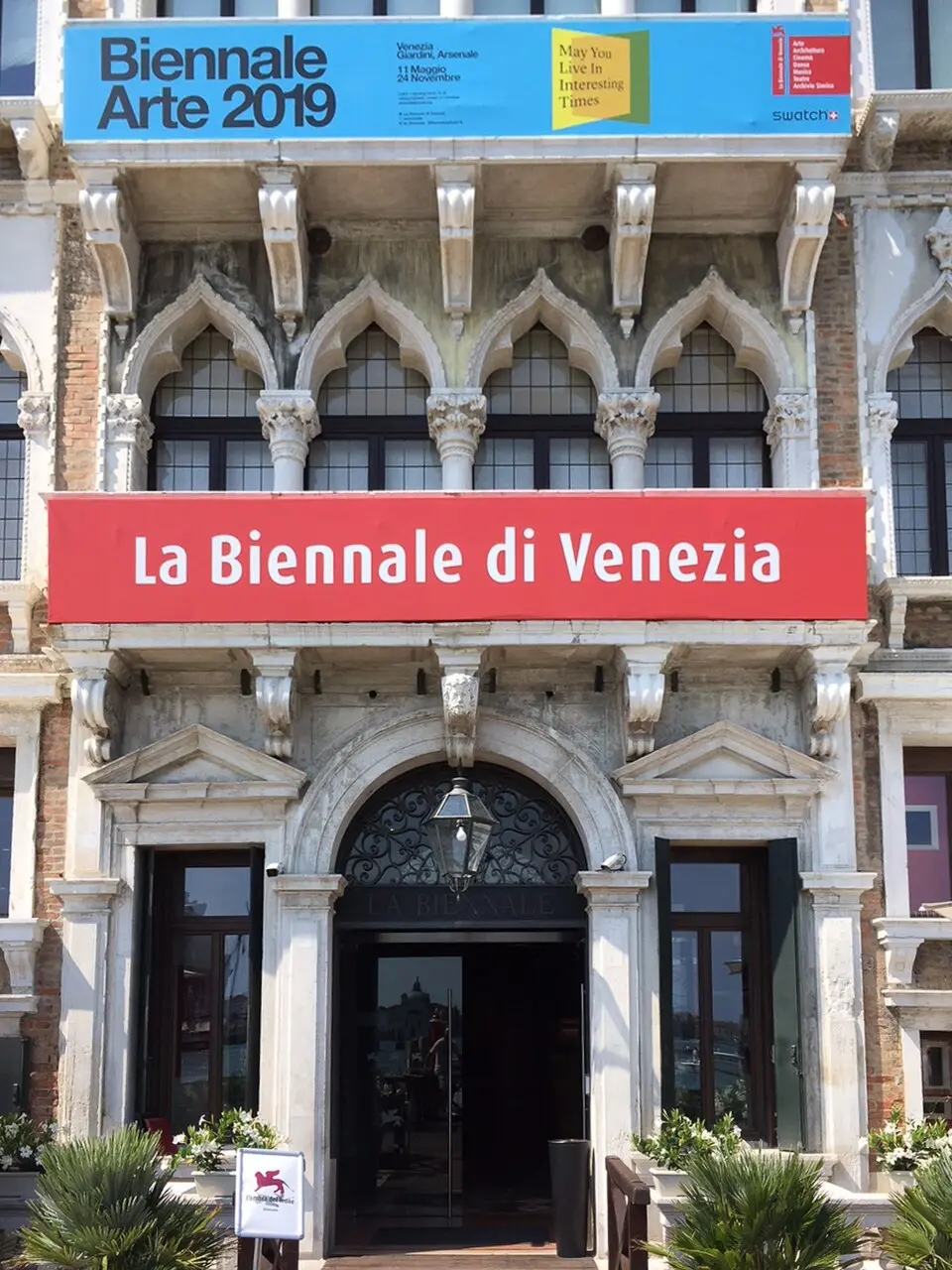
About Padiglione Venezia
The Padiglione Venezia, known in German-speaking countries as the German Pavilion, is one of the most important architectural and cultural sites of the Venice Biennale. It stands in the Giardini della Biennale, also called the Napoleonic Gardens, in the eastern district of Castello. This complex is the main venue of the international art exhibition, which has been held every two years since 1895 and is considered the oldest biennial and the oldest international exhibition of contemporary art. While a total of 28 countries present themselves in national pavilions in the gardens, the German contribution here carries particular historical and political weight. The pavilion serves not only as an exhibition space for current art but is itself a historical document that reflects the eventful history of Germany and Europe.
The history of the building begins in 1909, when it was first erected as the Bavarian Pavilion. The Venetian architect Daniele Donghi designed the building according to classical principles. It was meant to represent the cultural contribution of the Bavarian state to the Biennale. Just three years later, in 1912, it was renamed Padiglione della Germania. This change of name expressed the claim that the building now embodied the official cultural contribution of the entire German Empire to the international exhibition. The pavilion thus became a central place for Germany to present itself on the international stage.
A decisive change in the building's history took place in 1938, when the Nazis remodeled the pavilion. The German architect Ernst Haiger was responsible for the alteration. He replaced the original Ionic columns with four massive rectangular piers supporting a pedimentless architrave. These structural interventions gave the building a far more monumental appearance and turned it into another exhibition building for the self-presentation of the Third Reich. The architecture thus became an instrument of political propaganda, which would shape the later engagement with the site in the postwar period.
After World War II, the Federal Republic of Germany took over the property in 1950. The question of how to deal with a building shaped by the Nazis was a complex one. A plan submitted by Arnold Bode to redesign the exterior was not carried out because of financial constraints. Only the imperial eagle and the swastikas were removed. Plans to demolish the building entirely were rejected. Instead, the interior was renovated in 1964, changing the central room through the removal of a partition wall and the installation of a lowered, translucent ceiling. These interventions were later judged to have harmed the original fabric of the building.
It was only after German reunification that the discussions about demolition were taken up again. The decision, however, came down in favor of a renovation, which was carried out in 1995. Today the building is protected as a monument under Italian law. This decision underscores the significance of the site as a historical legacy that is not simply to be eliminated but preserved in all its complex history. The pavilion is thus a place where the past is not denied but integrated into the present of contemporary art.
In the years after World War II, the Biennale mostly showed retrospective exhibitions of German art from the first half of the 20th century. These exhibitions were often devoted to artists whom the Nazis had branded "degenerate" and persecuted. Only from 1964 on did the emphasis shift more toward contemporary art and individual artists who created their own works for the exhibition. Engagement with the history of the site was often the subject of the works on display, especially in the 1960s and 1970s. The pavilion's architecture thus provided a provocative setting for critical reflection on German history.
The German Pavilion is run by the Federal Republic of Germany, which also owns the property. The Federal Foreign Office is responsible for commissioning the German contribution. It appoints a curator, officially referred to as the commissioner. This person is responsible for selecting the artists and organizing the exhibition. The selection of artists and the design of the contribution follow a rigorous process intended to ensure that the German entry reflects the diversity and currency of the German art scene.
The history of the Biennale itself goes back to 1893, when the Venice city council decided to launch an exhibition of Italian art every two years. In the winter of 1894/1895, the Palazzo dell'Esposizione was built for the first international art exhibition. The opening in April 1895 was a great popular success. National committees were appointed to select the works, including a German committee made up of prominent artists such as Max Liebermann and Anton von Werner. These early years laid the foundation for the event's international importance.
Today the Padiglione Venezia is a place where visitors can experience the tension between historical burden and artistic freedom. The architecture, which once served the propaganda of power, is now used by contemporary artists who often take a critical approach to the site's history. The pavilion is an example of how architecture and art work together to address social issues. Here, visitors can not only marvel at current artworks but also discover the architectural traces of the past, which recall the difficult history of the 20th century.
The significance of the pavilion goes beyond the art exhibition itself. It is a symbol of international networking and cultural exchange. The Venice Biennale, which also includes music, film, theater, and dance festivals, is a multidisciplinary event of worldwide renown. The German Pavilion is a fixed part of this ensemble and attracts numerous visitors every year who are interested in the development of contemporary art. Engagement with the site and its history remains a central theme that prompts visitors to reflect.
In summary, the Padiglione Venezia is a place of special historical and cultural value. It embodies the complex history of Germany in the 20th century and today serves as a stage for contemporary art. The architecture, shaped by the 1938 remodeling, is an unchanging element that reminds visitors of the past. At the same time, the pavilion offers a space for new ideas and artistic experimentation. For visitors to the Biennale, a visit to the German Pavilion is therefore an enriching experience that combines art, history, and architecture in a unique way.
At a glance
- Category
- Museum › Art museums
- Rating
- no reviews yet · write a review
- Address
30100 Venice, Italy- Phone
- +390415242851
- Website
- www.labiennale.org
- segreteria@padiglionevenezia.it
- Coordinates
- 45.42902° N · 12.36003° E
- Data quality
- confidence 0.92
- Identifier
- ID 0c004932-661…
Location & surroundings
Toggle layersRatings & comments
none yetNear Padiglione Venezia
closest 5 per category · 2 kmSights
Restaurants
Museums
Hotels
More:Art museums in Venice (42)All museums in Venice (135)
241 places within 2 km loaded.
Don't miss in Venice
All sights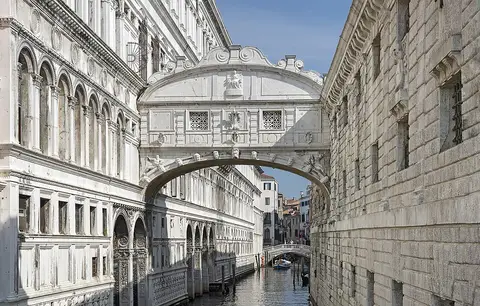 Monuments01
Ponte dei Sospiri
San Marco, Sestiere San Marco, 1 · Venice● Website● Phone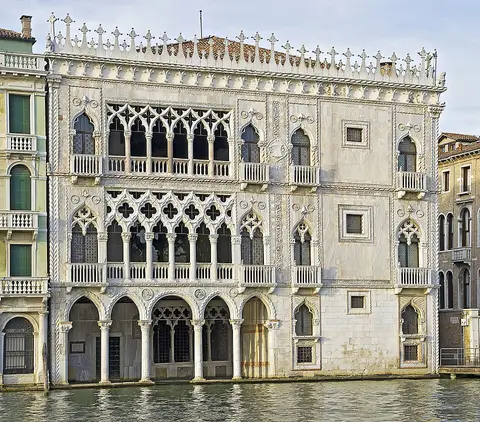 Palaces02
Ca' D'Oro
Ca' D'Oro Venezia · Venice● Website● Phone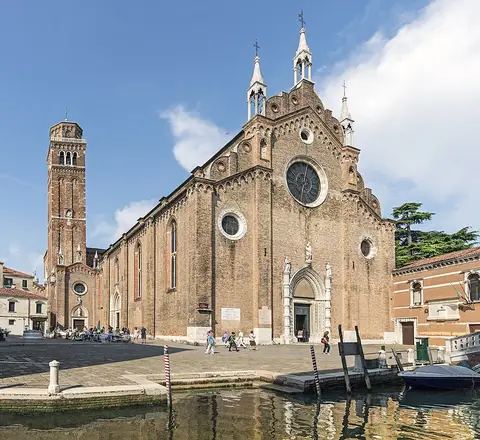 Historic sites03
Venezia Santa Maria Gloriosa Dei Frari
No address · Venice○ Website○ Phone Monuments04
You need a free account to leave reviews and photos – that keeps comments genuine and lets you edit them later.