About Museo Antichità Di Torino
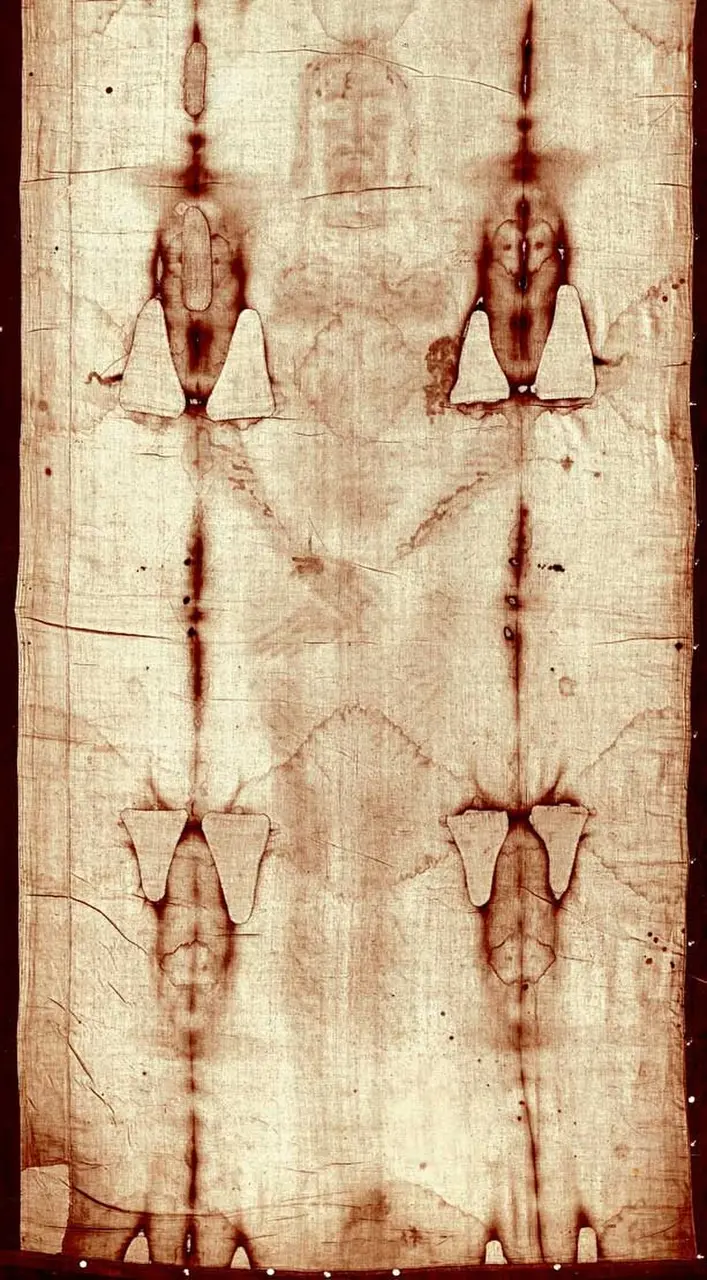
The Museo Antichità di Torino, often known in the narrower sense as the home of the Shroud of Turin, houses one of the most discussed and most studied objects in history. At the center of attention is a linen cloth kept in the Chapel of the Shroud of Turin Cathedral, the Duomo di San Giovanni. The cloth measures about 4.36 meters (14.3 feet) long and 1.10 meters (3.6 feet) wide and bears a full-length image of a human figure on its front and back. The chapel itself was built in the late 17th century to give the cloth a worthy and protected home. For visitors, the site is not only a historic landmark but also the setting of a centuries-long debate over the origin and meaning of this mysterious artifact.
The cloth's history is closely tied to the House of Savoy, which owned it for centuries. The oldest reliably documented written references date from the mid-14th century. At that time, the French knight Geoffroy de Charny was commissioned to build a collegiate church in Lirey, where the cloth was first shown to the public in 1357. It was a prestige object that the rulers of the Savoy family carried with them from castle to castle on their travels and displayed in various places. Not until 1578 was the cloth moved to Turin, the family's new capital, where it remains to this day. This long journey through history has given the cloth a special status that goes far beyond that of an ordinary museum piece.
The authenticity of the shroud has been disputed from the start. As early as the 14th century, Pierre d'Arcis, the Bishop of Troyes, expressed serious doubts about its genuineness. In a letter of complaint to the antipope Clement VII, he accused those responsible of passing off a cunningly painted cloth as the actual burial shroud of Christ. The bishop argued that the Gospels mention no such cloth bearing an image of a body, and that an artist had confirmed the truth that it was a work of human skill. These early doubts were supported by documents in which the cloth's then owners referred to it only as an "image" or "representation." Despite this criticism, veneration of the cloth grew ever more intense over time, especially after it came into the possession of the House of Savoy.
A turning point in how the cloth was perceived came with the introduction of photography in the late 19th century. When the first photographic negative of the shroud was made in 1898, it became clear that the image looked far more three-dimensional and detailed in the negative than in the original. This discovery set off a wave of interest and made the cloth one of the most widely covered archaeological objects in the media. The worldwide response meant the cloth became one of the most intensively studied objects of all. The sheer number of elaborate investigations has markedly raised its profile, unlike that of many other historical objects, and made it a central point of discussion among theology, history, and science.
The Catholic Church does not classify the cloth as a relic in the sense of Christ's actual burial shroud, but as an icon. An icon is more than a mere work of art; it is considered an existential link between the viewer and the person depicted, and indirectly also between the viewer and God. This theological classification became firmer after the scientific studies of the 20th century. While many of the faithful continue to revere the cloth as the one in which Jesus was buried, official Church teaching stresses its iconic character. This distinction is important for understanding the religious significance of the site without ignoring the scientific findings.
Scientific studies have examined the cloth intensively over recent decades. One of the most important methods was radiocarbon dating, carried out in 1988. A small sample was taken from the edge of the cloth and analyzed by three independent laboratories. The results dated the cloth to between 1260 and 1390 A.D., with a most probable value of 1325. This dating strongly suggests that it is a medieval artifact created around the time of its first documented mention. The method of accelerator mass spectrometry, which was needed for this precise dating, was developed only in the 1980s and made it possible to analyze very small samples.
The question of how the image on the cloth came about remains puzzling to this day. Various hypotheses try to explain how the image of a crucified man appeared on the linen. One theory assumes a painting, made in the 14th century using special linen-painting techniques with tempera paint that could produce transparent effects. Other researchers favor the idea of a contact imprint, in which a body lay in the cloth and caused discoloration through chemical or thermal processes. There are also theories proposing a kind of photographic method, in which light and chemical reactions would have produced an image on the cloth. Despite numerous experiments, no method has been able to fully and satisfactorily explain all the properties of the shroud image, such as its sharpness and three-dimensionality.
Physically preserving the cloth demands special care. After a fire in the castle chapel at Chambéry in 1532, the cloth bore symmetrical burn marks and holes, which nuns patched. In 1997, a fire broke out in the Chapel of the Shroud in Turin, and a firefighter rescued the cloth unharmed by smashing the protective bulletproof glass. Since then it has been kept in a special container filled with argon to protect it from environmental influences. Restoration work in 2002 removed the old patches and smoothed the creases caused by long storage. These measures underline the cloth's importance as a unique historical and religious object.
Public access to the shroud is severely limited. It stays almost entirely in its sealed shrine and is displayed only on rare occasions. These exhibitions are often tied to major Church feast days or anniversaries, such as a Holy Year or the commemoration of the cloth's transfer to Turin. On these occasions, thousands of the faithful flock to Turin to see the cloth. The last major public exhibition took place in 2015, while one planned for 2025 was canceled. The rarity of these showings adds to the site's mystical aura and makes every visit a special experience.
For visitors to Turin Cathedral and the Chapel of the Shroud, the site is a place of reflection and wonder. The combination of the cathedral's imposing architecture and the quiet dignity of the chapel creates an atmosphere that invites you to pause. Even though the cloth itself is seldom on view, its presence remains palpable. The site's history, the scientific debates, and the religious significance merge here into a unique cultural heritage. The Museo Antichità di Torino is thus not just a repository but a living space where history, faith, and science meet, inviting visitors to engage deeply with one of humanity's greatest mysteries.
At a glance
- Category
- Museum › Museums (general)
- Rating
- no reviews yet · write a review
- Address
- Via 20 Settembre, 86
10122 Turin, Italy - District
- Circoscrizione 1
- Phone
- —
- Website
- www.museireali.beniculturali.it
- mr-to.edu@beniculturali.it
- Coordinates
- 45.07403° N · 7.68607° E
- Data quality
- confidence 0.99
- Identifier
- ID db8a84fd-161…
Location & surroundings
Toggle layersRatings & comments
none yetNear Museo Antichità Di Torino
closest 5 per category · 2 kmSights
Restaurants
Museums
Hotels
More:Museums in Circoscrizione 1 (69)All museums in Turin (135)
300 places within 2 km loaded.
Don't miss in Turin
All sights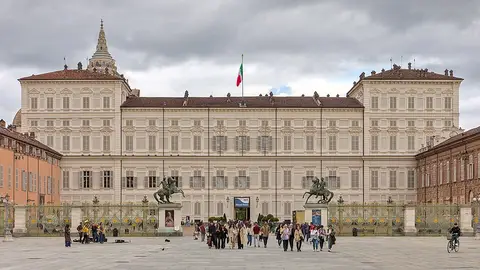 Historic sites01
Residences of the Royal House of Savoy
No address · Turin● Website○ Phone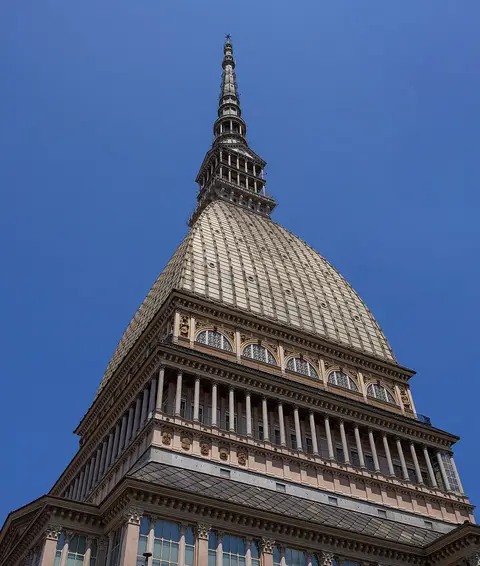 Historic sites02
Mole Antonelliana
Via Montebello, 20 · Turin● Website● Phone Castles03
Castello del Valentino
Viale Pier Andrea Mattioli 39 · Turin● Website● Phone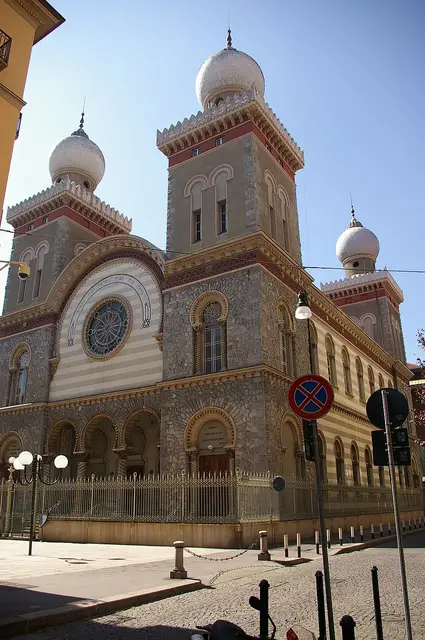 Historic sites04
You need a free account to leave reviews and photos – that keeps comments genuine and lets you edit them later.