About Museo Diocesano di Torino
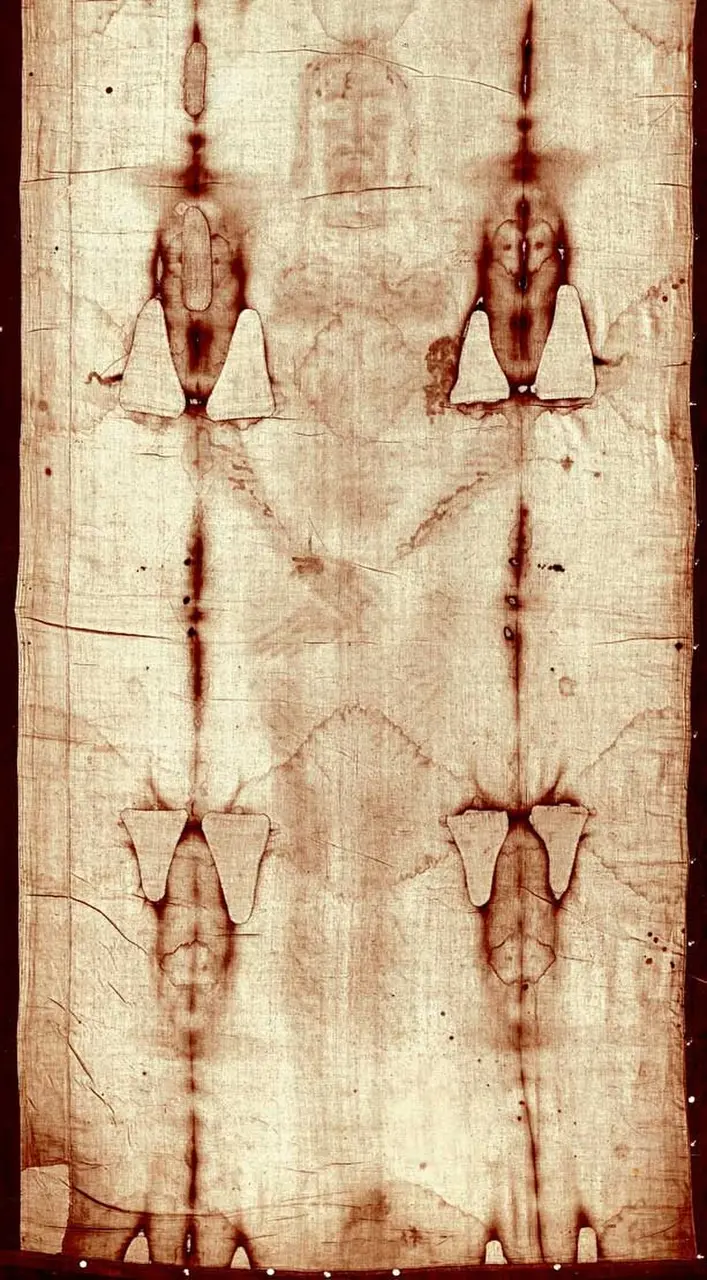
The Museo Diocesano di Torino in the Italian city of Turin is an important cultural and religious institution closely tied to the history of the Shroud of Turin. Although the museum itself houses a broad collection of ecclesiastical art, the focus of public attention and scholarly debate is the famous linen cloth kept in the Chapel of the Holy Shroud at Turin Cathedral. The chapel was built in the late 17th century and has served ever since as a protected home for the cloth, which measures 4.36 meters long and 1.10 meters wide and bears a full-body image of the front and back of a human figure. The close physical and institutional connection between the museum, the cathedral, and the cloth makes this place a major pilgrimage destination and a site of intensive research.
The history of the cloth is marked by controversy and changing ownership. The oldest undisputed written sources mentioning the cloth date from the mid-14th century. In 1357 it was first shown to the public at the collegiate church of Lirey in France, where it is documented by a pilgrim's medallion. Because of threats from marauding bands, it was moved to Saint-Hippolyte in 1418, where it remained for 34 years. In 1453 the cloth passed into the possession of the House of Savoy, which carried it along on its travels as a prestige object and displayed it in various places. It was not until 1578 that Duke Emmanuel Philibert of Savoy had the cloth transferred to Turin, where it has been kept ever since in the Cathedral of San Giovanni.
The authenticity of the cloth was questioned early on. In 1389, Pierre d'Arcis, the Bishop of Troyes, complained to the antipope Clement VII about the cloth, which he described as a cunningly painted work of art rather than a genuine relic. He argued that the cloth was the product of human craftsmanship, created for profit. This view was supported by documents in which the cloth was referred to only as an "image" or "representation." In 1392, Clement VII ruled that the cloth was not a relic but could be displayed as long as it was not presented as the burial shroud of Christ. With its transfer to the House of Savoy, however, the official assessment changed. In 1464, Pope Sixtus IV spoke of the cloth as "stained with the blood of Jesus," and in 1506 Pope Julius II dedicated a special feast day to it.
In the 16th century, the cloth survived a fire in the castle chapel at Chambéry. It suffered symmetrical burn marks and water stains from the firefighting, which nuns patched in 1534. After its transfer to Turin, it was kept in the Chapel of the Holy Shroud. In 1939 it was secretly moved to southern Italy to protect it from possible bombing and from seizure by the Nazis. It returned to Turin in 1946. After the end of the Savoy monarchy in 1946, it remained in the family's possession but was effectively placed in the custody of the Archbishop of Turin. In 1983, after the death of the last king, Umberto II, it was bequeathed to the pope and his successors, on the condition that it remain in Turin.
A dramatic event was the fire in the Chapel of the Holy Shroud on April 12, 1997. Firefighter Mario Trematore saved the cloth at the last minute by smashing its protective bulletproof glass. Since 1998, the cloth has been kept in a side chapel of the cathedral in a special argon-filled container to protect it from environmental influences. In 2002, conservation work was carried out in which the old patches over the burn holes were removed, a new backing cloth was sewn underneath, and the creases were smoothed out. These measures underscore the great importance that both the Church and science place on preserving this object.
Veneration of the cloth intensified in the late 19th century, when the first photographic negatives revealed a three-dimensional, lifelike image. This sparked worldwide media attention and made the cloth one of the most studied archaeological objects. The Catholic Church classifies the cloth not as a relic but as an icon. It is understood as an existential link between the viewer and the person depicted. Many believers nonetheless venerate it as the genuine burial cloth of Christ, in which Jesus of Nazareth was wrapped after the Crucifixion.
Scientific investigations, also known as sindonology, have occupied researchers intensively since the first photograph was taken in 1898. Biologists, anatomists, and physicians conducted various tests to examine its authenticity. In 1978, the Shroud of Turin Research Project (STURP) took place, in which samples were taken and analyzed. The results were controversial. Some researchers found evidence of pigments such as ocher and vermilion, pointing to medieval painting. Others claimed it was real blood. The debate over the chemical nature of the images remains unresolved.
One of the most important scientific investigations was the radiocarbon dating of 1988. Three independent laboratories dated a small sample of the cloth to between 1260 and 1390 A.D., with a most probable date of 1325 A.D. This result strongly suggests a medieval origin and contradicts the theory that the cloth dates from the 1st century. The dating was challenged by proponents of its authenticity, who pointed to possible contamination or unrepresentative sampling. Scientists consider these objections unlikely, however, since the samples were carefully cleaned and statistical analysis confirmed the results.
The publication of the dating results in the journal Nature was widely regarded as the conclusion of scientific research on the cloth. Since then, the Catholic Church has permitted no further research on the cloth itself and emphasizes its status as an icon. Even so, publications continue to appear that claim its authenticity or question the dating. Various hypotheses about how the image was formed, such as contact imprint, action at a distance, or painting, have been discussed, but none has been able to satisfactorily explain all the characteristics of the image. Radiocarbon dating remains the strongest argument for a medieval origin.
Visitors to the Museo Diocesano di Torino and the cathedral have the opportunity to experience the history and significance of the Shroud of Turin in the context of church art and history. The cloth is only rarely exhibited publicly, which underscores its special significance. The most recent public exhibitions took place on special occasions such as jubilees or papal visits. The next exhibition planned for the Holy Year 2025 was canceled by the Vatican. Despite its rare visibility, the cloth remains a central element of Turin's cultural and religious identity and attracts numerous visitors and pilgrims every year who are interested in the history, science, and spirituality of this fascinating object.
At a glance
- Category
- Museum › Art museums
- Rating
- no reviews yet · write a review
- Address
- Piazza San Giovanni, 4
10122 Turin, Italy - District
- Circoscrizione 1
- Phone
- +390115787018
- Website
- www.diocesi.torino.it
- museodiocesano@diocesi.torino.it
- Coordinates
- 45.07301° N · 7.68554° E
- Data quality
- confidence 1.00
- Identifier
- ID 854b7c76-96a…
Location & surroundings
Toggle layersRatings & comments
none yetNear Museo Diocesano di Torino
closest 5 per category · 2 kmSights
Restaurants
Museums
Hotels
More:Art museums in Turin (25)Museums in Circoscrizione 1 (69)All museums in Turin (135)
300 places within 2 km loaded.
Don't miss in Turin
All sights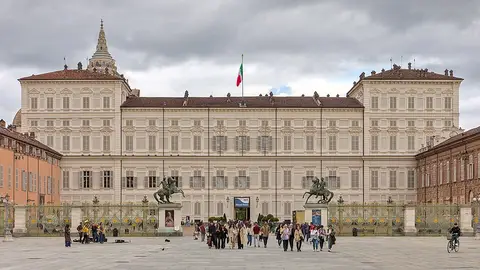 Historic sites01
Residences of the Royal House of Savoy
No address · Turin● Website○ Phone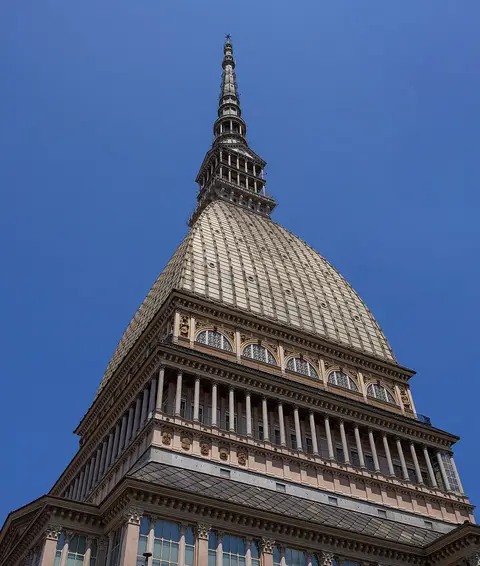 Historic sites02
Mole Antonelliana
Via Montebello, 20 · Turin● Website● Phone Castles03
Castello del Valentino
Viale Pier Andrea Mattioli 39 · Turin● Website● Phone Historic sites04
You need a free account to leave reviews and photos – that keeps comments genuine and lets you edit them later.