About Veii
Veii, known as Veio in present-day Italy, was one of the most important cities of the ancient Etruscans and lay about sixteen kilometers (ten miles) north-northwest of the center of Rome, on the Cremera River. Having grown out of settlements of the Villanovan culture, the city spread across a large plateau protected by natural barriers such as steep valleys. At its peak in the sixth and fifth centuries B.C., Veii closely resembled contemporary Rome. It was a rising community with a well-developed network of streets, played a central role in long-distance trade, and invested its wealth in large public building projects. The city was part of the powerful Etruscan League of twelve cities and controlled important trade routes, including the Via Salaria and the river trade on the Tiber, which gave it considerable economic power.
The history of Veii was closely bound up with its conflicts with the rising power of Rome. As early as the early Roman Republic, border disputes and military clashes broke out, as Rome sought to expand its territory at the expense of its Etruscan neighbor. These wars, which lasted for centuries, were marked by shifting truces and heavy battles, such as the defeat of the Roman Fabii at the Cremera. Tensions finally culminated in a ten-year war of annihilation that began in 406 B.C. The Roman siege was so grueling that the Romans even sought oracular guidance to secure victory, which points to the critical situation of their troops.
Veii was finally conquered in 396 B.C. by the Roman dictator Marcus Furius Camillus. Rather than storming the city by direct assault, the Roman soldiers entered it through an underground tunnel. After the city fell, its population was enslaved, the city was plundered, and the statue of the protective goddess Juno Regina was carried to Rome, to the Aventine Hill. Notably, the buildings of Veii were not completely destroyed, which played a role in later Roman history, when, after the Gallic conquest of Rome, it was proposed that the Romans relocate to Veii, a plan that was ultimately rejected.
After the conquest, Rome annexed the territory of Veii and incorporated it into new electoral districts. The city continued to exist as a modest settlement but lost its political importance. Over time, more and more non-Etruscans settled there. Under Emperor Augustus, Veii enjoyed a temporary revival when veterans were settled in the city and it was granted the status of a municipium. During this Julio-Claudian period, new public buildings were constructed, including a forum, a theater, and baths. Augustus's wife Livia owned a country estate nearby. Nevertheless, the city again declined in importance in the second century A.D. and was last mentioned in the fourth century.
Today, Veii is an important archaeological site that offers visitors a deep insight into Etruscan culture. The ruins lie on a plateau surrounded by a partially well-preserved tuff wall dating from the fifth century B.C. A technical masterpiece of that era is the Ponte Sodo, a water tunnel cut into the rock, which was already built in the sixth century B.C. In the southeast of the city is a fortified hill, while the Portonaccio Sanctuary lies in the northeast. This sanctuary was dedicated to the gods Apulu and Menrva and housed famous terracotta sculptures, which can now be seen in the Museo Nazionale Etrusco di Villa Giulia in Rome.
Among the most important testimonies of Veientine art are the large-scale sculptures from around 500 B.C., including the statue of the Apollo of Veii and the Head of Turms. These works are considered the city's main contribution to ancient art and are often associated with the sculptor Vulca. Outside the city walls are large necropolises with rock-cut tombs decorated with frescoes. Particularly well known are the Tomba Campana, which contains the oldest known Etruscan frescoes, as well as the Tomba delle Anatre and the Tomba dei Leoni Ruggenti. These tombs and the remains of the city bear witness to the rich history and cultural heritage of a city that was once one of the most important centers of the Etruscan world.
At a glance
- Category
- Sight › Historic sites
- Rating
- no reviews yet · write a review
- Address
- —
Rome, Italy - District
- Roma XV
- Phone
- —
- Website
- www.etruriameridionale.beniculturali.it
- —
- Coordinates
- 42.02389° N · 12.40139° E
- Data quality
- confidence 0.75
- Identifier
- ID f29d5d7b-2f0…
Location & surroundings
Toggle layersFAQ about Veii
quick answersWhat is Veii near Rome?
Veii, known in Italian as Veio and sometimes spelled Veji in German, was one of the most important cities of the ancient Etruscans. The historic site lies about sixteen kilometers (10 miles) north-northwest of central Rome on the Cremera River, in what is now Rome's Municipio XV. The city grew out of settlements of the Villanovan culture and spread across a large plateau naturally protected by steep valleys.
Why was the Etruscan city of Veii so powerful?
Veii owed its power above all to long-distance trade and its control of important trade routes. The city belonged to the Etruscan League of twelve cities and dominated, among other things, the Via Salaria and the river trade on the Tiber. At its peak in the sixth and fifth centuries B.C., Veii closely resembled contemporary Rome, had a well-developed network of streets, and invested its wealth in major public buildings.
How did Rome conquer Veii?
Veii was conquered in 396 B.C. by the Roman dictator Marcus Furius Camillus after Roman soldiers entered the city through an underground tunnel. This followed a ten-year war that began in 406 B.C., as well as centuries of conflict, including the defeat of the Roman Fabii at the Cremera. After the city fell, its population was enslaved, the city was plundered, and the statue of the protective goddess Juno Regina was taken to Rome and placed on the Aventine Hill.
What happened to Veii after the Roman conquest?
After the conquest, Veii was annexed by Rome and continued to exist as a modest settlement with no political importance. Under Emperor Augustus, the city enjoyed a temporary revival: it was resettled with veterans, received the status of a municipium, and was given a forum, a theater, and baths. From the second century A.D., Veii declined again and was mentioned for the last time in the fourth century.
What can you visit around Veii in Rome?
Near the Etruscan site of Veii in Rome stands the Cippo funebre di San Pancrazio, a historic gravestone. travelguide195 lists it about 835 meters (roughly half a mile) from Veii. This way, you can combine a visit to the ancient city with another historic site in Municipio XV.
Ratings & comments
none yetNear Veii
closest 5 per category · 2 kmRestaurants
Museums
None within 2 km.
Cocktail bars
None within 2 km.
More:Historic sites in Rome (1,014)Sights in Roma XV (23)All sights in Rome (1,312)
11 places within 2 km loaded.
Don't miss in Rome
All sights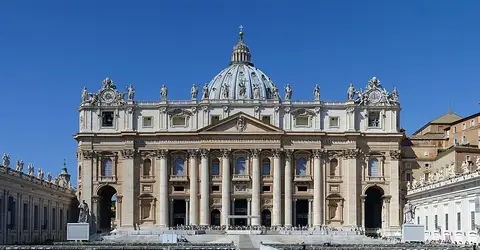 Historic sites01
The Dome at San Pietro Basilica
No address · Rome○ Website○ Phone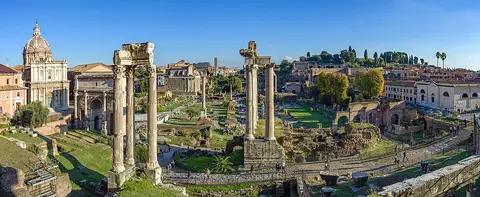 Historic sites02
Roman Forum
Via della Salara Vecchia, 5/6 · Rome● Website● Phone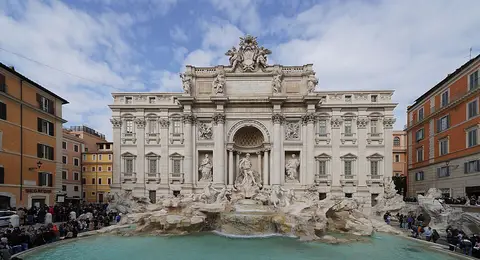 Historic sites03
Restauro Fontana di Trevi
Piazza di Trevi, 91 · Rome● Website○ Phone Monuments04
You need a free account to leave reviews and photos – that keeps comments genuine and lets you edit them later.