About Tempietto del Bramante
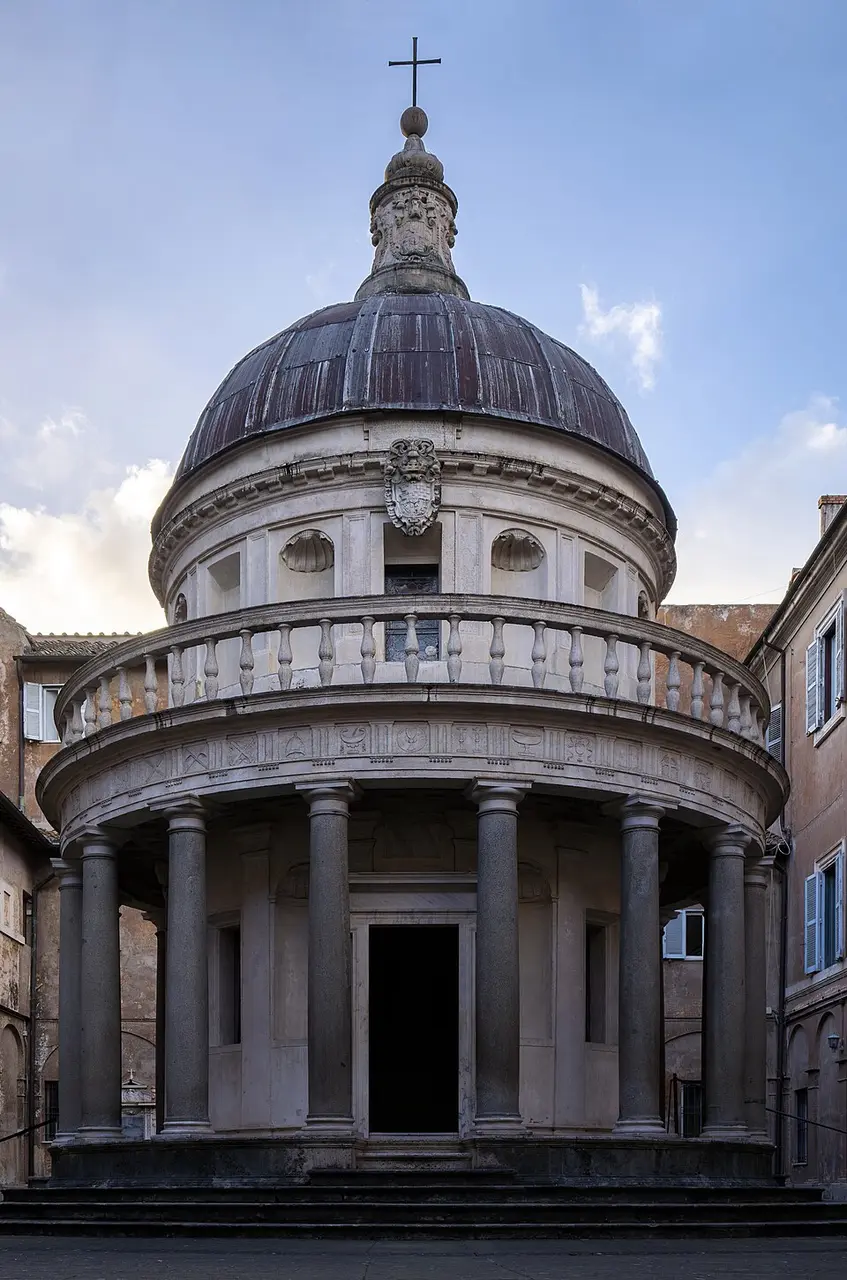
The Tempietto di Bramante is a small but architecturally groundbreaking building in Rome, regarded as a key work of the High Renaissance. It stands in an inner courtyard of the former monastery of San Pietro in Montorio in the Trastevere district, on the Janiculum Hill. The circular temple was built by the Italian architect Donato Bramante and stands on the spot where, according to Christian tradition, the Apostle Peter was crucified. The historical significance of this site lies in the masterful fusion of ancient temple architecture with new Roman design elements. Here Bramante created a harmonious ensemble of elegant proportions that serves not only as a memorial but is also considered the founding example of the centralized martyrium church in the history of Christian art.
The building history of the Tempietto is closely tied to the Spanish crown and the papal court. The Catholic Monarchs Ferdinand II of Aragon and Isabella of Castile had previously commissioned the church and the adjoining Franciscan monastery at this pilgrimage site. Cardinal Bernardino de Carvajal, the Spanish envoy to the papal court, commissioned Bramante on behalf of the monarchs to build a memorial at the exact site of the crucifixion. Bramante, who had come to Rome from Milan shortly before, designed and built the work between 1500 and 1508. An inscription that can be found in the crypt today dates the foundation to 1502. Bramante originally planned a larger complex with a round courtyard surrounded by colonnades, but only the central circular temple was ever realized. Why the rest was abandoned remains unclear, but it may be connected to Bramante's later commitment to the construction of St. Peter's Basilica.
Architecturally, the building is a masterpiece of the Renaissance. It has a circular plan and is built mainly of travertine. Three steps lead up to the stylobate, which is surrounded by a ring of sixteen gray granite columns in the Doric order. These columns enclose the inner chamber, the cella. The entablature bears a frieze with triglyphs and metopes depicting Eucharistic symbols such as chalices and patens. Above the colonnade is a balustrade leading to a light-filled drum, which in turn is topped by a hemispherical dome. The exterior of this upper story is decorated with alternating rectangular niches and niches topped with shell motifs. In this context, the circular form symbolizes perfection and the cosmic universe, underscoring the significance of the site as the burial place of the first pope.
Inside the chapel is a white, round space in which Doric pilasters alternate rhythmically with the openings in the walls. In the niches above the windows are Baroque-era sculptures of the four Evangelists. The focus is on the marble altar, which features a seated figure of the Apostle Peter. On the back of the altar is a relief depicting the martyrdom of Peter along with the heraldic emblems of the Spanish royal house. The dome inside is painted with a starry sky, lending the space a heavenly atmosphere. The floor is decorated with marble inlays reminiscent of medieval Cosmatesque work.
Beneath the Tempietto lies a crypt, reached by a double staircase at the back of the building. This vaulted, richly stuccoed space houses another altar with a statue of the Apostle Peter. Important historical inscriptions can also be found here, including the 1502 plaque documenting the year the Tempietto was founded, as well as an inscription by Pope Alexander VI from 1500. A circular opening in the marble floor and in the vaulted ceiling marks the spot where the cross of Peter is said to have been erected. The crypt and the Tempietto itself are open to the public today and offer visitors a deep insight into the religious and architectural history of the site.
Over the centuries, the complex underwent various alterations and restorations. In the 17th century, the dome was raised and a Baroque lantern was added. During the Roman Republic in the late 18th century, the complex was nationalized and the Tempietto was stripped of its metal parts, including the lead dome covering, which was temporarily replaced by a tile roof. Later restorations, including by Giuseppe Valadier, restored its original character. In 1876 the complex was returned to the Kingdom of Spain, which in 1881 designated it the seat of the Spanish Academy in Rome. The building still belongs to the Academy, which regularly maintains and restores the Tempietto, most recently for the Holy Year 2000.
The Tempietto's influence on architectural history is enormous. As early as the 16th century, it was highly praised by leading architects and writers such as Giorgio Vasari, Sebastiano Serlio, and Andrea Palladio and described in their works. Many artists, including Raphael and Tintoretto, included the building in their paintings, often as an architectural backdrop or as a symbol of the Renaissance. The Tempietto type also inspired the design of catafalques for high-ranking deceased persons in the late 16th century. In modern times, it served as a model for numerous mausoleums and garden structures across Europe, including the Howard family mausoleum in England and the Jussow Temple in Bergpark Wilhelmshöhe. Today the Tempietto stands as an iconic example of the harmony and elegance of Renaissance architecture and attracts visitors from all over the world who want to experience the union of faith, history, and art.
At a glance
- Category
- Sight › Monuments
- Rating
- no reviews yet · write a review
- Address
- Piazza di S. Pietro in Montorio, 2
00153 Rome, Italy - District
- Trastevere
- Phone
- —
- Website
- —
- —
- Coordinates
- 41.88872° N · 12.46642° E
- Data quality
- confidence 0.99
- Identifier
- ID 259eb0da-102…
Location & surroundings
Toggle layersFAQ about Tempietto del Bramante
quick answersWhat is the Tempietto del Bramante in Rome?
The Tempietto del Bramante is a small round temple in Rome that is considered a key work of the High Renaissance. It stands on the spot where, according to Christian tradition, the Apostle Peter was crucified. The architect Donato Bramante combined ancient temple architecture with new Roman design elements here. The building is regarded as the founding example of the centrally planned martyrium in the history of Christian art.
Where exactly is the Tempietto del Bramante located?
The Tempietto del Bramante stands in a courtyard of the former monastery of San Pietro in Montorio in Rome's Trastevere district. The monastery sits on the Janiculum Hill. The address is Piazza di S. Pietro in Montorio, 2, in Rome.
Who built the Tempietto del Bramante, and when was it built?
Donato Bramante designed and built the Tempietto in Rome between 1500 and 1508, shortly after arriving in Rome from Milan. The commission came from Cardinal Bernardino de Carvajal, the Spanish envoy to the papal court, on behalf of the Catholic Monarchs Ferdinand II of Aragon and Isabella of Castile. An inscription in the crypt dates the foundation to 1502. Bramante originally planned a larger complex with a circular courtyard surrounded by colonnades, but only the central round temple was realized.
What is architecturally worth seeing at the Tempietto del Bramante?
The Tempietto del Bramante in Rome has a perfectly circular plan, is made mainly of travertine, and is surrounded by sixteen gray granite columns in the Doric order. In the metopes, the frieze shows Eucharistic symbols such as chalices and patens. Above the colonnade, a balustrade and a light-filled drum lead up to a hemispherical dome. Inside the white, round interior, you'll find Baroque sculptures of the four Evangelists in the niches above the windows, as well as a marble altar.
What can you visit around the Tempietto del Bramante?
Around the Tempietto del Bramante in Trastevere, several Janiculum sights are within walking distance. travelguide195 lists the Mausoleo Ossario Gianicolense about 82 meters away, the Aqua Traiana about 193 meters away, and the Fontanone del Gianicolo about 195 meters away. For a break, travelguide195 lists around 218 restaurants within 500 meters.
Ratings & comments
none yetNear Tempietto del Bramante
closest 5 per category · 2 kmSights
Restaurants
Museums
Hotels
More:Monuments in Rome (235)Sights in Trastevere (46)All sights in Rome (1,312)
300 places within 2 km loaded.
Don't miss in Rome
All sights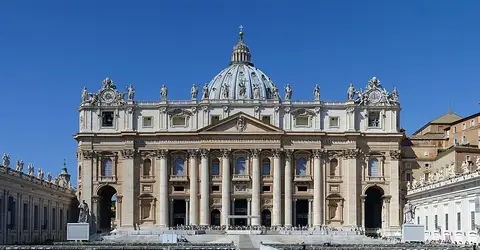 Historic sites01
The Dome at San Pietro Basilica
No address · Rome○ Website○ Phone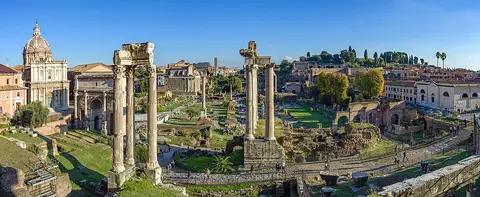 Historic sites02
Roman Forum
Via della Salara Vecchia, 5/6 · Rome● Website● Phone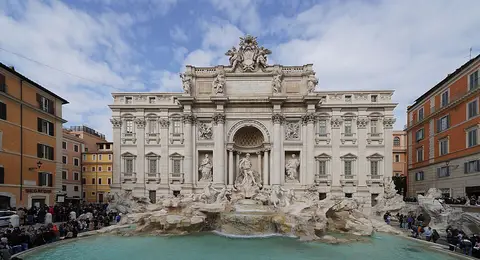 Historic sites03
Restauro Fontana di Trevi
Piazza di Trevi, 91 · Rome● Website○ Phone Monuments04
You need a free account to leave reviews and photos – that keeps comments genuine and lets you edit them later.
Designed by Bramante to mark the spot of St. Peter's martyrdom, this delightful miniature building is considered a masterpiece of Renaissance architecture. Open to the public.
Source: Wikivoyage, „Rome/Trastevere“ · authors per page history · CC BY-SA 4.0