About Solarium Augusti
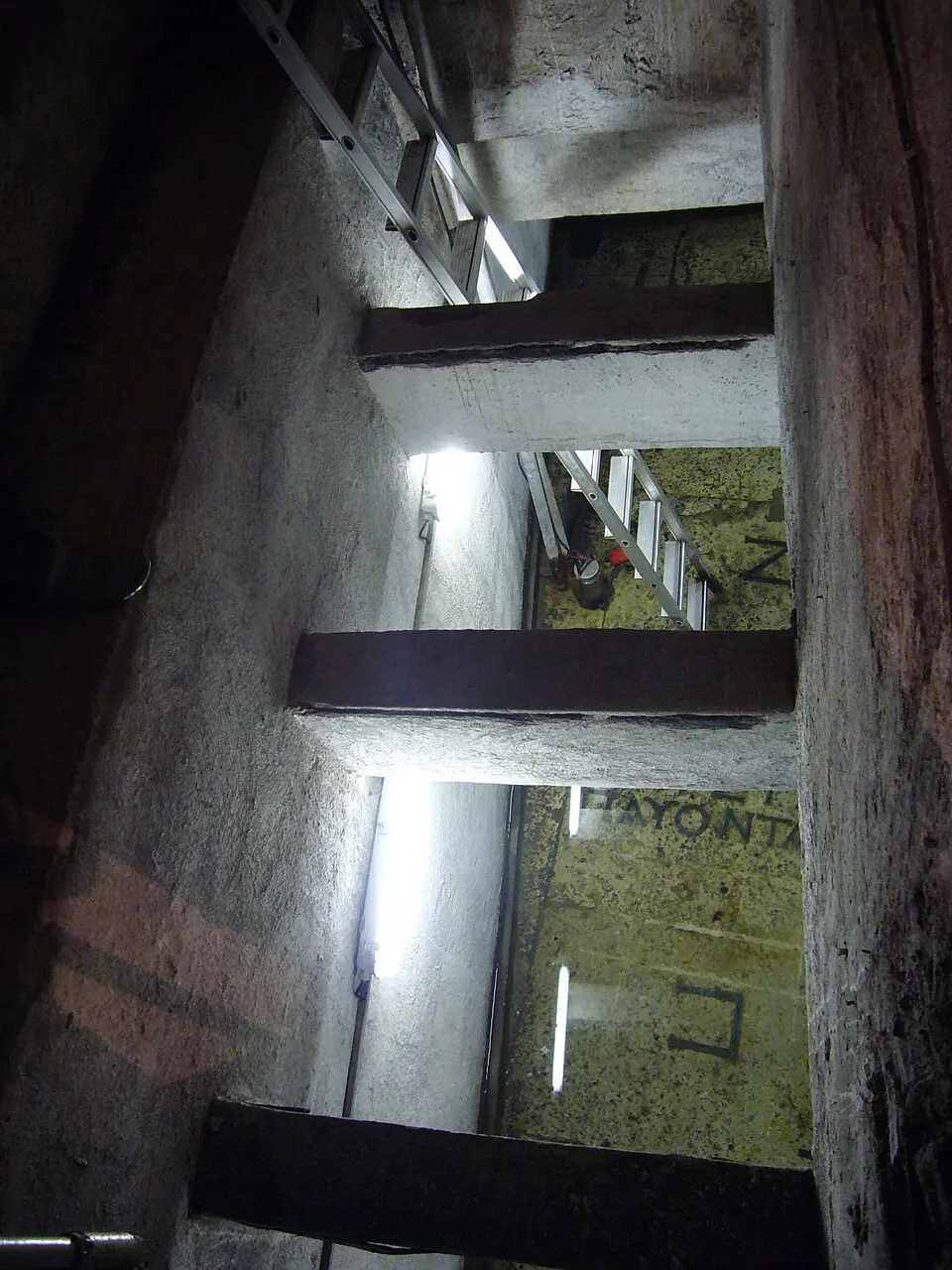
The Campus Martius in Rome was once home to the Solarium Augusti, a monumental astronomical instrument built under Emperor Augustus. It was not an ordinary sundial but a giant meridian instrument, sometimes called a noon marker or annual calendar. Its central feature was an obelisk about 30 meters (roughly 100 feet) tall, made of Egyptian rose granite, which was originally carved in Heliopolis and brought to Rome in 10 B.C. A large sphere sat at its tip and served as the shadow caster. The shadow it threw fell on a graduated line set into the pavement, which showed the position of the sun in the zodiac. Together with the Mausoleum of Augustus, the Ara Pacis, and the surrounding parkland, the complex formed a single architectural ensemble and was a powerful political symbol of the emperor's power and cosmic ambitions.
The instrument survived until the 8th century. Archaeological investigations by the German Archaeological Institute in the 1970s and 1980s uncovered parts of the complex. They found that the original structure was probably destroyed after Augustus's time and rebuilt under Emperor Domitian on ground that had been raised by Tiber floods. The remains of the meridian line that are still visible today are made of bronze and are marked with the Greek names of the zodiac signs as well as degree markings. Special inscriptions pointed to astronomical and meteorological events, such as the start of summer or the end of the summer Etesian winds.
Today, visitors encounter the Solarium mainly through the obelisk on Piazza di Montecitorio, which was moved to its current location in front of the Italian Parliament in 1792. The original site of the measuring line lies below present-day street level on Via del Campo Marzio. There you can see the excavated section of the bronze line, which offers a glimpse into the precise astronomical technology of antiquity. The complex shows how the Romans measured time and the seasons, and in doing so tied their political order to the movement of the heavenly bodies.
At a glance
- Category
- Sight › Historic sites
- Rating
- no reviews yet · write a review
- Address
- Piazza di Montecitorio
Rome, Italy - District
- Roma I
- Phone
- —
- Website
- it.wikipedia.org
- —
- Coordinates
- 41.90056° N · 12.47861° E
- Data quality
- confidence 0.76
- Identifier
- ID a2f51b9b-5c9…
Location & surroundings
Toggle layersFAQ about Solarium Augusti
quick answersWhat is the Solarium Augusti in Rome?
The Solarium Augusti was a monumental astronomical instrument on the Campus Martius in Rome, built under Emperor Augustus. It was no ordinary sundial but a huge meridian instrument, also known as a horologium or annual calendar. At its center stood an obelisk about 30 meters (98 feet) tall, made of Egyptian rose granite from Heliopolis, which was brought to Rome in 10 B.C. and whose globe at the top cast a shadow onto a scaled line on the ground. Together with the Mausoleum of Augustus and the Ara Pacis, the complex was regarded as a political symbol of the emperor's power and cosmic ambitions.
What can you still see of the Solarium Augusti today?
Of the Solarium Augusti in Rome, what you can mainly see today is the obelisk on Piazza di Montecitorio and an excavated section of the meridian line. The obelisk was moved to its present location in front of the Italian Parliament in 1792. The section of the bronze line lies below today's street level on Via del Campo Marzio, where you can visit it. It bears the Greek names of the zodiac signs and degree markings.
How was the Solarium Augusti researched, and how long did it exist?
The Solarium Augusti in Rome existed until the 8th century and was partially excavated by the German Archaeological Institute in the 1970s and 1980s. The investigations showed that the original structure was probably destroyed after the time of Augustus and rebuilt under Emperor Domitian on ground that had been raised by Tiber floods. Inscriptions along the meridian line referred to astronomical and meteorological events, such as the start of summer or the end of the summer Etesian winds.
What can you visit around the Solarium Augusti?
Around the Solarium Augusti on Piazza di Montecitorio in Rome, you'll find several historic sites within walking distance. travelguide195 lists, among others, the Palazzo Wedekind at about 72 meters (236 feet), the Temple of Hadrian at about 101 meters (331 feet), the Column of Marcus Aurelius at about 108 meters (354 feet), and the Templum Matidiae at about 110 meters (361 feet). If you're interested in museums, you'll find the exhibition L'anatomia di Leonardo at about 138 meters (453 feet).
Are there restaurants near the Solarium Augusti?
Yes, there are plenty of restaurants around the Solarium Augusti in Rome's Roma I district. travelguide195 lists about 433 restaurants within 500 meters (about 1,640 feet) of Piazza di Montecitorio.
Ratings & comments
none yetNear Solarium Augusti
closest 5 per category · 2 kmSights
Restaurants
Museums
Hotels
More:Historic sites in Rome (1,014)Sights in Roma I (642)All sights in Rome (1,312)
300 places within 2 km loaded.
Don't miss in Rome
All sights Historic sites01
The Dome at San Pietro Basilica
No address · Rome○ Website○ Phone Historic sites02
Roman Forum
Via della Salara Vecchia, 5/6 · Rome● Website● Phone Historic sites03
Restauro Fontana di Trevi
Piazza di Trevi, 91 · Rome● Website○ Phone Monuments04
You need a free account to leave reviews and photos – that keeps comments genuine and lets you edit them later.