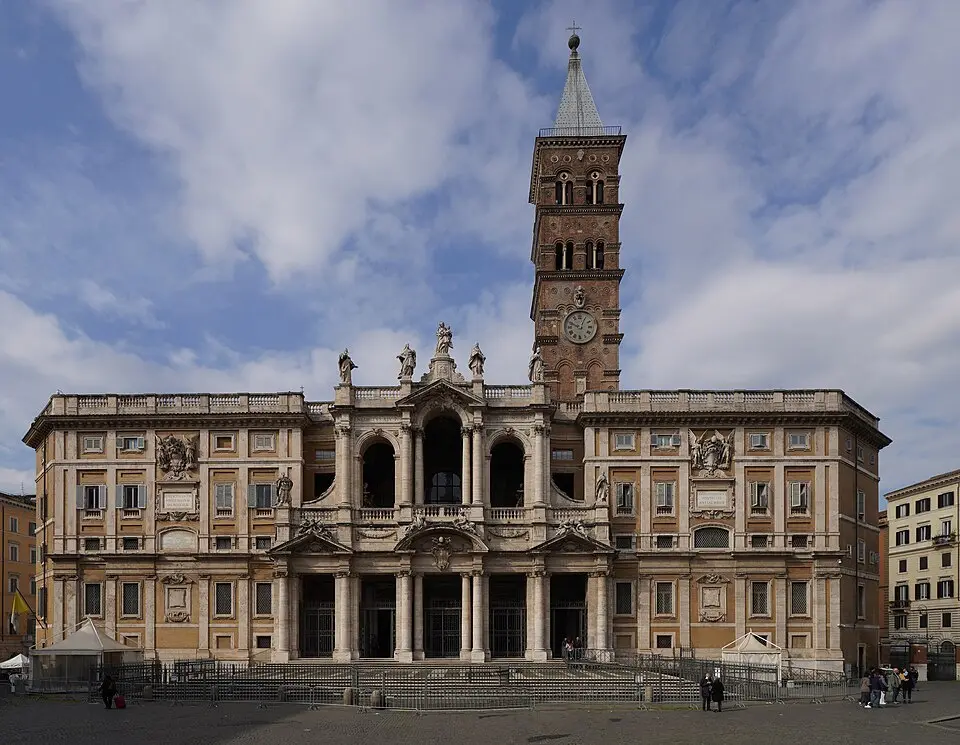
About Santa Maria della Neve
Santa Maria Maggiore, also known as the Basilica Liberiana or Santa Maria della Neve, is one of Rome's four papal basilicas and one of the city's seven traditional pilgrimage churches. It is extraterritorial property of the Holy See and sits in the heart of the city, right near Roma Termini station. As the oldest church dedicated to Mary in Rome, and the first in the West placed under the patronage of the Virgin Mary, it holds outstanding historical and theological significance. The basilica's current archpriest, since July 2025, is Cardinal Rolandas Makrickas.
The history of the site is closely tied to the Christianization of Rome in the early 5th century. The present basilica was built under Pope Celestine I and consecrated by Pope Sixtus III on August 5, 434. It is considered the first major church to be commissioned not by the emperor but by the Bishop of Rome, as a votive church. Building it on the highest point of the Esquiline Hill was meant to give Christian Rome a new face and to pull the city's religious center away from the pagan Roman Forum.
A famous legend, dated to the year 358, surrounds the church's founding. According to the story, the Virgin Mary appeared to a childless couple and promised them a son if they would build a church on the spot where snow would lie the next morning. When snow really did cover the Esquiline on August 5, the foundation stone was laid. This so-called Miracle of the Snow explains the name Santa Maria della Neve. Historically, the basilica is thought to have replaced an older predecessor, the Basilica Liberii, which burned down during the sack of Rome in 410, although archaeological finds beneath the current church have turned up no traces of such a building.
The architecture clearly shows the marks of its long building history. The original 5th-century structure was a three-aisled basilica with no transept and a large apse. Over the centuries the building was remodeled several times. In the 13th century, Pope Nicholas IV had the old apse torn down to build a transept, and replaced the original apse mosaic with a new work by Jacopo Torriti. Later popes added more chapels and porticoes, so that today the building looks like a single unified block.
A striking feature of the exterior is the main façade on the east side, redesigned in the 18th century by Ferdinando Fuga in the late Baroque style. It consists of a portico with five entrances and a loggia above. On the west side, the façade was reworked by Carlo Rainaldi and given a cascading staircase. In front of the church, on the large square, stands the monumental Column of the Virgin, the Colonna della Pace. It was erected in 1614 in thanks for the end of a plague epidemic and carries a bronze statue of the Madonna. The column itself came from the Basilica of Maxentius in the Roman Forum and served as the model for numerous other Marian columns across Europe.
The interior is defined by its early Christian mosaics, which are considered the only almost completely preserved church mosaics from the 4th and 5th centuries. They adorn the triumphal arch and the long walls of the nave. The imagery is theologically profound and refers to the condemnation of the teachings of Nestorius, who had questioned the divinity of Christ. The mosaics present the divinity of Christ and the virginity of Mary as proof against him.
The triumphal arch shows scenes from the life of Jesus in four bands, beginning with the Annunciation and ending with the enthronement of the Crucified One. The nave mosaics tell the story of the people of God, from the calling of Abraham through Moses to Joshua. The style shifts between a monumental, solemn tone on the triumphal arch and a more narrative, livelier style along the nave. This artistic design served to proclaim the faith with authority and to redefine Rome as a Christian world capital.
The apse holds the large mosaic by Jacopo Torriti from 1296, depicting the Coronation of the Virgin in heaven. Mary sits on a splendid throne beside Christ, who crowns her with a golden crown. Surrounded by angels and saints, this image forms the visual high point of the apse. Below it are further scenes from the life of Mary, such as the Annunciation, the Nativity, and the Presentation in the Temple.
Two large side chapels flank the high altar and take the place of the transept that was not originally planned. The Sistine Chapel houses a precious bronze tabernacle, while the Pauline Chapel serves as the burial place of the Borghese family. The latter is considered the most opulent private chapel in Rome and contains the miraculous image Salus Populi Romani, once venerated as an icon painted by St. Luke. The ceiling frescoes of this chapel include the Assumption of Mary, and the depiction of the moon already shows the craters that Galileo Galilei would later discover.
The basilica is also the final resting place of several popes, including Honorius III, Nicholas IV, Pius V, Sixtus V, Clement VIII, Paul V, Clement IX, and Pope Francis. Francis was buried in April 2025 in a niche in the left aisle, near the chapel with the icon Salus Populi Romani, as he had requested in his will. The tombs of these popes are elaborately designed and tell of their pontificates and deeds through reliefs and statues.
For visitors, Santa Maria Maggiore offers a unique combination of historical depth, architectural splendor, and spiritual atmosphere. The chance to see the early Christian mosaics in their original setting makes the site one of the most important witnesses to early Christian art. The basilica's bells, especially the famous La Sperduta, which rings every evening at 9 p.m., add to the special atmosphere. This bell recalls a legend about a lost pilgrim who found her way back to the city by following its ringing, and so symbolizes the church's role as a beacon for the faithful and for pilgrims.
At a glance
- Category
- Sight › Historic sites
- Rating
- no reviews yet · write a review
- Address
Rome, Italy- District
- Roma I
- Phone
- —
- Website
- —
- —
- Coordinates
- 41.89819° N · 12.49751° E
- Data quality
- confidence 0.96
- Identifier
- ID 12df3c6e-a5c…
Location & surroundings
Toggle layersRatings & comments
none yetNear Santa Maria della Neve
closest 5 per category · 2 kmSights
Museums
Hotels
More:Historic sites in Rome (1,014)Sights in Roma I (642)All sights in Rome (1,312)
300 places within 2 km loaded.
Don't miss in Rome
All sights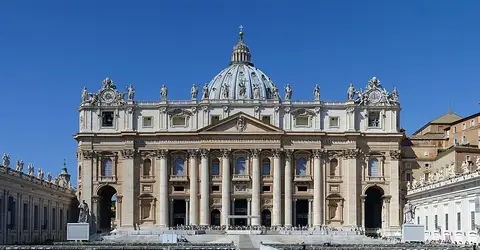 Historic sites01
The Dome at San Pietro Basilica
No address · Rome○ Website○ Phone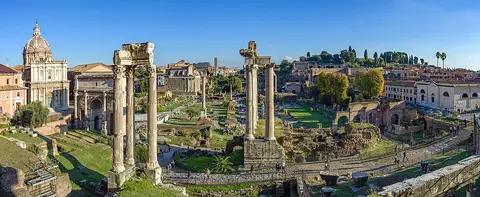 Historic sites02
Roman Forum
Via della Salara Vecchia, 5/6 · Rome● Website● Phone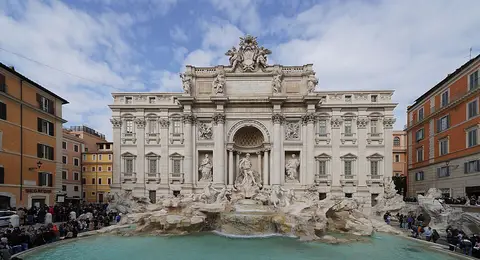 Historic sites03
Restauro Fontana di Trevi
Piazza di Trevi, 91 · Rome● Website○ Phone Monuments04
You need a free account to leave reviews and photos – that keeps comments genuine and lets you edit them later.