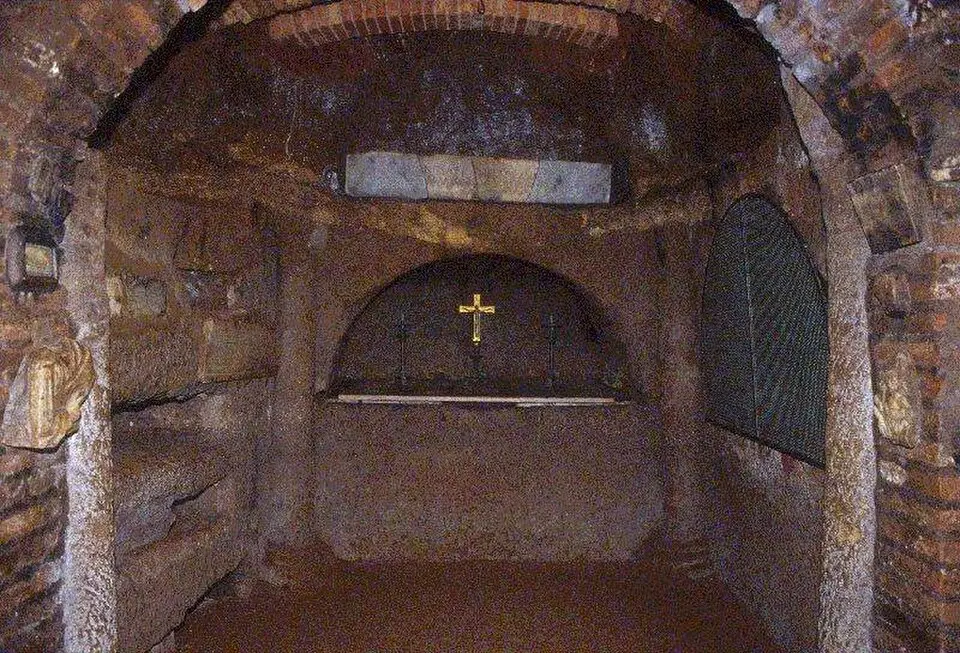
About Catacombe di Santa Agnese
The Catacombs of St. Agnes lie in Rome's Trieste district, at the second mile of the Via Nomentana. They are part of the monumental complex of the Basilica of Sant'Agnese fuori le mura and take their name from the virgin and martyr Agnes, who is buried there. The date of her martyrdom is historically uncertain, but it is generally placed in one of the persecutions of the third century under Emperor Decius, Valerian, or Diocletian. The oldest written sources, including the Depositio martyrum and a poem by Pope Damasus I, confirm her burial at this site. The original underground burial ground, which belonged to the martyr's family, dates from the second half of the third century and forms the core of today's complex.
During the fourth century, the burial area was expanded and divided into four separate regions spread across three levels. The reign of Emperor Constantine was especially formative: he used the land above the fourth region to build a first basilica of St. Agnes and the Mausoleum of Santa Costanza. In the process, a pagan necropolis from the second century that had previously stood there was destroyed. A small basilica was later built above the catacombs, and in the seventh century it was expanded into today's church. After antiquity, the underground complex fell into oblivion and was not rediscovered until the early sixteenth century. Later excavations in the nineteenth and twentieth centuries saved large parts of the site from decay, after it had been badly damaged by treasure hunters in the eighteenth century.
For visitors, the site offers above all a rich epigraphic heritage, as there are no significant wall paintings. The first region is considered the oldest and lies beneath today's street to the left of the basilica. The third region is the most extensive, stretching beneath the convent and the Via Nomentana; many of the artifacts found there are now in the Vatican Museums. The fourth region, which lies between today's basilica and the ruins of the Constantinian church, contains the oldest dated inscriptions in the entire complex. A tombstone from the year 314 for a man named Sisinnius can be seen here, while other slabs from the destroyed pagan necropolis were reused as steps for access to the underground area.
At a glance
- Category
- Sight › Historic sites
- Rating
- no reviews yet · write a review
- Address
- Via di Sant'Agnese, 1
00198 Rome, Italy - District
- Trieste
- Phone
- —
- Website
- —
- —
- Coordinates
- 41.92312° N · 12.51878° E
- Data quality
- confidence 0.78
- Identifier
- ID a38224d4-5f8…
Location & surroundings
Toggle layersFAQ about Catacombe di Santa Agnese
quick answersWhat are the Catacombe di Santa Agnese in Rome?
The Catacombe di Santa Agnese are early Christian catacombs in Rome's Trieste neighborhood, at the second mile of the Via Nomentana (address: Via di Sant'Agnese, 1). They are part of the monumental complex of the Basilica of Sant'Agnese fuori le mura and are named after the virgin and martyr Agnes, who was buried here. Early sources such as the Depositio martyrum and a poem by Pope Damasus I confirm her burial at this site.
How old are the Catacombs of Saint Agnes in Rome?
The core of the Catacombe di Santa Agnese in Rome dates to the second half of the third century, when an underground cemetery for the family of the martyr Agnes was established here. In the fourth century, the burial ground was expanded and divided into four regions across three levels. Under Emperor Constantine, a first basilica of Agnes and the Mausoleum of Santa Costanza were built above the fourth region. After antiquity, the complex fell into oblivion and was not rediscovered until the early sixteenth century.
What can you see in the Catacombe di Santa Agnese?
In the Catacombe di Santa Agnese in Rome, you'll find above all a rich legacy of inscriptions, as there are no significant wall paintings here. In the fourth region, between today's basilica and the ruins of the Constantinian church, are the oldest dated inscriptions of the complex, including a funerary stele from the year 314 for a man named Sisinnius. Slabs from a destroyed pagan necropolis of the second century were also reused here as steps leading to the underground area. Many finds from the extensive third region are now in the Vatican Museums.
What can you visit around the Catacombe di Santa Agnese?
Within a kilometer of the Catacombe di Santa Agnese in Rome's Trieste neighborhood, there are several historic villas, monuments, and a museum. travelguide195 lists the Villa Leopardi (about 390 m), the Villa Mirafiori (about 500 m), and the Villa Alberoni (about 780 m), among others. About 600 m away, you'll find the Monumento ai Finanzieri caduti per la patria, the Monumento alla Guardia di Finanza, and the Museo Storico Guardia di Finanza.
Are there restaurants near the Catacombe di Santa Agnese in Rome?
Yes, you'll find a wide selection of places to eat around the Catacombe di Santa Agnese in Rome. travelguide195 lists around 62 restaurants within 500 meters of the catacombs on Via di Sant'Agnese in the Trieste neighborhood.
Ratings & comments
none yetNear Catacombe di Santa Agnese
closest 5 per category · 2 kmSights
Restaurants
Museums
Hotels
More:Historic sites in Rome (1,014)Sights in Trieste (16)All sights in Rome (1,312)
245 places within 2 km loaded.
Don't miss in Rome
All sights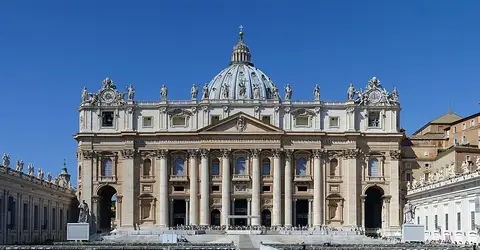 Historic sites01
The Dome at San Pietro Basilica
No address · Rome○ Website○ Phone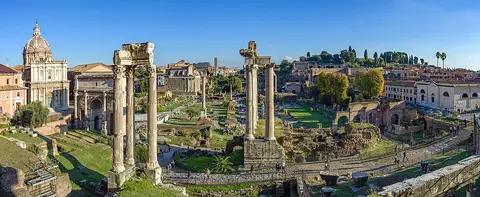 Historic sites02
Roman Forum
Via della Salara Vecchia, 5/6 · Rome● Website● Phone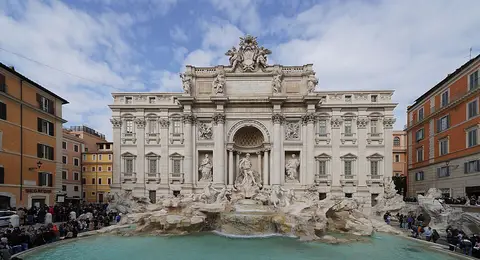 Historic sites03
Restauro Fontana di Trevi
Piazza di Trevi, 91 · Rome● Website○ Phone Monuments04
You need a free account to leave reviews and photos – that keeps comments genuine and lets you edit them later.