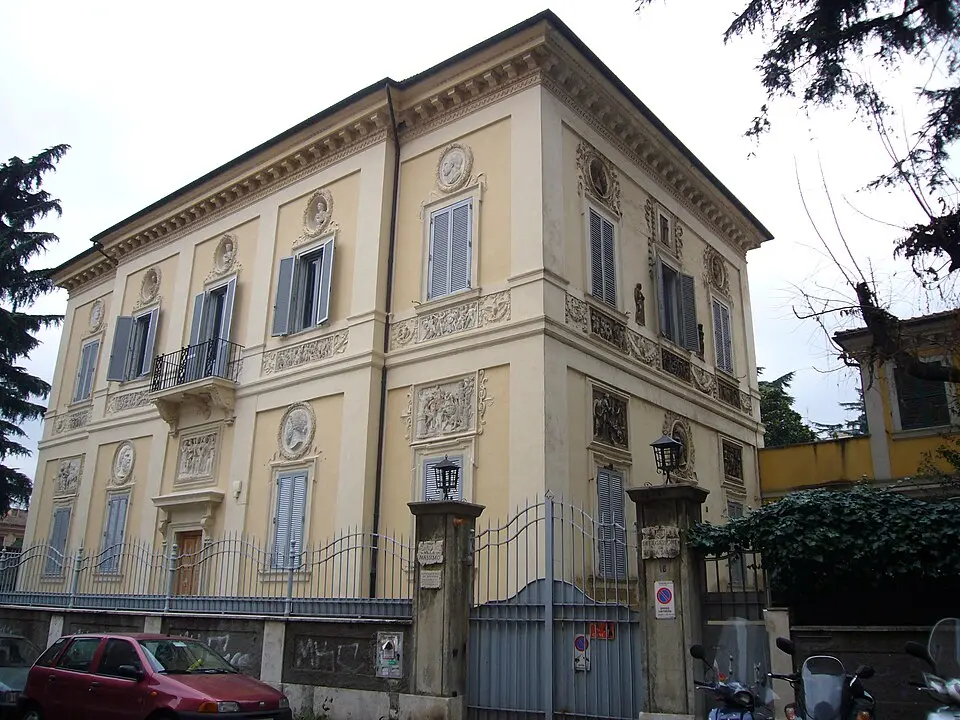
About Casino Massimo Lancellotti
The Casino Massimo Lancellotti in Rome is a historic palace complex with roots in the early 17th century. It was built by the Marquis Vincenzo Giustiniani, who bought a vineyard in 1605 and had a magnificent residence constructed on it. After passing to the Massimo family in 1802, the estate came into the hands of the Lancellotti in 1848. In 1871 they sold the large park as building land, which led to the gradual disappearance of the green spaces. The monumental gate in the surrounding wall was ceded to the Italian state in 1885 and re-erected in 1931 as the entrance to the Villa Celimontana on the Caelian Hill. Since 1948 the building has belonged to the Custody of the Holy Land, which maintains its delegation for Italy here.
Inside, you can admire significant works of art dating from the time of the Giustiniani and the Massimo. One outstanding piece is the so-called Statue of Justinian, a marble work about four meters (13 ft) tall from 1638. It is a pastiche that combines a Greek torso with a head modeled on a youthful portrait of Marcus Aurelius, intended to underscore the family's claimed descent from the Byzantine emperor.
The artistic highlight, however, is the frescoes in the three garden rooms, created between 1817 and 1829 by the Nazarene painters. Julius Schnorr von Carolsfeld decorated the Ariosto Room with scenes from Orlando Furioso, while Johann Friedrich Overbeck and Friedrich Führich adorned the Tasso Room with episodes from Jerusalem Delivered. In the Dante Room, Philipp Veit and Joseph Anton Koch worked on a visual synthesis of the Divine Comedy. Veit painted Paradise on the ceiling, while Koch covered the walls with detailed depictions of the Inferno and Purgatorio. These murals show complex scenes from Dante's journey through the afterlife, from the encounter with the three beasts to the various heavens and the Empyrean, making the site an important testament to the art history of Romanticism.
At a glance
- Category
- Sight › Historic sites
- Rating
- no reviews yet · write a review
- Address
- Via Matteo Boiardo, 16
00185 Rome, Italy - District
- Roma I
- Phone
- +390670495651
- Website
- www.060608.it
- —
- Coordinates
- 41.88832° N · 12.50538° E
- Data quality
- confidence 0.97
- Identifier
- ID 6fc705ce-c09…
Location & surroundings
Toggle layersRatings & comments
none yetNear Casino Massimo Lancellotti
closest 5 per category · 2 kmSights
Restaurants
Museums
Hotels
More:Historic sites in Rome (1,014)Sights in Roma I (642)All sights in Rome (1,312)
300 places within 2 km loaded.
Don't miss in Rome
All sights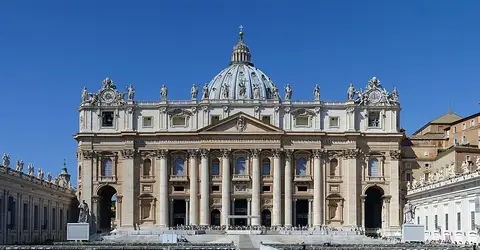 Historic sites01
The Dome at San Pietro Basilica
No address · Rome○ Website○ Phone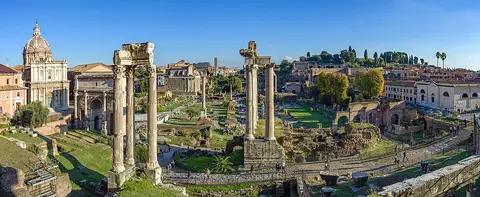 Historic sites02
Roman Forum
Via della Salara Vecchia, 5/6 · Rome● Website● Phone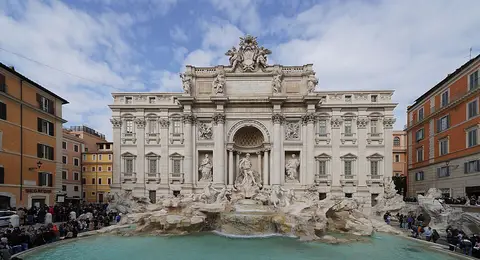 Historic sites03
Restauro Fontana di Trevi
Piazza di Trevi, 91 · Rome● Website○ Phone Monuments04
You need a free account to leave reviews and photos – that keeps comments genuine and lets you edit them later.