About Casal Rotondo
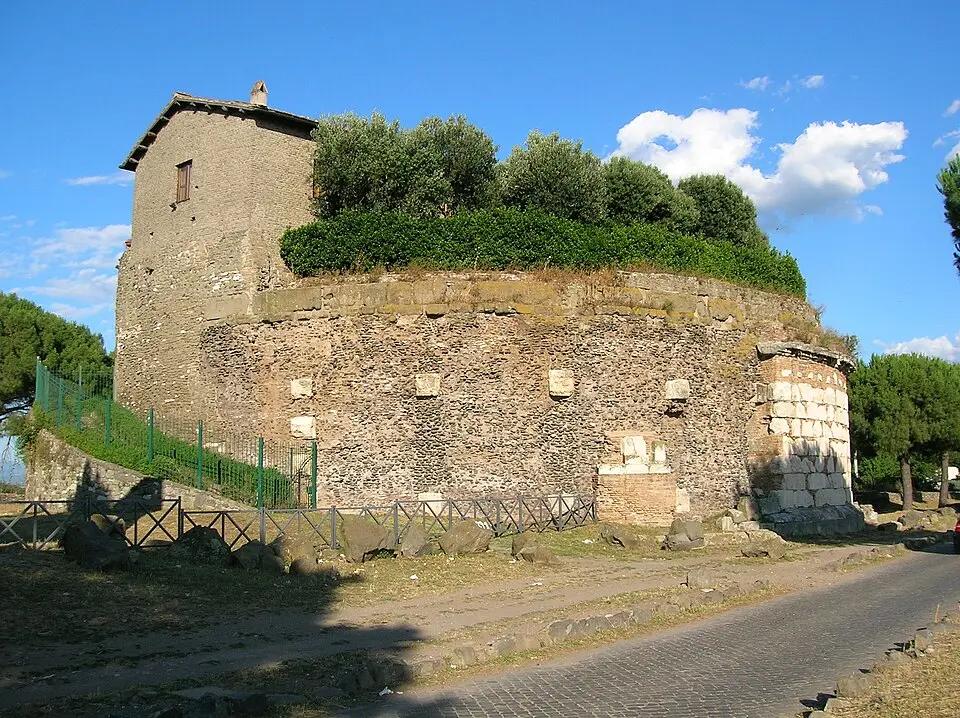
The Casal Rotondo is an imposing Roman tomb on the Via Appia Antica in southeastern Rome. Measuring about 35 meters (115 feet) in diameter, the monument dates to around 30 B.C. and, at that size, is among the largest of its kind along this historic highway. Its cylindrical structure is topped by a farmhouse built in later centuries on the lower level, which gave the building its name. The structure originally served as a mausoleum for a powerful family, though the identity of the person buried here remains unknown to this day. Older theories based on fragments bearing the inscription COTTA are now more commonly interpreted as the remains of a smaller neighboring building. The base of the tomb is decorated along its upper edge with an ornamental frieze. Right nearby stands a brick wall displaying marble inlays and other finds from the surrounding area. Incorporated into a network of watchtowers built by the Savelli family, the site offers a fascinating glimpse into Roman burial culture and the monumental architecture along the Via Appia.
At a glance
- Category
- Sight › Monuments
- Rating
- no reviews yet · write a review
- Address
- Via Appia Antica
00178 Rome, Italy - District
- Roma VIII
- Phone
- —
- Website
- —
- —
- Coordinates
- 41.82111° N · 12.55575° E
- Data quality
- confidence 0.81
- Identifier
- ID 160f0479-8fc…
Location & surroundings
Toggle layersFAQ about Casal Rotondo
quick answersWhat is the Casal Rotondo in Rome?
The Casal Rotondo is an ancient Roman tomb on the Via Appia Antica in southeastern Rome, in the Roma VIII district. The cylindrical monument dates to around 30 BC and has a diameter of roughly 115 feet (35 meters). That makes it one of the largest tombs along the historic Via Appia highway.
Why is it called the Casal Rotondo?
The Casal Rotondo takes its name from a farmhouse that was built in later centuries on the round base of the ancient tomb on the Via Appia Antica in Rome. The cylindrical structure still carries this house on its lower story today. The site was later also incorporated into a system of watchtowers belonging to the Savelli family.
Who is buried in the Casal Rotondo on the Via Appia?
Who was buried in the Casal Rotondo in Rome remains unknown to this day. All that is certain is that the tomb originally served as a mausoleum for an influential family. Older theories relied on fragments bearing the inscription COTTA, but these are now more commonly interpreted as remains of a smaller neighboring building.
What is there to see at the Casal Rotondo in Rome?
At the Casal Rotondo on the Via Appia Antica, you'll see mainly the massive round base of the tomb, which is decorated with an ornamental frieze along its upper edge. Nearby stands a brick wall displaying marble inlays and other finds from the surrounding area. The site gives you a glimpse into Roman funerary culture and the monumental architecture along the Via Appia.
What can you visit around the Casal Rotondo?
Around the Casal Rotondo on the Via Appia Antica in Rome, more ancient sites lie within walking distance. travelguide195 lists the Mausoleo di Romolo about 370 meters (1,200 feet) away and the Mausoleo di Pompeo Magno about 640 meters (0.4 miles) away within a one-kilometer (0.6-mile) radius. About 900 meters (0.55 miles) away, you'll find the Area archeologica Villa dei Quintili - S. Maria Nova.
Ratings & comments
none yetNear Casal Rotondo
closest 5 per category · 2 kmSights
Restaurants
Museums
Hotels
Cocktail bars
More:Monuments in Rome (235)Sights in Roma VIII (60)All sights in Rome (1,312)
53 places within 2 km loaded.
Don't miss in Rome
All sights Historic sites01
The Dome at San Pietro Basilica
No address · Rome○ Website○ Phone Historic sites02
Roman Forum
Via della Salara Vecchia, 5/6 · Rome● Website● Phone Historic sites03
Restauro Fontana di Trevi
Piazza di Trevi, 91 · Rome● Website○ Phone Monuments04
You need a free account to leave reviews and photos – that keeps comments genuine and lets you edit them later.
Casal Rotondo is the biggest mausoleum on the Appian Way, at about the sixth mile. It now incorporates a small private villa, originally a farmhouse. It is not known for whom it was built. The wall of fragments next to it, constructed by Luigi Canina, has ruins referring to the Cotta family but this family is now believed to not be associated with the Casal Rotondo.
Source: Wikivoyage, „Rome/South“ · authors per page history · CC BY-SA 4.0