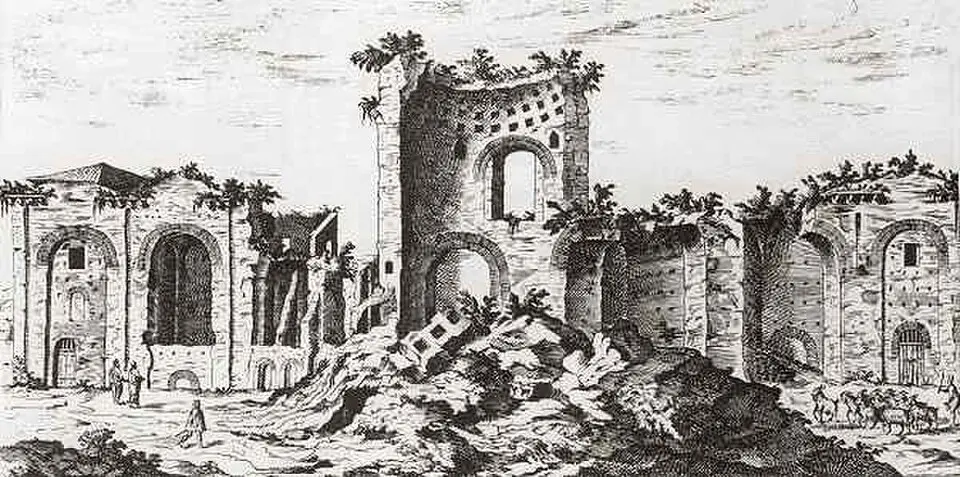
About Baths of Constantine
The Baths of Constantine were among the last great bathing complexes of ancient Rome. Possibly begun by Emperor Maxentius, they were completed under Constantine the Great and inaugurated in A.D. 315. Because of the hilly topography and the limited building site between several streets, the architecture had to be adapted to local conditions. Existing residential buildings served as a substructure to create a level surface. The complex was oriented north to south to take advantage of the sun's warmth, and it omitted the usual surrounding garden area. Instead, a semicircular wall enclosed only the front part. The frigidarium, tepidarium, and caldarium were laid out in a round shape, and some anterooms were left out because of the narrow building line.
Over the centuries, the baths suffered heavily from fires and earthquakes, which led to several renovations, including one in the 5th century. In the 13th century, the noble Colonna family used the remains to build a fortress. At the beginning of the 16th century, surviving wall remnants made it possible to draw up floor plans, which shape our knowledge today. During the construction of the Palazzo Pallavicini Rospigliosi between 1605 and 1621, however, most of the structures were destroyed. Later finds made during road construction were also largely removed. Today, visitors can see a few rediscovered remains near the palazzo's casino. Important works of art such as bronze statues and frescoes also came from the site and are now housed in Roman museums.
At a glance
- Category
- Sight › Historic sites
- Rating
- no reviews yet · write a review
- Address
- —
Rome, Italy - District
- Roma I
- Phone
- —
- Website
- de.wikipedia.org
- —
- Coordinates
- 41.89843° N · 12.48790° E
- Data quality
- confidence 0.71
- Identifier
- ID 01ab5a3d-09b…
Location & surroundings
Toggle layersFAQ about Baths of Constantine
quick answersWhat are the Baths of Constantine in Rome?
The Baths of Constantine were one of the last great bathing complexes of ancient Rome and are located in the Roma I district of Rome, Italy. Possibly begun under Emperor Maxentius, they were completed under Constantine the Great and inaugurated in A.D. 315. Because the site was hilly and hemmed in between several streets, existing residential buildings served as a substructure to create a level surface.
What is special about the architecture of the Baths of Constantine in Rome?
Because of the narrow building line, the Baths of Constantine in Rome had to depart from the usual bath layouts. The complex was oriented north to south to take advantage of the sun's warmth and dispensed with the otherwise typical surrounding garden area; a semicircular wall enclosed only the front section. The frigidarium, tepidarium, and caldarium were built in a circular shape, and some anterooms were omitted due to lack of space.
Why are there hardly any remains of the Baths of Constantine in Rome?
Little is left of the Baths of Constantine in Rome because fires, earthquakes, and later building projects largely destroyed the complex. After renovations, including one in the 5th century, the noble Colonna family used the remains in the 13th century to build a fortress. Most of the structures were destroyed during the construction of the Palazzo Pallavicini Rospigliosi between 1605 and 1621, but floor plans from the early 16th century still shape what we know about the baths today.
What can you still see of the Baths of Constantine in Rome today?
Today you can visit a few rediscovered remains of the Baths of Constantine near the Casino of the Palazzo Pallavicini Rospigliosi in Rome. Significant works of art from the site, including bronze statues and frescoes, are now housed in Roman museums.
What can you see around the Baths of Constantine in Rome?
Around the Baths of Constantine in Rome, several attractions are just a few minutes' walk away. travelguide195 lists, among others, the Casino dell'Aurora Pallavicini Rospigliosi (about 88 m), the Palazzo Pallavicini-Rospigliosi (about 106 m), the Palazzo Koch (about 122 m), the Quirinal Obelisk (about 125 m), and the Villa Aldobrandini with its gardens (about 206 m). For a break, travelguide195 also lists about 258 restaurants within 500 m.
Ratings & comments
none yetNear Baths of Constantine
closest 5 per category · 2 kmSights
Restaurants
Museums
Hotels
More:Historic sites in Rome (1,014)Sights in Roma I (642)All sights in Rome (1,312)
300 places within 2 km loaded.
Don't miss in Rome
All sights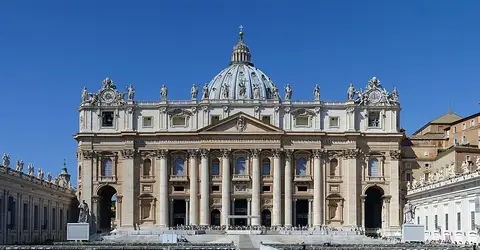 Historic sites01
The Dome at San Pietro Basilica
No address · Rome○ Website○ Phone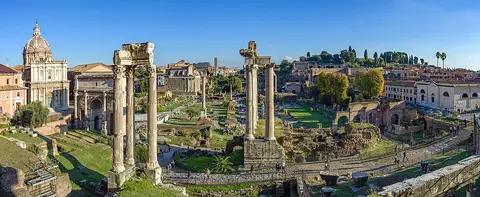 Historic sites02
Roman Forum
Via della Salara Vecchia, 5/6 · Rome● Website● Phone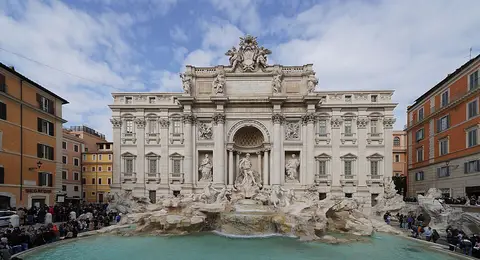 Historic sites03
Restauro Fontana di Trevi
Piazza di Trevi, 91 · Rome● Website○ Phone Monuments04
You need a free account to leave reviews and photos – that keeps comments genuine and lets you edit them later.