Discover Catania: Lava, Baroque, and Mount Etna
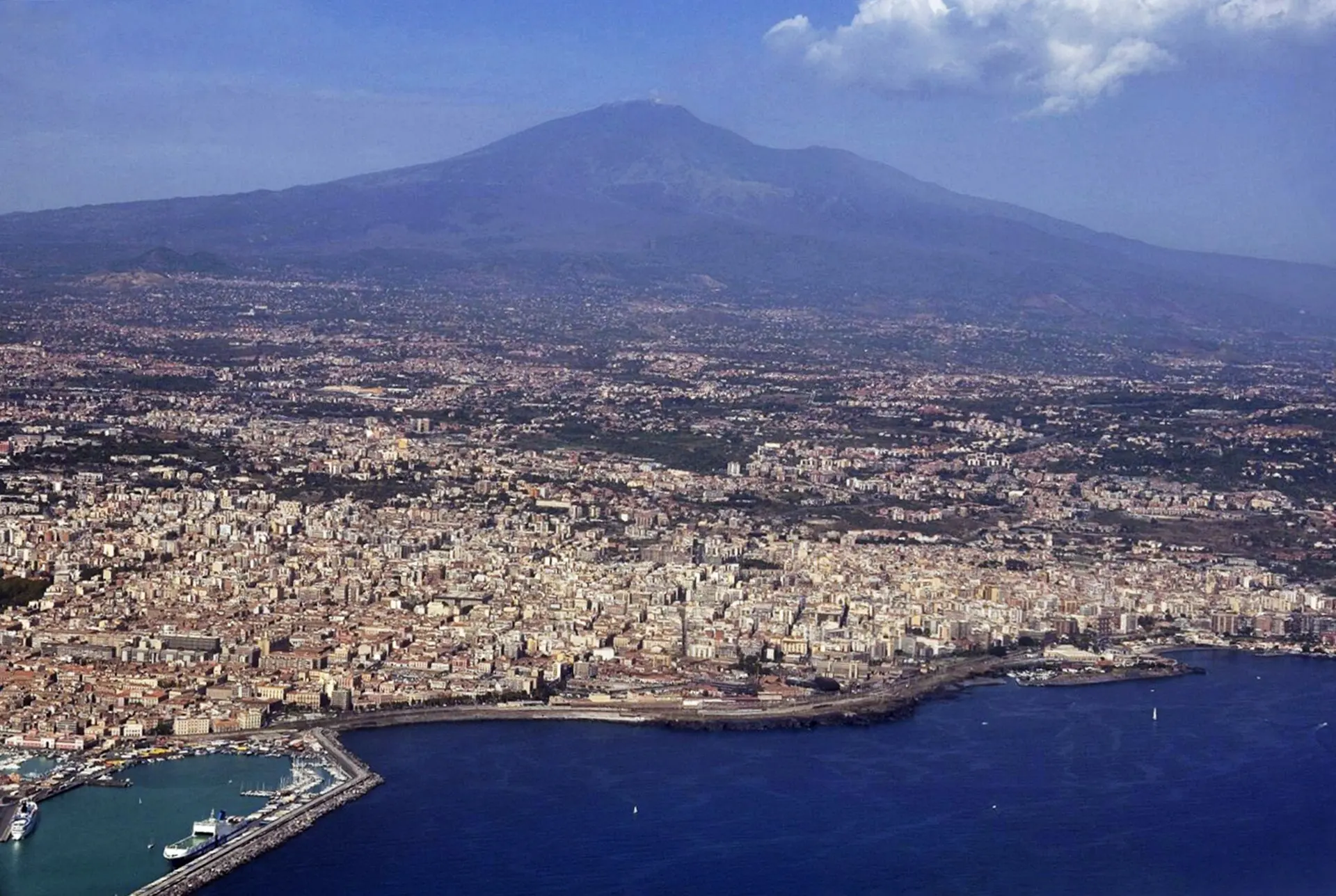
Travel guide · editorialBlack lava-stone facades, an elephant as the city's emblem, and a smoking Mount Etna on the horizon: Catania is the lively big city on Sicily's east coast. A trip to Catania combines Baroque architecture, one of Italy's loudest fish markets, and excursions up Europe's highest active volcano.
Built from the Ashes
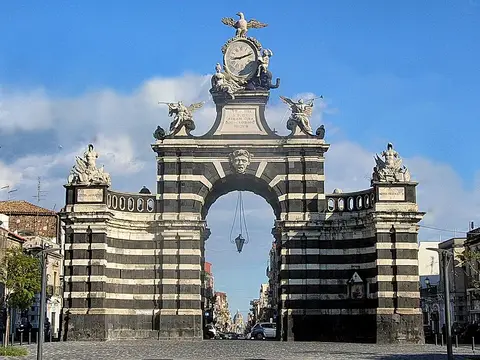
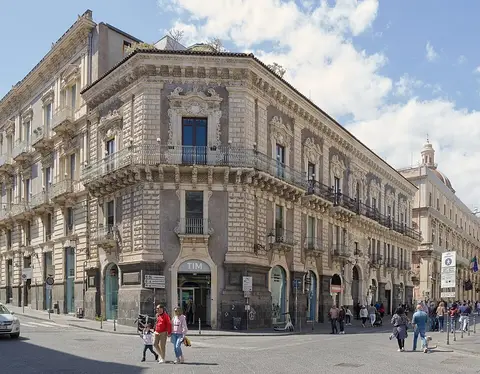
Greek settlers founded Katane in the 8th century B.C. The city's history is a series of destructions: a lava flow reached the city walls in 1669, and the earthquake of 1693 left Catania almost completely in ruins. The late Baroque rebuilding under architects such as Giovanni Battista Vaccarini gave the city its broad streets and the characteristic gray of lava stone. The historic center is part of the late Baroque towns of the Val di Noto, which are UNESCO World Heritage sites.
Sights in Catania
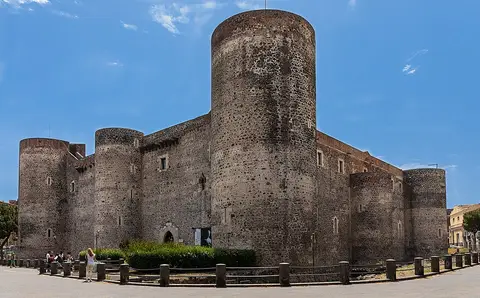
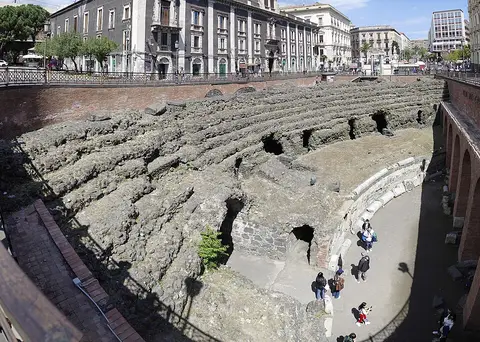
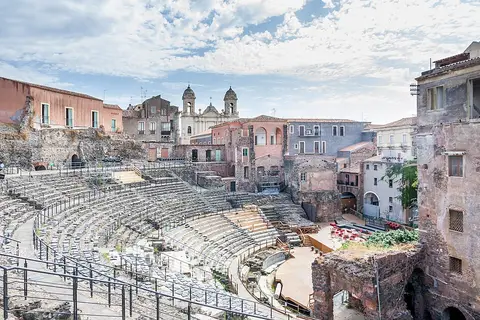
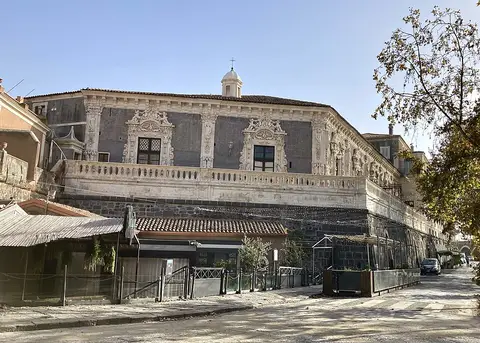
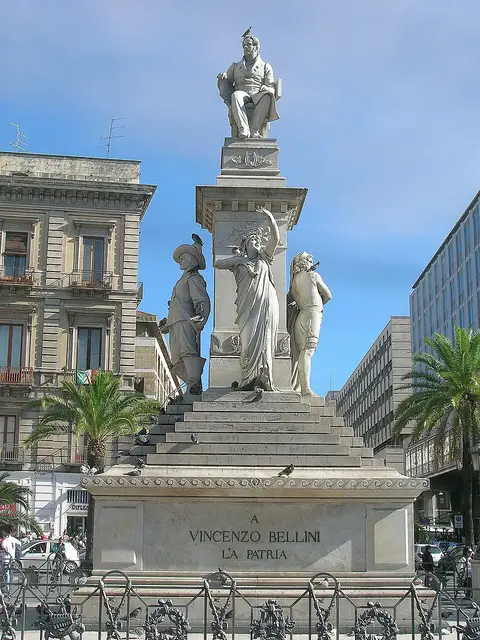
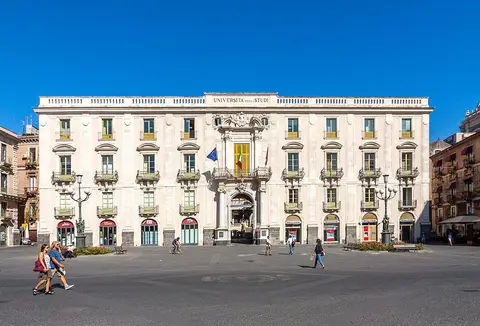
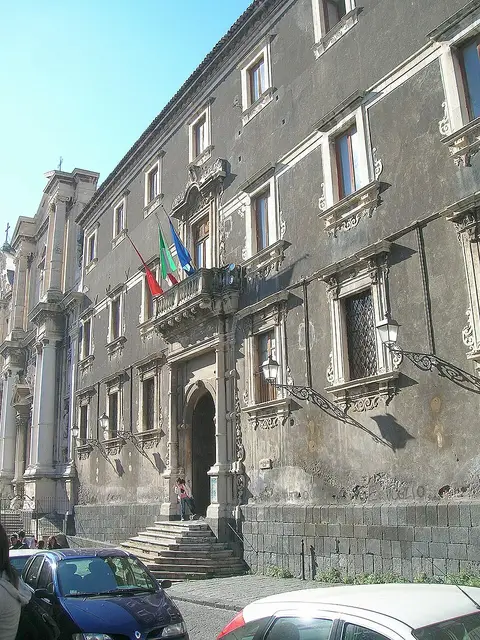
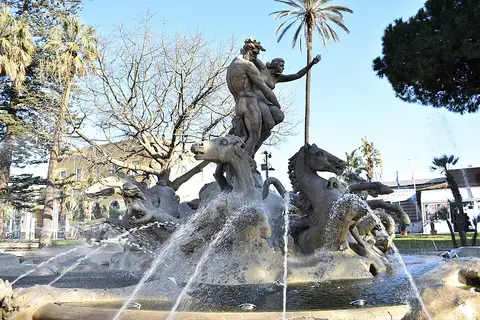
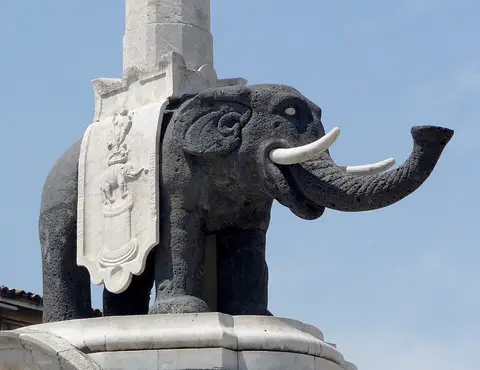
On Piazza del Duomo stands the Elephant Fountain, "u Liotru," a lava elephant topped with an Egyptian obelisk. The cathedral is dedicated to the city's patron saint, Sant'Agata, whose festival is celebrated in early February with enormous processions. Via Etnea, the main axis, runs straight as an arrow toward the volcano, past Baroque churches all the way to the Villa Bellini city park. Also worth a visit are the Benedictine monastery of San Nicolò l'Arena, one of the largest in Europe and now part of the university, the Roman theater, and Castello Ursino. The Teatro Massimo Bellini commemorates the composer Vincenzo Bellini, who was born here.
Eating and Going Out in Catania
Behind the cathedral lies the Pescheria, the fish market, where swordfish, squid, and sea urchins are sold amid loud shouting in the morning. Catania's signature dish is pasta alla Norma with eggplant, tomatoes, and salted ricotta, named after Bellini's opera. Here, arancini are cone-shaped like Etna, and you'll also find grilled horse meat, cipollina, and sweet granita with brioche for breakfast. Meals end on a sweet note with cannoli or minne di Sant'Agata, small domed pastries in honor of the city's patron saint. In the evening, the young crowd gathers in the centro storico around Piazza Teatro Massimo and Via Gemmellaro.
Getting Around and the Best Time to Visit
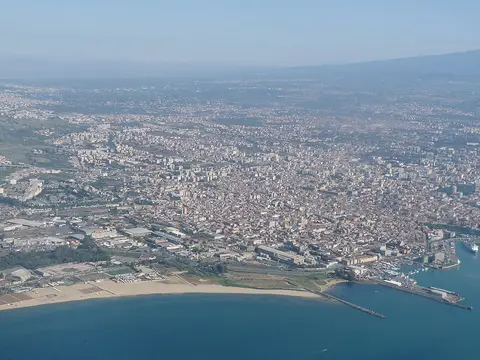
Fontanarossa Airport is just a few kilometers to the south, and buses run to the center. A metro line connects the main train station with the northern districts, and the Ferrovia Circumetnea circles the volcano on a narrow-gauge line. During eruptions of Etna, the airport may be temporarily closed. The best times to visit are spring and fall; summers are hot, when the beach clubs on the Plaia south of the city beckon.
Excursions to Etna and the Coast
From Rifugio Sapienza, at about 1,900 meters, a cable car and off-road vehicles continue farther up; the summit area may only be entered with guides. North of the city lies the Riviera dei Ciclopi with Aci Trezza and the Cyclops Rocks, and a bit farther on, Taormina with its ancient theater. To the south, Syracuse and the Baroque towns of Noto, Modica, and Ragusa await. If you want to combine a Catania vacation with nature, hike through the Alcantara Gorge with its basalt columns or visit the wineries on the slopes of Etna, whose lava soils produce robust red wines from the Nerello Mascalese grape.