About Castello Ursino
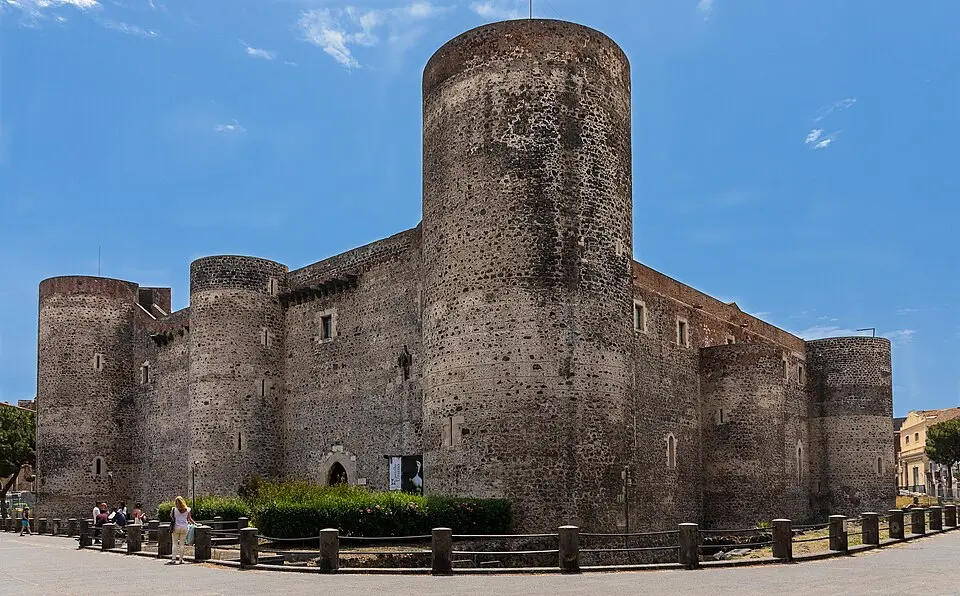
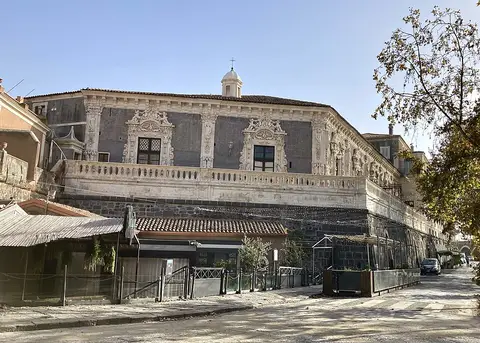
Castello Ursino in Catania is an imposing medieval fortress built in the 13th century on the foundations of a Norman structure. Emperor Frederick II had the building designed by Riccardo da Lentini between 1239 and 1250, and its name is said to derive from the bear. The architecture stands out for its square floor plan with four wings enclosing a central courtyard. Its hallmarks are the large groin vaults with so-called box ribs and the massive round corner towers that give the castle its sturdy, imposing character. The building originally had three upper floors, which gave it a steeper silhouette reminiscent of French donjons. Historically, the castle became the seat of parliament during the Sicilian Vespers, but after the introduction of gunpowder it lost its military importance and served as a prison. An eruption of Mount Etna in 1669 surrounded the structure with lava, which is why it now sits inland. Since 1934, the restored castle has housed the Civic Museum, where you can enjoy a rich collection of ancient sculptures and bronzes in the large ground-floor rooms, along with other works of art up to the present day.
At a glance
- Category
- Sight › Historic sites
- Rating
- no reviews yet · write a review
- Address
- piazza Castello Ursino
95121 Catania, Italy - District
- Centro storico
- Phone
- +393397008876
- Website
- www.comune.catania.it
- —
- Coordinates
- 37.49980° N · 15.08464° E
- Data quality
- confidence 1.00
- Identifier
- ID 6c00afb1-c4a…
Location & surroundings
Toggle layersFAQ about Castello Ursino
quick answersWhat is Castello Ursino in Catania?
Castello Ursino is a medieval fortress in Catania's historic center (Centro storico) on Sicily, located on Piazza Castello Ursino. It was built in the 13th century on the foundations of a Norman structure. Its typical features are the square floor plan, with four wings around a courtyard, and the massive round corner towers that give the castle its imposing character.
Who built Castello Ursino in Catania?
Emperor Frederick II had Castello Ursino in Catania built between 1239 and 1250, and it was designed by Riccardo da Lentini. Originally, the fortress had three upper stories and a steeper silhouette reminiscent of French donjons. During the Sicilian Vespers, the castle was the seat of parliament. After the introduction of gunpowder, it lost its military importance and served as a prison.
Why is Castello Ursino in Catania no longer on the sea today?
Castello Ursino in Catania lies inland today because an eruption of Mount Etna in 1669 surrounded the building with lava. The cooled lava permanently changed the landscape around the fortress.
What can you see at Castello Ursino in Catania?
At Castello Ursino in Catania, you can visit the Civic Museum, which has been housed in the restored castle since 1934. In the large rooms on the ground floor, it displays a rich collection of ancient sculptures and bronzes, along with other works of art up to the present day. The architecture itself is also worth a look, for example the large rib vaults with so-called box ribs.
What can you see around Castello Ursino in Catania?
Around Castello Ursino in Catania, several sights and museums are within walking distance. travelguide195 lists, among others, the historic site Gammazita about 39 meters away, the GAM Galleria d'Arte Moderna about 113 meters away, the Museo e Teatro dei Pupi F.lli Napoli about 137 meters away, the Antica Bottega del Puparo about 145 meters away, and the Terme dell'Indirizzo about 165 meters away. travelguide195 also lists around 141 restaurants within 500 meters.
Ratings & comments
none yetNear Castello Ursino
closest 5 per category · 2 kmSights
Museums
More:Historic sites in Catania (71)Sights in Centro storico (61)All sights in Catania (97)
249 places within 2 km loaded.
You need a free account to leave reviews and photos – that keeps comments genuine and lets you edit them later.
It was built in the 13th century as a royal castle of the Kingdom of Sicily, and ilater became the seat of the Sicilian Parliament. It hosts the Museo Civico (civic museum), which displays Greek and Roman artifacts from the city; art from the 17th-19th centuries; 2000 bronze figurines from the Archaic, Siceliot, Greek, Etruscan-Italic and Hellenistic eras; and temporary exhibitions.
Source: Wikivoyage, „Catania“ · authors per page history · CC BY-SA 4.0 · as of 2/14/2021