Discover Iceland: Glaciers, Geysers and the Northern Lights
Travel guide · editorialGeologically speaking, Iceland is a young island, and you feel it on every trip here: steam rises from the ground, glaciers creep right up to the Ring Road, and now and then a volcano erupts while sheep graze in the valley below. Only around 390,000 people live on an area roughly the size of Bavaria and Baden-Württemberg combined, and a good third of them live in Reykjavík.
Landscapes Between Fire and Ice
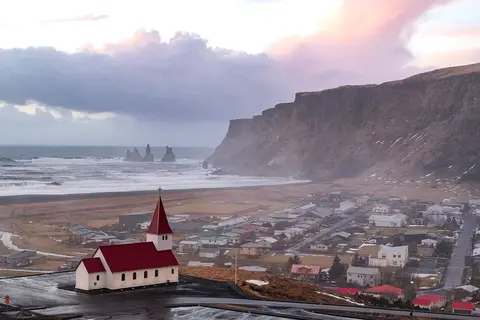
Iceland sits on the Mid-Atlantic Ridge, where the North American and Eurasian plates are drifting apart. In Þingvellir National Park, about 45 minutes from Reykjavík, you can see this as a rift valley you can hike through; in the Silfra fissure, visitors dive and snorkel in glacial water with visibility of more than 100 meters. The south is the most visited region: you can walk around behind the Seljalandsfoss waterfall, at Skógafoss a staircase leads up to the start of the hiking trail over Fimmvörðuháls, and near Vík í Mýrdal black basalt columns line the beach at Reynisfjara. This is also where the dreaded sneaker waves roll in, waves that surge much farther up the beach than you would expect, so you should keep your distance from the water.
Farther east lies Vatnajökull, Europe's largest glacier and the heart of a national park that is a World Heritage Site. At the Jökulsárlón glacier lagoon, icebergs drift out to sea, and at Diamond Beach the chunks of ice come to rest on the black sand. The north is drier and brighter: mud pots bubble around Mývatn, and Dettifoss is considered one of the most powerful waterfalls in Europe. Finally, the Westfjords are a remote region of steep coastal cliffs where puffins nest in summer, and roads that wind into and back out of every fjord.
Reykjavík, Akureyri and the Reykjanes Peninsula
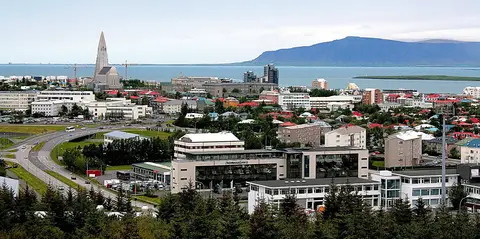
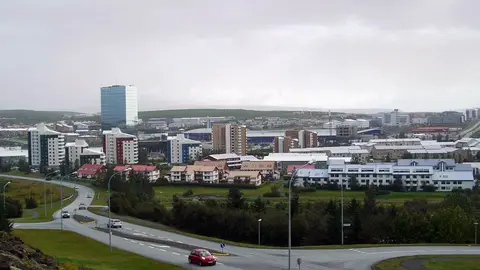
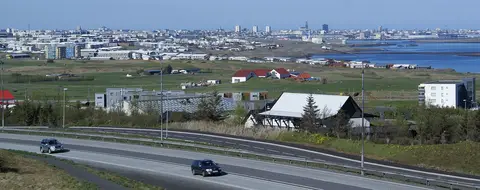
Reykjavík is small enough to explore on foot. From the tower of Hallgrímskirkja, whose shape recalls solidified lava columns, you look out over colorful corrugated-iron houses, the harbor and the Harpa concert hall with its glass facade. Laugavegur is the main shopping street, and in the old harbor, workshops have become restaurants and museums. Locals don't meet at the bar but at the public pool: thermal baths like Sundhöllin or Vesturbæjarlaug are the city's real living room, with hot pots where people talk about the weather and politics. The neighboring towns of Kópavogur and Hafnarfjörður have long since grown together with the capital.
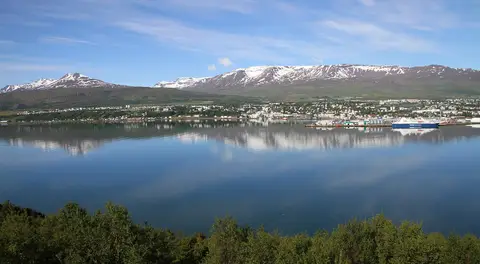
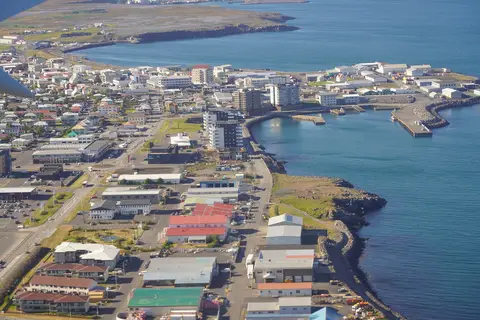
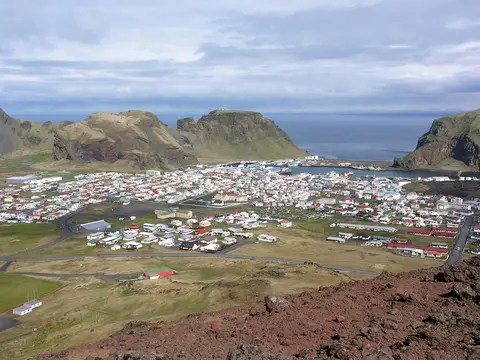
Akureyri, the "capital of the north," lies on Eyjafjörður and is the starting point for whale watching and excursions to Mývatn; here, the traffic lights have heart-shaped red lights. On the Reykjanes Peninsula, where Keflavík Airport is also located, the Blue Lagoon is the best-known of Iceland's attractions. Since 2021, lava has erupted repeatedly in the region, most recently several times near Grindavík, which was temporarily evacuated. Before a visit, it is therefore worth checking the authorities' advisories. Iceland destinations beyond the Ring Road also include the Westman Islands off the south coast, where an eruption in 1973 nearly buried the town of Heimaey, and the Snæfellsnes Peninsula with the glacier volcano Snæfellsjökull, which Jules Verne made the entrance to the center of the Earth.
History and Culture: Sagas, the Althing and Elves
Iceland was settled in the 9th century by Norwegians, who often brought Celtic slaves and women from the British Isles with them. In 930, the settlers first gathered at Þingvellir for the Althing, which is considered one of the oldest parliaments in the world. The Icelandic sagas date from the Middle Ages, family chronicles full of feuds and sea voyages that Icelanders can still read in the original today, because the language has changed so little. Iceland has been an independent republic since 1944. Last names are mostly patronymics, formed with -son or -dóttir, and the phone book is sorted by first name. The fact that part of the population at least does not rule out a belief in elves and the hidden people occasionally leads to roads being built around certain rocks.
Food and Drink: Lamb, Skyr and Fermented Shark
Icelandic cuisine thrives on lamb and fish. The sheep roam freely in the highlands all summer, and kjötsúpa, a hearty lamb soup with root vegetables, warms you up after a day in the wind. Fresh cod, haddock and Arctic char are on every menu, as is plokkfiskur, a fish stew with potatoes eaten with dark rúgbrauð, a sweetish rye bread traditionally baked in hot earth. Skyr, a dairy product similar to quark, is served at breakfast and as dessert. The brave try hákarl, fermented Greenland shark, traditionally washed down with a shot of caraway schnapps called Brennivín. An inexpensive classic is the hot dog, "ein með öllu," with everything, from the kiosk Bæjarins Beztu in Reykjavík.
Getting There and Getting Around on the Ring Road
Almost all visitors land at Keflavík International Airport, about 50 kilometers from Reykjavík; direct flights come from Frankfurt, Munich, Berlin and Hamburg, among others. The Norröna ferry of Smyril Line runs from Hirtshals in Denmark via the Faroe Islands to Seyðisfjörður in the east, and is mainly of interest to travelers with their own vehicle. There is no railway. Most people drive a rental car along the Ring Road, which is about 1,300 kilometers long and for which you should allow at least a week. Highland tracks, the so-called F-roads, are open only in summer and permitted only for four-wheel-drive vehicles. Domestic flights from Reykjavík City Airport connect the capital with Akureyri, Egilsstaðir and Ísafjörður.
Best Time to Visit Iceland: Midnight Sun or Northern Lights
The best time to visit Iceland for road trips is between June and August. It is then light almost around the clock, the highlands are accessible, and temperatures in Reykjavík reach 12 to 15 degrees Celsius (54 to 59°F), on sunny days in the north even above 20 degrees (68°F). Puffins can be seen along the coasts from May to August. If you are looking for the northern lights, travel between September and March, ideally on clear, moonless nights away from the cities. In winter the days are short; around the winter solstice, Reykjavík gets only a little over four hours of daylight, but ice caves form in Vatnajökull, which you can visit with guides. Thanks to the Gulf Stream, the coast is milder than you might expect, with temperatures around freezing, but storms and ice can close roads at any time.