Suðurnes: Reykjanes, the Blue Lagoon, and Lava Fields
Travel guide · editorialFor almost every visitor, Suðurnes is the first impression of Iceland: this is where planes land at Keflavík, amid moss-covered lava fields. But a trip to Suðurnes is worth far more than just a transfer – with the Blue Lagoon, bubbling thermal fields, and a peninsula where the earth has been spewing fire again and again for several years now.
Sights in Suðurnes
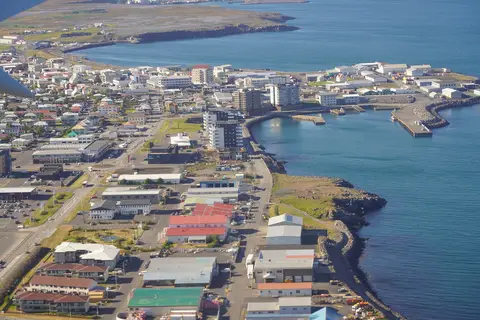
The Blue Lagoon near Grindavík is Iceland's best-known thermal spa: milky blue, mineral-rich water from a geothermal power plant fills pools set among black lava. At the southwestern tip of the peninsula, the Gunnuhver mud field bubbles away, and next to it the Reykjanesviti lighthouse stands above a surf-battered coast with bird cliffs. The Bridge Between Continents spans a rift where the North American and Eurasian plates are drifting apart. The entire peninsula is part of the Reykjanes UNESCO Geopark. In Reykjanesbær, which Keflavík is part of, the Víkingaheimar Viking World museum tells the story of the Íslendingur, a seaworthy replica of a Viking ship, and the Rokksafn Íslands (Icelandic Museum of Rock 'n' Roll) covers Iceland's pop music history. Geothermal energy is everywhere on the peninsula: the Svartsengi power plant supplies electricity and hot water. At the northern tip near Garður stand two lighthouses, where you can watch the northern lights well in winter.
Volcanoes and Nature
After roughly 800 years of dormancy, the Reykjanes peninsula has been volcanically active again since 2021. Eruptions at Fagradalsfjall and, from late 2023, along the Sundhnúkur crater row near Grindavík led to the fishing town being evacuated and protected with defensive barriers. Whether and where lava fields are accessible depends on current conditions; you should check the advisories from the Icelandic Meteorological Office before every outing. Only hike in lava fields on marked trails, as fissures and gases can be dangerous.
Food, Getting There, and Best Time to Visit
The peninsula's fishing towns live off cod, which restaurants serve fresh or as salt cod; Sandgerði and Garður have small harbors with fish kitchens. Keflavík Airport sits right in the middle of the region, about 45 minutes from Reykjavík. Suðurnes can be visited year-round: summer is the most pleasant time for hiking, while in winter you can see the northern lights over the lava on clear nights. The Duus Safnahús cultural center, housed in old merchants' buildings in Reykjanesbær, showcases art and local history, and hotels near the airport are handy for early departures.