Capital Region: Reykjavík and Its Neighboring Towns
Travel guide · editorialNearly two-thirds of Iceland's population lives in the Capital Region, known in Icelandic as Höfuðborgarsvæðið, and yet the wilderness begins right behind the last houses. A vacation in the Capital Region means colorful corrugated-iron houses in Reykjavík, soaking in geothermally heated outdoor pools, whale watching in the bay, and a starting point for the Golden Circle.
Location and Landscape
The region lies on Faxaflói Bay in southwestern Iceland and includes Reykjavík as well as the neighboring municipalities of Kópavogur, Hafnarfjörður, Garðabær, Mosfellsbær, and Seltjarnarnes. To the north rises the flat-topped mountain Esja, a popular hiking destination for locals, while to the south the lava fields of the Reykjanes Peninsula begin. Thanks to the Gulf Stream, the climate is mild but changeable and windy; in summer it barely gets dark at night, while in December there are only about four hours of daylight. On clear days, you can see the Snæfellsjökull glacier on the horizon from the harbor, more than 100 kilometers away.
Sights in the Capital Region
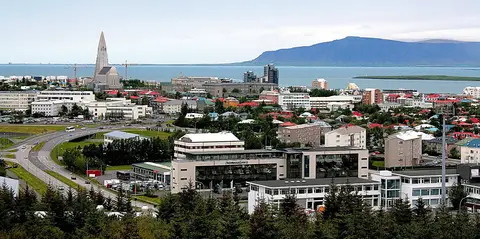
Hallgrímskirkja, with its 74-meter-high tower inspired by basalt columns, is Reykjavík's landmark; from the tower, you look out over the colorful rooftops. At the harbor, the Harpa concert hall gleams with its glass facade by Ólafur Elíasson. The shopping street Laugavegur, the lake Tjörnin with City Hall, the National Museum, and the saga exhibition at Perlan with its artificial ice cave and observation deck offer insight into history and nature. The sculpture Sólfar, a stylized Viking ship, stands on the waterfront promenade. From the Old Harbor, whale-watching and puffin tours depart for islands such as Lundey. Hafnarfjörður, the town of elves and lava rocks, draws visitors with the Hellisgerði lava park and a Viking festival in June. Kópavogur has an art museum in Gerðarsafn, and Mosfellsbær is a gateway to the Golden Circle with Þingvellir, Geysir, and Gullfoss. Reagan and Gorbachev met in 1986 at Höfði House on the coast, and on the island of Viðey, Yoko Ono's Imagine Peace Tower lights up in fall and winter. At Nauthólsvík beach, you can bathe in a lagoon heated with geothermal energy.
Culture and Daily Life
Reykjavík is a small capital with a big cultural scene: musicians such as Björk and Sigur Rós, the Iceland Airwaves music festival in November, and a lively literary scene have earned the city the title of UNESCO City of Literature. Life revolves around the outdoor pools, the sundlaugar, where people gather in hot tubs in any weather. During Culture Night in August, museums and buildings stay open late into the night, and on weekends the bars along Laugavegur stay lively late.
Food, Getting There, and Best Time to Visit
Icelandic cuisine relies on lamb, fish, and skyr. Well-known dishes include plokkfiskur, a fish casserole; hot dogs with crispy fried onions at the Bæjarins Beztu stand; lamb soup; and kanelsnúðar, cinnamon rolls. The adventurous try hákarl, fermented shark. Keflavík International Airport is about 45 minutes away, and the Flybus and rental cars bring travelers into the city. The best time to visit is June through August for the midnight sun, and October through March for the northern lights. The Golden Circle, the Snæfellsnes Peninsula, and the volcanic area of Reykjanes can all be explored from Reykjavík as day trips; many tours start right in the city. Strætó buses connect the neighboring towns.