Museum · Museums (general)
Historisches Grünes Gewölbe
Residenzschloss, Taschenberg 2, 01067 Dresden
About Historisches Grünes Gewölbe
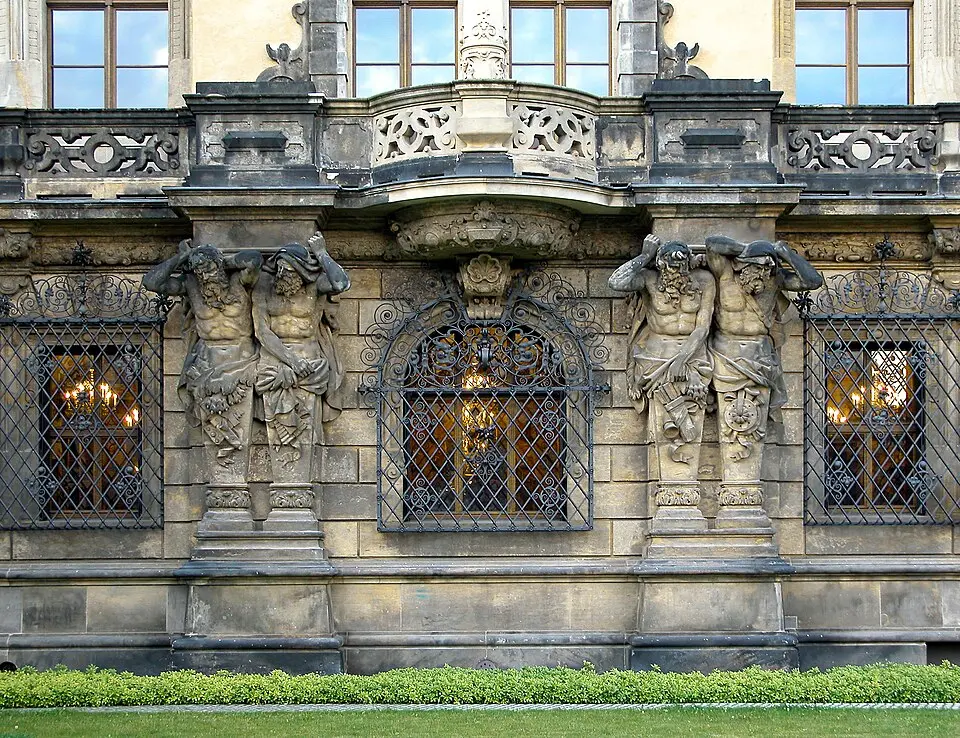
The Historic Green Vault (Historisches Grünes Gewölbe) in Dresden is one of the most important collections of art treasures and jewels in Europe. As part of the Dresden State Art Collections, it houses the historic treasury of the Saxon electors and kings, spanning the Renaissance through Neoclassicism. The name comes from the column bases and capitals in the oldest vaulted rooms, which were originally painted malachite green. The rooms have been open to the public since 1724, making the museum one of the oldest of its kind in the world. The collection comprises more than four thousand works of art, of which only a selection of the most famous and exquisite pieces can be shown to the public, since space is limited.
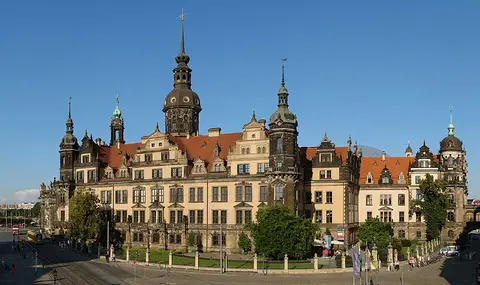
The history of the Green Vault begins in 1547, when Duke Maurice was named elector and had a wing added to his residential palace. The ground-floor rooms created at that time initially served to safely store valuable objects and documents. The stone vaults offered special protection against fire, which made it possible to preserve the treasures over the centuries. It was only under Augustus the Strong, the Saxon elector and Polish king, that the collection was expanded into a Baroque cabinet of wonders between 1723 and 1730. The architect Matthäus Daniel Pöppelmann designed the rooms, while Raymond Leplat was responsible for the interior furnishings. This expansion laid the foundation for today's presentation in a magnificent showcase of ceremonial architecture.
In the 20th century the vault remained largely unchanged until the bombing of Dresden on February 13, 1945, destroyed most of three of the nine rooms. The art treasures, however, had been moved in time to Königstein Fortress and survived the war. After World War II they were carried off to the Soviet Union, but returned to East Germany in 1958 by decision of the Soviet government. From 1959 to 2004 the collection was temporarily on view in Dresden's Albertinum. On September 1, 2006, the restored Historic Green Vault reopened on the ground floor of the west wing of the Residential Palace. The layout follows the inventories of 1733 and restores the state of the collection under Augustus the Strong as far as possible, with more than 3,000 objects returning to their original places.
The Historic Green Vault consists of nine exhibition rooms and an antechamber, offering visitors an impressive glimpse of electoral splendor. The antechamber, which can also be entered without a timed ticket, displays works from the Middle Ages and early Renaissance, including the drinking bowl of Ivan the Terrible and Martin Luther's mouth cup. The Amber Cabinet houses one of the most artistically significant collections of amber art in Europe, with vessels and statuettes from workshops in Königsberg and Danzig. Other rooms are devoted to ivory, white silver and silver gilt, and the Silver-Gilt Room once again shines in its malachite-green splendor after the fire of 1945.
The Pretiosa Hall, the largest exhibition room, is almost entirely mirrored and impresses with its opulent design. The Jewel Room contains what is probably the best-known exhibit, the "Moor with an Emerald Cluster," created by the court goldsmith Johann Melchior Dinglinger in collaboration with Balthasar Permoser. This sculpture presents a Colombian emerald cluster on a tray and is set with numerous gemstones. Another masterpiece is the "Obeliscus Augustalis," a life-size wall-mounted obelisk that bears an oval portrait of Augustus the Strong and is made up of 240 gems and cameos. These pieces embody the absolutist claim to power of the rulers and bear witness to the highest craftsmanship.
Until the theft in 2019, the jewelry sets in the Historic Green Vault formed the most extensive jewel treasure in Europe. They were created for Augustus the Strong and his successors and followed the fashions of their day. Among the treasures was also a 648-carat sapphire, unique in the world, a gift from Tsar Peter the Great. On November 25, 2019, thieves broke into the historic section of the Green Vault and stole several objects and the "Saxon White," a 48-carat white diamond. After lengthy investigations, a considerable portion of the loot was recovered in December 2022, including 31 objects, while a few pieces such as the epaulette with the "Saxon White" are still missing.
Besides the Historic Green Vault, the Residential Palace also houses the New Green Vault on the second floor (US numbering), which opened in 2004. In contrast to the historic section, the New Green Vault is set up as a modern treasury museum in plain rooms without historic ambiance. In ten halls with covered windows, nearly 1,100 objects of the jeweler's and goldsmith's art are displayed under artificial light in 200 display cases. The exhibits are arranged chronologically and stand on pedestals of different colors that mark the various eras. Here you will see mainly works by the court goldsmith Johann Melchior Dinglinger, such as the "Golden Coffee Service" and the "Court of Delhi on the Birthday of the Grand Mogul Aurangzeb."
The "Golden Coffee Service" from 1697 to 1701 is considered Dinglinger's first major work and consists of 45 vessels on a silver-gilt pyramid, decorated with gold, silver, enamel, ivory and about 5,600 diamonds. The "Court of Delhi" is an elaborate miniature depiction of a celebration at the court of the Indian Grand Mogul, made solely from travel accounts, since neither the elector nor the goldsmith had ever been to India. The work shows 137 figures and is set with thousands of gemstones. The Watzdorf Cabinet of the New Green Vault also displays the "Dresden Green Diamond," one of the largest diamonds in the world, which owes its unique color to natural radioactivity and is part of a precious hat ornament. These objects underscore the diversity and wealth of the Saxon art collections.
At a glance
- Category
- Museum › Museums (general)
- Rating
- no reviews yet · write a review
- Address
- Residenzschloss, Taschenberg 2
01067 Dresden, Germany - District
- Innere Altstadt
- Phone
- +4935149142000
- Website
- gruenes-gewoelbe.skd.museum
- besucherservice@skd.museum
- Coordinates
- 51.05253° N · 13.73624° E
- Data quality
- confidence 0.99
- Identifier
- ID 9b0af1d1-293…
Part of the tour
Dresden in One Day: Zwinger, Palace, and Neumarkt →Location & surroundings
Toggle layersRatings & comments
none yetNear Historisches Grünes Gewölbe
closest 5 per category · 2 kmSights
Restaurants
Museums
Hotels
More:Museums in Innere Altstadt (32)All museums in Dresden (93)
246 places within 2 km loaded.

You need a free account to leave reviews and photos – that keeps comments genuine and lets you edit them later.