Discover Dresden: Frauenkirche, Zwinger and Neustadt
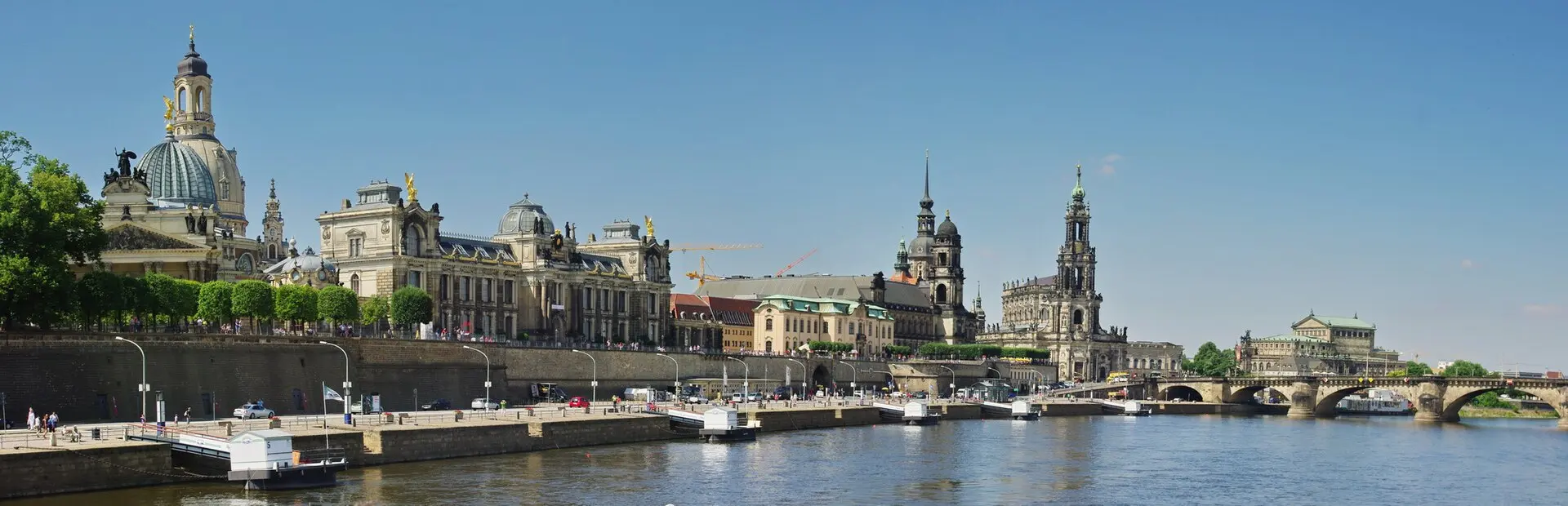
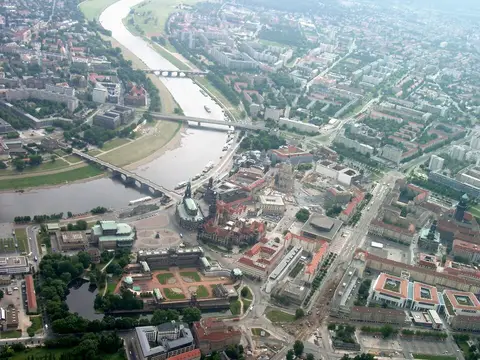
Travel guide · editorialSeen from the banks of the Elbe, Dresden looks like a stage set: domes, towers and palaces line up along the river, just as in the view Canaletto painted in the 18th century. The Saxon state capital was painstakingly rebuilt after its destruction in 1945 and is now one of Europe's great art cities. A city break in Dresden combines Baroque splendor with the lively Neustadt nightlife district and excursions into Saxon Switzerland.
Florence on the Elbe
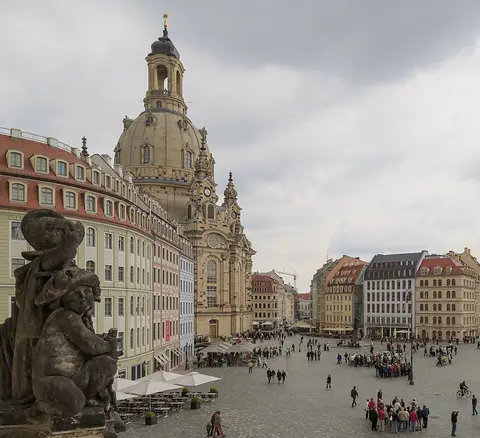
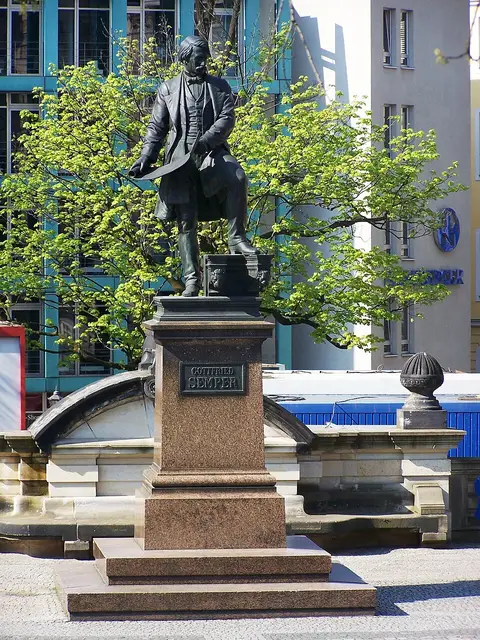
Under Augustus the Strong and his son Augustus III in the 18th century, Dresden became a magnificent royal residence with collections that rank among the most important in Europe. The city owes its nickname "Florence on the Elbe" to the brilliance of its art and architecture. In February 1945, air raids destroyed almost the entire city center. In East German times, the Zwinger and the Semperoper were rebuilt, while the ruins of the Frauenkirche were left standing as a memorial. After reunification, the church was reconstructed with donations from around the world and consecrated in 2005.
Sights in Dresden
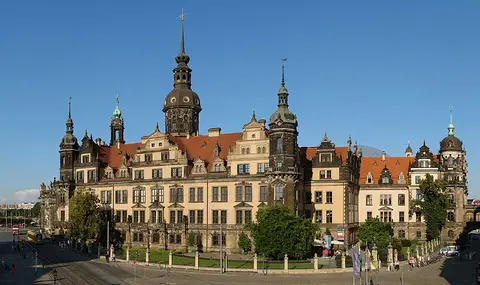
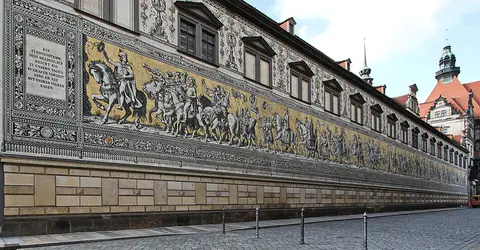
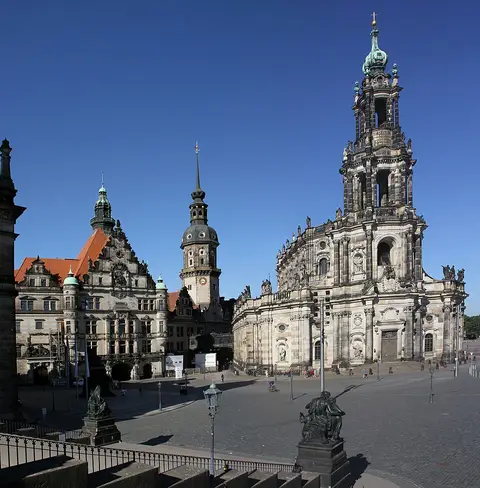
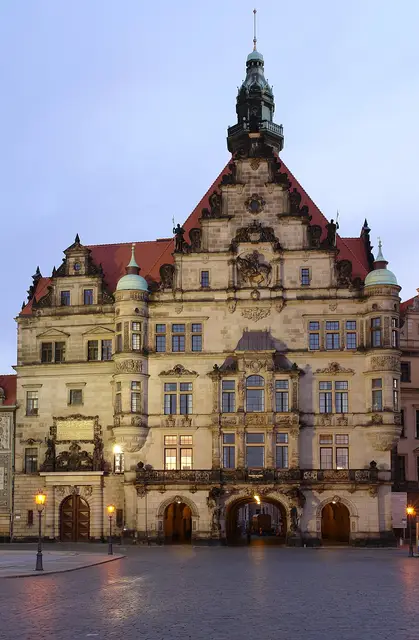
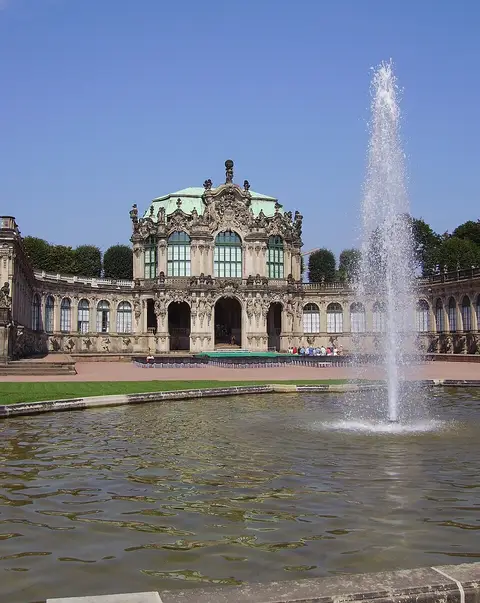
The Frauenkirche on the Neumarkt, with its stone dome, is a symbol of reconciliation; the old, dark stones in the facade show what was reused from the ruins. The Zwinger, a Baroque festival complex with pavilions and gardens, houses the Old Masters Picture Gallery with Raphael's "Sistine Madonna." The Semperoper is one of the most beautiful opera houses in the world. The Residenzschloss preserves treasures of gold, silver and gemstones in the Green Vault. At the Stallhof, the Procession of Princes, a mural more than 100 meters long made of Meissen porcelain tiles, depicts the rulers of Saxony. The Brühl Terrace, the "Balcony of Europe," offers a view of the Elbe.
Neustadt and the Elbe Riverbank
On the other side of the Elbe lies the Äußere Neustadt (Outer New Town), a district of late 19th-century buildings with pubs, clubs, street art and the Kunsthofpassage, whose facades can make music with their rain gutters. In the Innere Neustadt (Inner New Town) you'll find the Golden Rider, a statue of Augustus the Strong, and the Japanese Palace. In summer, the Elbe meadows are a gathering place for picnics and open-air cinema. The Great Garden in the Seevorstadt district is the city's largest park, with a palace and a miniature park railway.
Eating in Dresden
Dresden Christstollen is world famous, as is Eierschecke, a cake made with quark and egg custard. Sauerbraten, potato soup and Quarkkeulchen are part of Saxon cuisine. Wines from the Elbe Valley, one of the northernmost wine regions in Europe, go well with them. The Pfunds Molkerei in the Neustadt is considered the "most beautiful dairy shop in the world," with hand-painted tiles.
Getting Around and Best Time to Visit
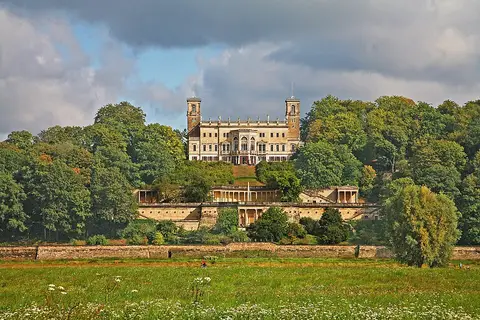
The airport is north of the city and can be reached by S-Bahn in about 20 minutes. Trams and buses serve the city, and historic paddle steamers cruise the Elbe. The best time to visit is from May to September; in Advent, the Striezelmarkt, one of Germany's oldest Christmas markets, draws crowds. Excursions lead to Meissen, Pillnitz Palace and Saxon Switzerland with the Bastei, whose sandstone rocks rise high above the Elbe; the S-Bahn takes about 40 minutes to Kurort Rathen. Moritzburg with its moated castle, known from the fairy-tale film "Three Wishes for Cinderella," and Radebeul with its vineyards and the Karl May Museum are also quickly reached. The Elbe Cycle Path links many of these destinations along flat riverside trails.