About Museum Ludwig
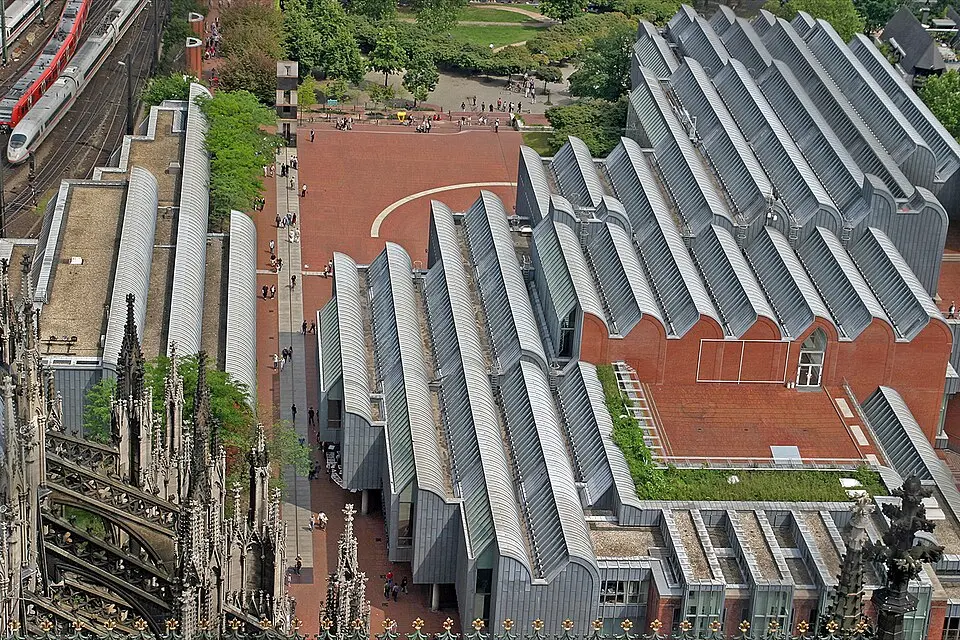
The Museum Ludwig in Cologne is one of Europe's most important institutions for 20th- and 21st-century art. It stands on the Domplatte, just southeast of Cologne Cathedral and the main train station. Besides the museum itself, the building also houses the Cologne Philharmonic, the city's Art and Museum Library, and the Filmforum NRW. With nearly 9,000 square meters (about 97,000 square feet) of exhibition space, the museum has plenty of room for its extensive holdings. The collection includes the largest Pop Art collection in Europe, the third-largest Picasso collection in the world, and major works of German Expressionism and the Russian avant-garde. The museum also owns a comprehensive collection on the history of photography, with around 70,000 works.
The museum's history goes back to the Expressionism collection of Cologne citizen Josef Haubrich, which was originally part of the Wallraf-Richartz Museum. The decisive impetus for founding a museum of its own came from the collector couple Peter and Irene Ludwig. They gave the city of Cologne around 350 works, mostly Pop Art. The city then decided, under the direction of Gerhard Bott, to establish a separate museum for 20th-century art. The aim was to present the collections of the Wallraf-Richartz Museum and the Ludwigs' new holdings under one roof.
Planning the new building came with urban design challenges. A void had developed between the Domplatte and the Rheinuferstrasse, previously used as a bus depot. The city wanted to revitalize this area with a large cultural complex consisting of two museums and a philharmonic hall, giving the city plan new mass and substance. In 1975, an ideas competition was announced, drawing numerous well-known architects from Germany and abroad.
The competition was decided in 1976. The design by the Cologne architecture firm Busmann und Haberer won first prize. The plan called for a lively landscape of sawtooth roofs that echoed the small-scale feel of the Old Town skyline and was conceived as a kind of loosened-up urban structure for pedestrians. The jury's decision was hotly debated in professional circles, since other designs, such as those by Oswald Mathias Ungers and James Stirling, had proposed clearer cubic forms. Nevertheless, the commission went to Busmann und Haberer, which provoked little resistance among architects.
The donation agreement between the Ludwigs and the city of Cologne was signed on February 5, 1976. The foundation stone was laid in January 1982. Before the actual construction, a so-called simultaneous hall was built in Köln-Volkhoven to test lighting and materials. Since 1983, this hall has itself served as an exhibition space for contemporary art. The museum building was completed in just over four years and opened on September 6, 1986.
The building's architecture is governed by a grid system of 10.80 meters, divided into units of 90 centimeters. These dimensions shape the building's appearance down to the smallest details. The facade consists of brick laid in stretcher bond and titanium-zinc, joined together by seaming. The structure encloses a volume of 260,000 cubic meters, equal to that of Cologne Cathedral. Despite this enormous mass, the building does not feel oppressive, because the fanned-out structure with its sawtooth roofs breaks up the perception of bulk. Parts of the complex that need no daylight, such as mechanical rooms, parking, and the Philharmonic's concert hall, were placed underground.
In 2004 and 2005, the entrance areas and the foyer were redesigned by the joint venture of Busmann + Haberer and the Office for Metropolitan Architecture. Since then, the architecture has remained largely unchanged. Today the building is widely acknowledged, even though it drew criticism in the past for its industrial typology. It was conceived more as an urban landscape than as pure architectural form.
In recent years, the building has faced the challenge of a comprehensive renovation. At the end of 2021, the city of Cologne announced that a full renovation would be needed within six to eight years to prevent deterioration. The estimated cost was around one billion euros. The building's architects reacted critically to the high figures and called for the building to be given landmark protection. There was debate over whether the museum could remain open during the renovation.
The city of Cologne is currently looking for ways to preserve the building complex. In February 2025, a Europe-wide tender was launched for the partial renovation of the restoration building, focusing on the ventilation and air-conditioning systems. In general, the city administration plans to hand over operation of the complex to an external operator, as with other cultural centers in Cologne. A status report cites a growing legal risk that the external handover is meant to reduce.
To design Heinrich-Böll-Platz, between the cathedral choir, the Museum Ludwig, and the Hohenzollern Bridge, the environment Ma'Alot by Israeli artist Dani Karavan was inaugurated in 1986. This area had previously been used as a bus station. However, there were usage conflicts, as the ceiling structure of the underground concert hall amplified noise and the square could not be fully entered during events. The plaza surface also suffered from heavy use. After technical studies and consultations with the artist, a costly renovation was carried out and completed in April 2016.
The Museum Ludwig's collections offer a cross-section from classic modernism to current art production. Besides the focal points of Pop Art, Picasso, Expressionism, and the Russian avant-garde, the collection includes works of Abstract Expressionism, Minimalism, and Conceptual Art. The art history of the Rhineland is also well represented, with works by Joseph Beuys, Gerhard Richter, and Sigmar Polke. The photography collection, known as the Agfa Foto-Historama, contains 20,000 cameras alone, along with a wide range of photographic works from the beginnings of the medium to the present. The museum is also committed to giving the collection a global orientation and to reassessing its holdings with regard to diversity and contemporary perspectives.
At a glance
- Category
- Museum › Art museums
- Rating
- no reviews yet · write a review
- Address
- Heinrich-Böll-Platz
50667 Cologne, Germany - District
- Altstadt-Nord
- Phone
- +4922122126165
- Website
- www.museum-ludwig.de
- service.museumsdienst@stadt-koeln.de
- Coordinates
- 50.94079° N · 6.96012° E
- Data quality
- confidence 0.99
- Identifier
- ID 54d9e9ea-6a7…
Part of the tour
Cologne in One Day: Cathedral, Old Town, and Rhine Views →Location & surroundings
Toggle layersRatings & comments
none yetNear Museum Ludwig
closest 5 per category · 2 kmSights
Restaurants
Museums
Hotels
More:Museums in Altstadt-Nord (24)All museums in Cologne (108)
296 places within 2 km loaded.
Don't miss in Cologne
All sights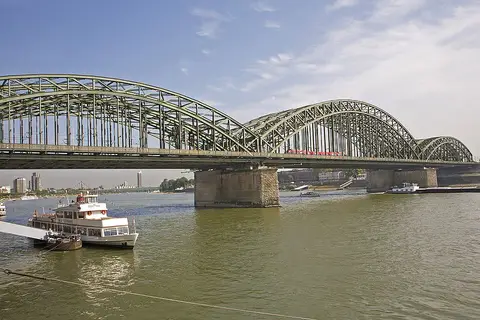 Historic sites01
Hohenzollernbrücke
Trankgasse 20 · Cologne● Website● Phone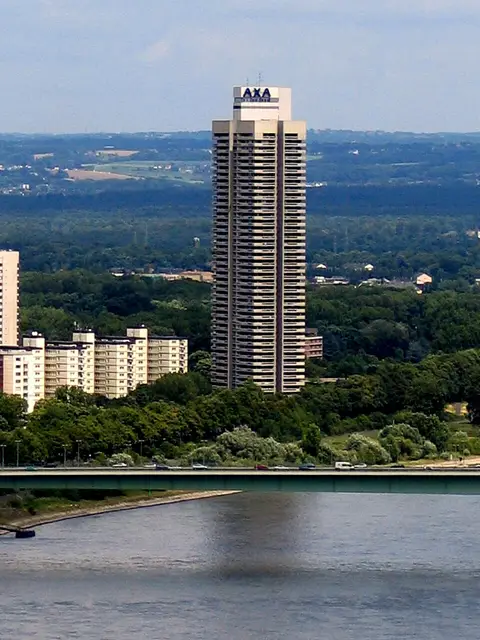 Historic sites02
Colonia-Haus
An d. Schanz 2 · Cologne● Website● Phone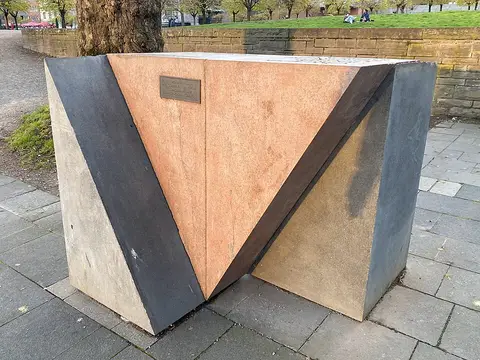 Monuments03
Memorial to Gay and Lesbian Victims of National Socialism
· Cologne○ Website● Phone Historic sites04
You need a free account to leave reviews and photos – that keeps comments genuine and lets you edit them later.
A museum of modern art, near the central railway station and the Cathedral hosts a worthy regular exhibition and temporary exhibitions.
Source: Wikivoyage, „Cologne“ · authors per page history · CC BY-SA 4.0 · as of 5/28/2022