Discover Aachen: Imperial Cathedral, Thermal Baths, and Printen
Travel guide · editorialFor more than 600 years, German kings were crowned on a plain marble throne in Aachen Cathedral, and beneath the Old Town bubble up the hottest springs in Central Europe. Aachen, Germany's westernmost major city, sits where the borders of Belgium and the Netherlands meet, and it is steeped in history, full of students, and devoted to good food. A city break in Aachen combines Carolingian heritage with thermal baths, printen, and day trips across the border.
The City of Charlemagne
The Romans were already using the warm springs for their baths. Around 800, Charlemagne made Aachen his preferred palace seat and had a magnificent palatine chapel built, where he was buried in 814. From 936 to 1531, around 30 German kings were crowned here. In the 18th and 19th centuries, Aachen was a fashionable spa town for the nobility and the upper middle class. Today the city's character is shaped by RWTH, the technical university and one of the largest in Europe, and every year Aachen awards the Charlemagne Prize to individuals who have made outstanding contributions to European unification.
Sights in Aachen
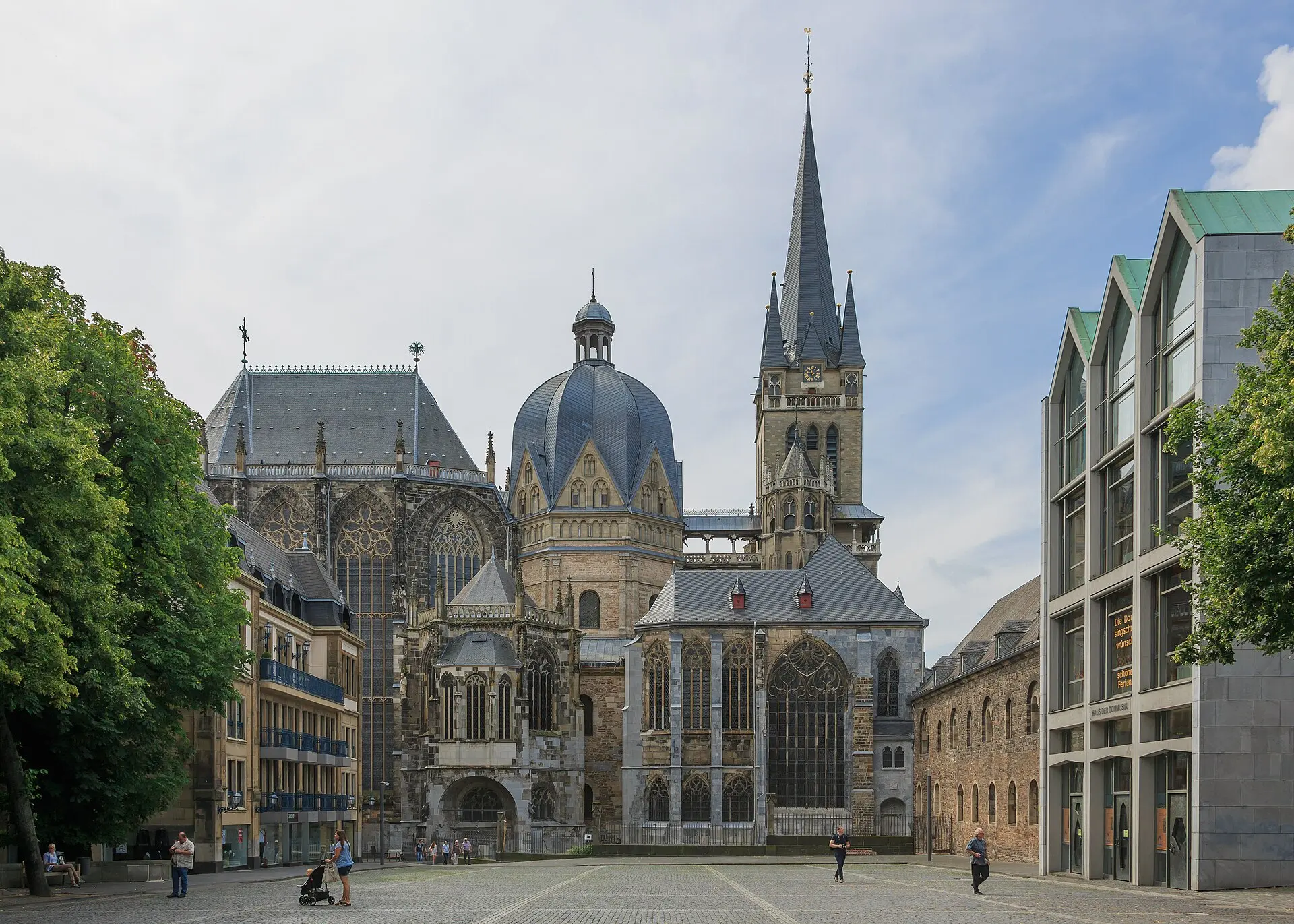
In 1978, Aachen Cathedral became one of the first buildings in Germany to be named a UNESCO World Heritage Site. The Carolingian octagon with its mosaics and the columns Charlemagne had brought from Italy, along with the Gothic choir hall and its tall stained-glass windows, are deeply impressive. The Shrine of Charlemagne and Charlemagne's throne are both here. The cathedral treasury houses the Lothar Cross and the Charlemagne bust, part of one of the most important collections of church treasures north of the Alps. The Gothic City Hall was built on the foundations of the palace's royal hall, and the Coronation Hall displays replicas of the imperial regalia. In between lie the Katschhof, the market square with the Charlemagne Fountain, and the lanes of the Old Town with fountains such as the Puppenbrunnen.
Thermal Baths and Museums
The Carolus Thermen in the Stadtgarten offer thermal water in large pools along with sauna areas. In the Old Town, the Elisenbrunnen, a neoclassical pavilion, recalls the city's spa era; the water flowing from the fountains smells of sulfur. The Centre Charlemagne tells the story of the city, the Ludwig Forum shows contemporary art, and the Suermondt-Ludwig Museum displays old masters. The Couven Museum offers a glimpse of middle-class domestic life in the 18th and 19th centuries.
Eating and Going Out
Aachener Printen are a hard, spicy gingerbread cookie with protected designation of origin, sold in traditional bakeries around the cathedral and the market. You'll also find Reisfladen, a cake made with rice pudding, and hearty Rhenish cuisine. Thanks to the students, the Pontviertel around Pontstraße is the city's nightlife district, with pubs, bars, and inexpensive restaurants. In July, the CHIO takes place, the world's most prestigious equestrian tournament.
Getting Around and Best Time to Visit
The nearest airports are Cologne/Bonn and Düsseldorf, both about an hour away, as well as Maastricht. Aachen is a stop for ICE and Thalys trains on the Cologne–Brussels line. Buses run within the city. The best time to visit is from May to September; during Advent, the Christmas market around the cathedral and City Hall draws visitors from neighboring countries. Day trips lead to Maastricht in the Netherlands, Liège in Belgium, the Three-Country Point at Vaalserberg, and the Eifel region with its national park and Monschau Abbey.