About Musées de Strasbourg
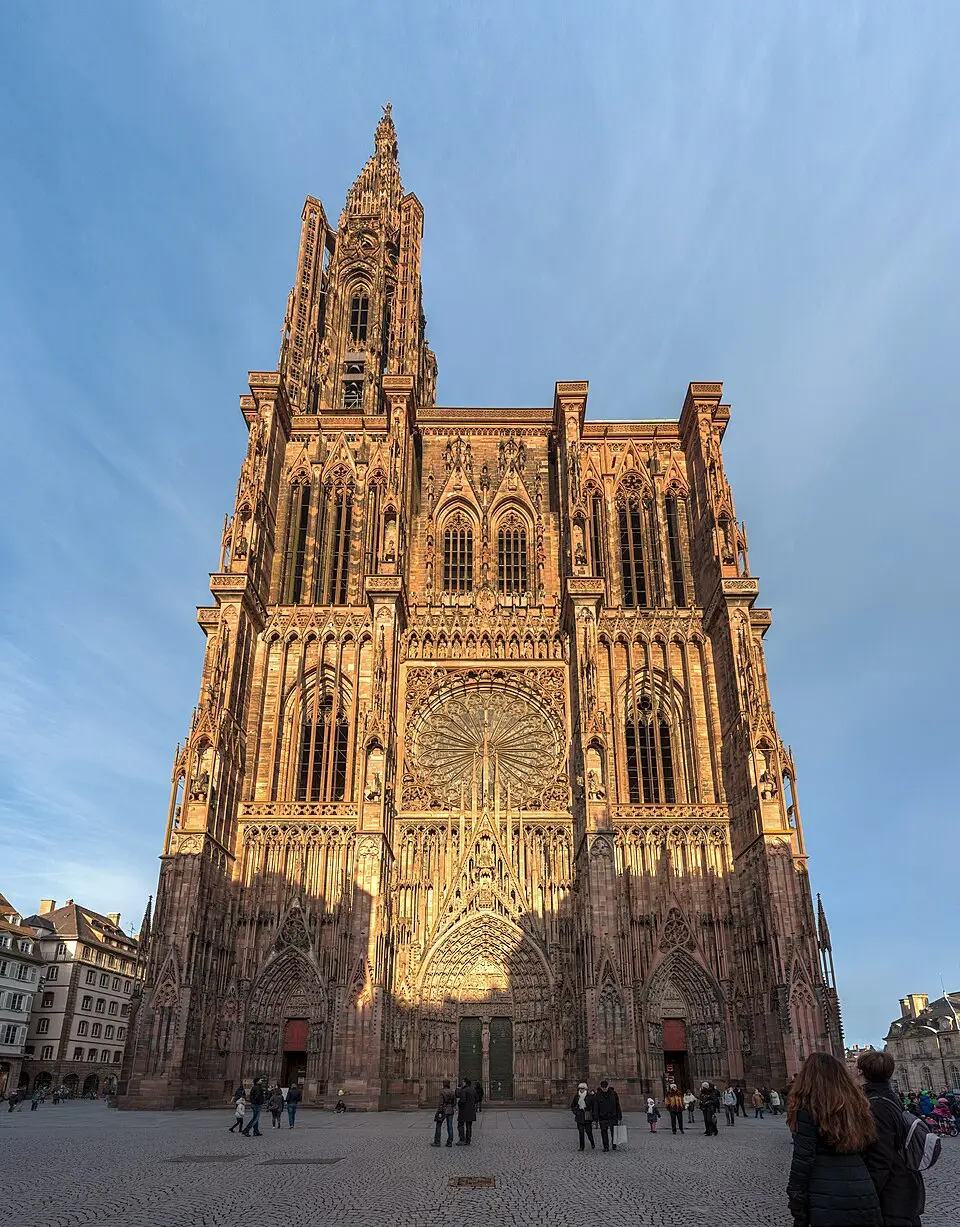
Strasbourg Cathedral, officially the Cathedral of Notre-Dame de Strasbourg, is the architectural and cultural heart of the Alsatian city. One of the most significant sacred buildings in European history, this Romanesque-Gothic basilica blends German and French influences in a way found nowhere else. Built of pink Vosges sandstone, it ranks among the largest buildings of its kind in the world and has shaped the city's skyline for centuries. Its distinctive asymmetrical silhouette, the result of a south tower that was never completed, makes the cathedral the unmistakable landmark of Alsace. On a clear day, the striking tower can be seen from much of the Rhine Valley, the Vosges, and even the Black Forest, underscoring its monumental presence.
The history of the cathedral's construction is marked by a long tradition and several turning points. In antiquity, pagan temples already stood on the site of today's church, followed by Christian wooden churches and stone buildings that were repeatedly destroyed by fires and lightning strikes. Construction of the present building began in the 12th century and continued into the 15th century. It was begun in the Romanesque style before the builders turned to Gothic aesthetics. Renowned architects such as Erwin von Steinbach and Ulrich Ensinger contributed to its design. The north tower, which rises 142 meters, was the tallest structure in the world from at least 1647 until 1874 and remains the tallest building completed in the Middle Ages.
The cathedral's architecture is a complex mosaic of different building phases. The eastern section with the choir and apse rests on foundations from the 11th century, which makes it look heavier and older than the rest of the building. The High Gothic nave, built in the 13th century, impresses with its broad design and the delicate triforium galleries typical of the Rayonnant style. The west facade, whose foundation stone was laid in 1277, is a masterpiece of Late Gothic architecture. It is fronted by a freestanding screen of slender rods and tracery arches, often described as harp tracery, which gives the facade an unusual lightness. The great rose window above the main portal is one of the largest of its kind, though its glass does not extend beyond the outer ring.
The sculptural decoration is especially impressive and counts among the most important works of art produced in the German Empire in the 13th century. In the south transept stands the so-called Angel Pillar, an unconventional ensemble depicting the Last Judgment. Twelve figures are arranged on three levels around an octagonal pillar, with Christ as judge of the world at the center. This arrangement has no parallel in art history. The portals of the west facade are also richly adorned with sculptures telling biblical scenes and stories of salvation. Many of the original figures were damaged or destroyed over the course of history, particularly during the French Revolution, and were later replaced by copies or new creations.
A special highlight for visitors is the astronomical clock in the south transept. This complex mechanism, built in its present form in the 19th century by Jean-Baptiste Schwilgué, shows not only the time but also the orbits of the planets and the moon. A unique feature is the gear train that reproduces the precession of the Earth's axis, a cycle lasting 25,800 years. The clock is also the only one in the world that strikes 1 p.m. as thirteen. Besides the clock, the cathedral houses other precious furnishings, such as the richly decorated pulpit, the baptismal font, and the Swallow's Nest organ, set in a Gothic case from the 15th century.
The cathedral's stained-glass windows are another testament to Western art. Most date from the 14th century, with some older and newer pieces added. Particularly famous was the so-called green ray, a light phenomenon that twice a year shone through a green glass segment and cast a spot of light on the floor that reached the canopy above the Crucifixion. Long interpreted as a medieval symbol, the effect turned out to be a modern coincidence caused by the quality of the glass. After restoration work, the glass was darkened, so the ray can no longer be seen today. Even so, the play of light inside the church remains a central experience that shows the architecture in a special light.
The cathedral is also a place of musical tradition. Three organs are housed in the building, including the main organ in the nave and the choir organ. The cathedral's bells are among the most beautiful in Europe. The great Holy Spirit Bell, cast in 1427, is a historic one-of-a-kind piece that still rings in the peal today. Together with the bells added later, the ensemble forms one of the heaviest and most sonorous carillons in France. The bells are distributed among different towers and contribute to the acoustic identity of the place.
Historically, the cathedral has been the stage for major events. During the Reformation it was used for a time by Protestants, which led to iconoclasm. Later, in the 17th century, it was returned to the Catholics as part of Louis XIV's policy of reunions. During the French Revolution, the north tower was threatened with demolition, which the citizens prevented by crowning it with a Phrygian cap. In World War II the building suffered severe damage from bombing, but it was carefully restored. The choir window by Max Ingrand, donated by the Council of Europe in 1956, symbolizes European reconciliation and is a modern masterpiece of stained glass.
Today Strasbourg Cathedral is the seat of the Archbishop of Strasbourg and a living place of spiritual life. Many prominent preachers and pastors of various denominations have served here. The surrounding Place de la Cathédrale, lined with historic half-timbered houses, provides a picturesque setting for the cathedral. Visitors can climb the north tower via a spiral staircase and enjoy sweeping views of the city and surrounding landscapes from the platform at a height of 66 meters. In good visibility, the view extends to the Vosges, the Black Forest, and the Kaiserstuhl.
The experience is rounded off by the nighttime illumination of the west facade. In the summer months, the facade is lit with changing colors and light effects as part of a sound-and-light show. This staging highlights the fine structures of the architecture and reveals details that often remain in shadow in daylight. Strasbourg Cathedral is thus not just a historic monument but a place that combines history, art, and spirituality in an impressive way and draws visitors from around the world.
At a glance
- Category
- Museum › Museums (general)
- Rating
- no reviews yet · write a review
- Address
- 2 place du Château
67000 Strasbourg, France - District
- Centre
- Phone
- 03 88 52 50 00
- Website
- www.musees.strasbourg.eu
- —
- Coordinates
- 48.58108° N · 7.75080° E
- Data quality
- confidence 0.77
- Identifier
- ID ed124855-49f…
Location & surroundings
Toggle layersRatings & comments
none yetNear Musées de Strasbourg
closest 5 per category · 2 kmSights
Restaurants
Museums
Hotels
More:Museums in Centre (15)All museums in Strasbourg (32)
224 places within 2 km loaded.
Don't miss in Strasbourg
All sights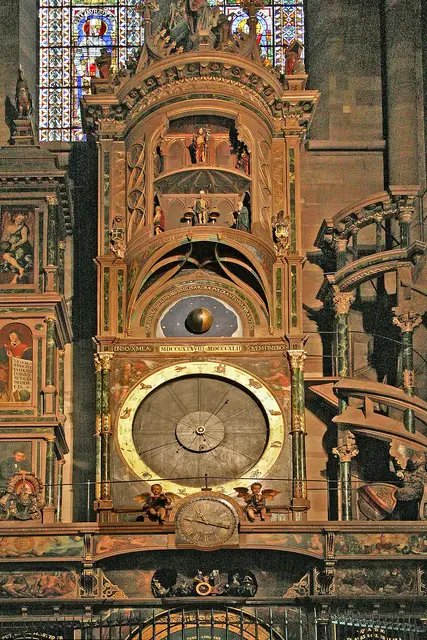 Historic sites01
Horloge Astronomique de Strasbourg
Place du château · Strasbourg● Website● Phone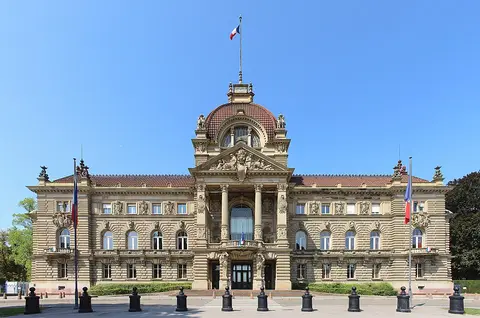 Historic sites02
Palais du Rhin
2 Pl. de la République · Strasbourg● Website● Phone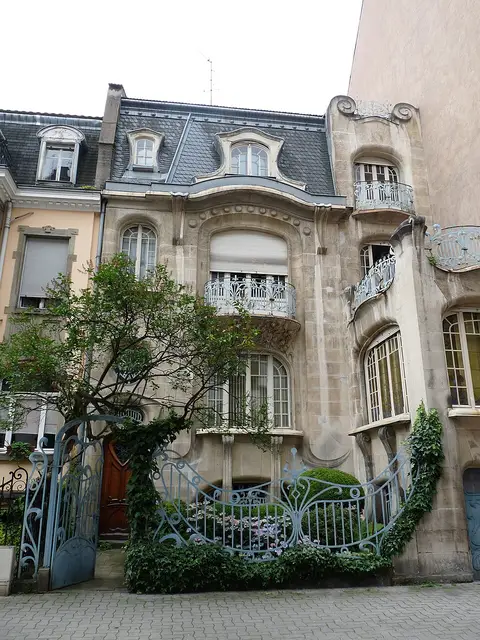 Monuments03
Hotel Brion
20 Rue Sleidan · Strasbourg○ Website○ Phone Historic sites04
You need a free account to leave reviews and photos – that keeps comments genuine and lets you edit them later.