Discover Strasbourg: Cathedral, Petite France, and Winstubs
Travel guide · editorialStrasbourg sits so close to Germany that you can take the tram across the border to Kehl – and yet the city is thoroughly Alsatian and French at the same time. Half-timbered houses are reflected in the canals of the Ill, and above it all rises the red sandstone spire of the cathedral. A city trip to Strasbourg combines European politics, medieval alleyways, and one of the best regional cuisines in France.
A City Between Two Countries
The Romans founded the camp of Argentoratum here, in the Middle Ages Strasbourg became a wealthy Free Imperial City, and around 1440 Johannes Gutenberg experimented here with printing. In 1681 the city passed to France, in 1871 to the German Empire, and in 1918 back to France; it was annexed by Germany during World War II and has been French again since 1944. This back and forth shapes both the architecture and the mentality. After the war, Strasbourg became a symbol of reconciliation: the Council of Europe, the European Court of Human Rights, and the European Parliament, which meets here monthly for plenary sessions, are all based here.
Sights in Strasbourg
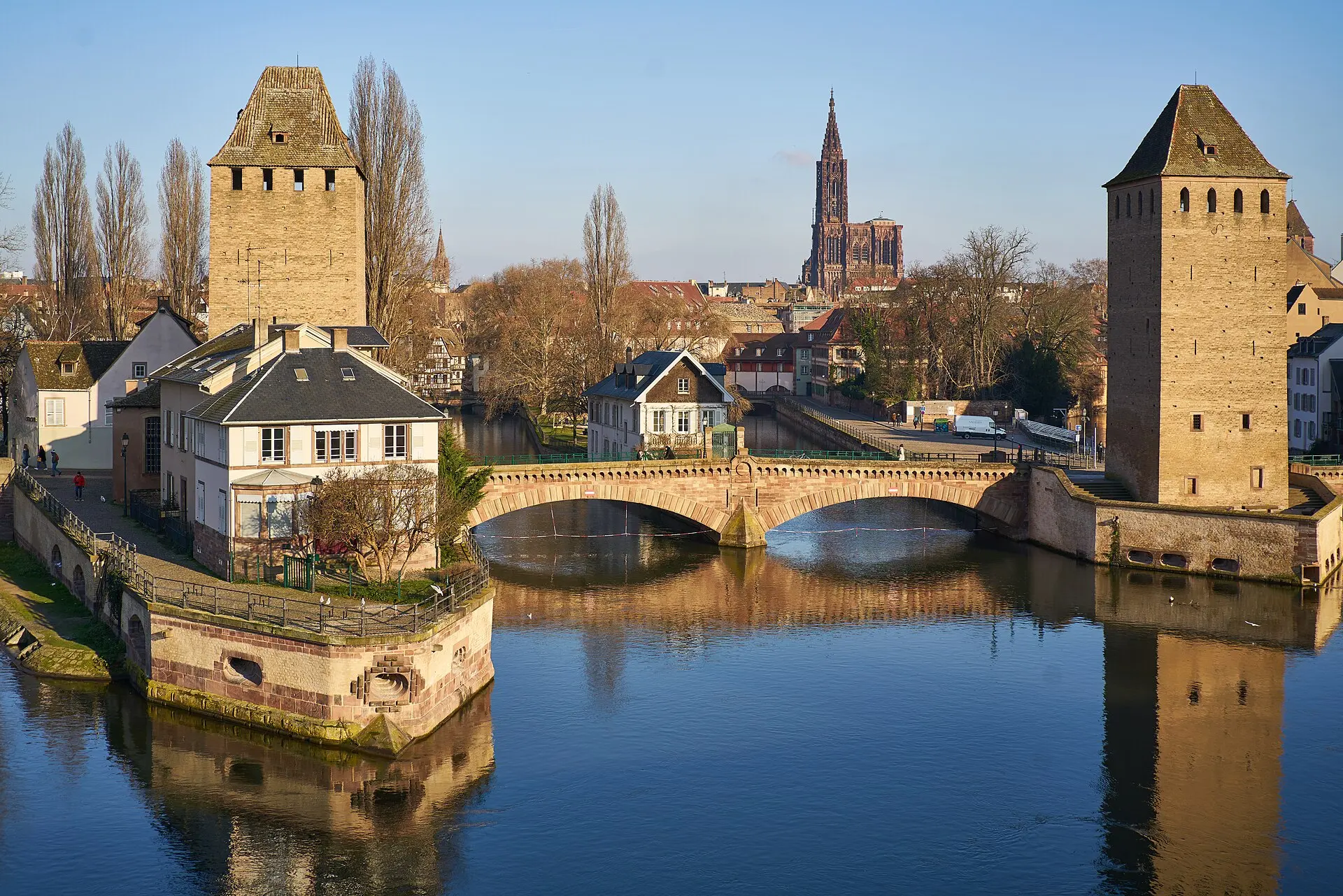
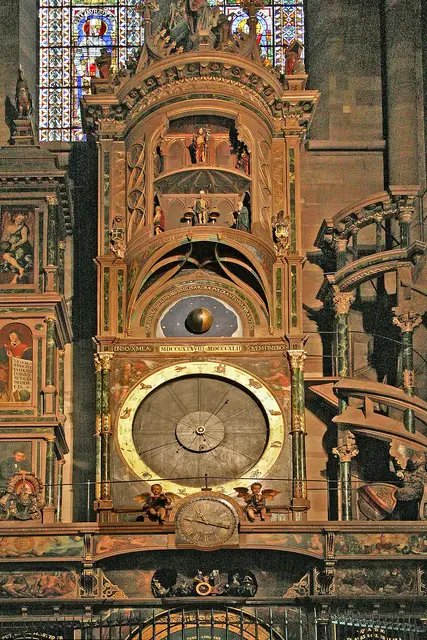
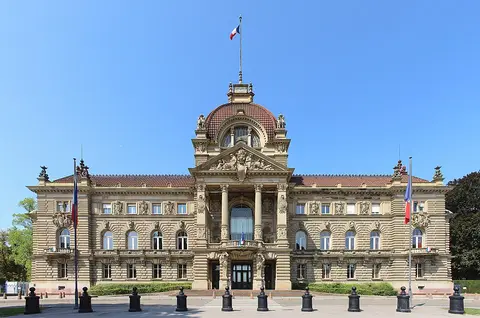
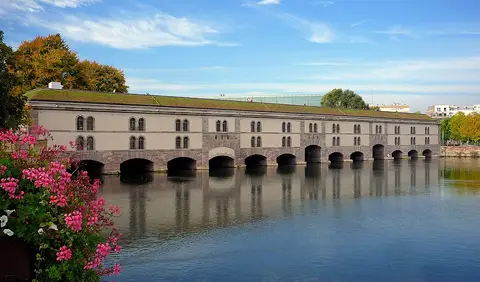
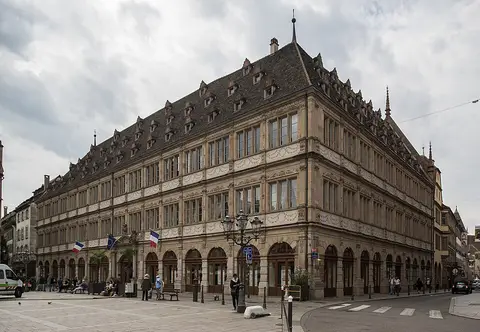
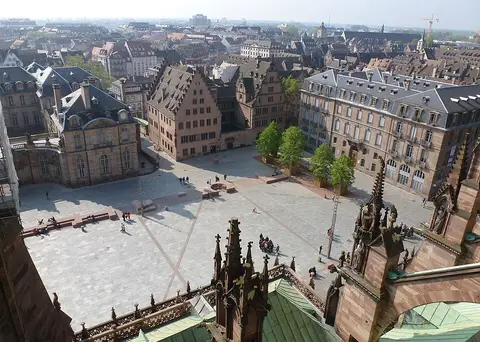
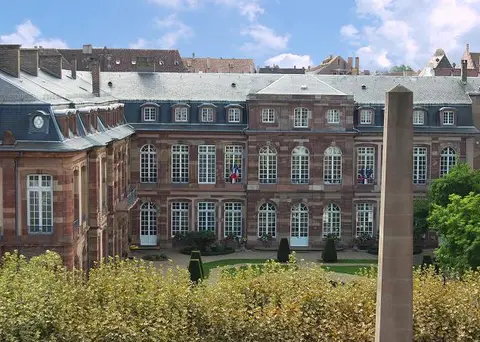
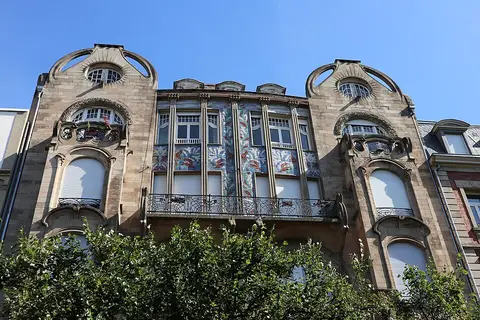
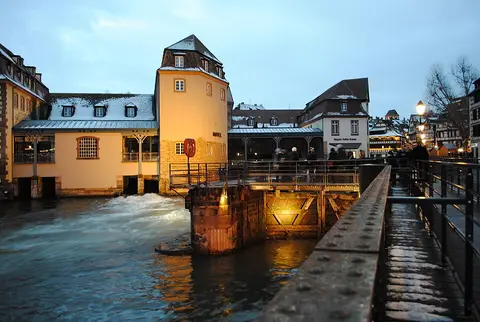
With its 142-meter-high spire, Strasbourg Cathedral (Notre-Dame) was the tallest building in the world for more than two centuries. Its facade looks as if it were made of lace, and inside, the astronomical clock presents a procession of figures every day at 12:30 p.m. If you climb the 332 steps to the platform, you can see all the way to the Black Forest on a clear day. The Petite France quarter, once home to tanners, millers, and fishermen, with its half-timbered houses, locks, and the Ponts Couverts, is the most photogenic spot in the city. The Grande Île, the old town encircled by the Ill in the Centre district, has been a UNESCO World Heritage Site since 1988, and since 2017 so has the Neustadt, the Wilhelmine-era quarter with the Imperial Palace on Place de la République. The Palais Rohan houses three museums, including the Musée des Beaux-Arts. Boat tours on the Ill lead to the European Quarter near Orangerie-Conseil des XV, where the Orangerie park, with its stork enclosure, is a draw.
Eating in Strasbourg: Winstubs and Flammekueche
The winstub is the Alsatian wine tavern, cozy, with wood paneling and hearty cooking. Choucroute garnie (sauerkraut with sausages, bacon, and smoked pork), baeckeoffe (a stew sealed in bread dough), and tarte flambée, the Alsatian flatbread, belong on every menu. For dessert there is kougelhopf or bredele, Christmas cookies. You wash it down with Riesling, Gewürztraminer, or beer from Alsatian breweries. The restaurants around the cathedral are often touristy; Krutenau, a student quarter near Bourse and Esplanade, is more authentic. In the evening, people gather along the quays, in the bars of Krutenau, or on the terraces of Place Kléber.
Christmas Market and Surroundings
The Christkindelsmärik, one of the oldest Christmas markets in Europe, with origins in the 16th century, transforms the old town during Advent into the "Capitale de Noël." Around 300 stalls are spread across several squares, and a giant fir tree stands on Place Kléber. Excursions lead along the Alsace Wine Route to Colmar, Riquewihr, and Obernai, to the Haut-Koenigsbourg Castle, or up Mont Sainte-Odile in the Vosges.
Getting Around and Best Time to Visit
Strasbourg-Entzheim Airport (SXB) lies about twelve kilometers southwest, and a train gets you to the main station in a few minutes. Karlsruhe/Baden-Baden Airport is also nearby. The TGV reaches Paris in just under two hours. In the city, you get around by tram or bike – Strasbourg has one of the densest bike path networks in France. The best time to visit is spring through fall and Advent, though Advent is very crowded.