Normandy: Cliffs, Abbeys, and Landing Beaches
Travel guide · editorialNormandy lies on the English Channel between Paris and Brittany, combining chalk cliffs, apple orchards, and an eventful history stretching from the Vikings to D-Day. A vacation in Normandy takes you to Mont-Saint-Michel, to the harbor towns painted by the Impressionists, and to the beaches where the liberation of Europe began in 1944.
Coasts and Countryside
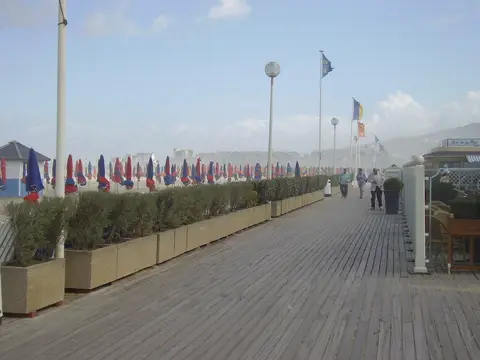
The Alabaster Coast (Côte d’Albâtre) between Le Havre and Dieppe is a steep coastline of white limestone; at Étretat, rock arches such as the Porte d’Aval and the Aiguille rock needle form one of the best-known sights in France. West of the Seine estuary comes the Côte Fleurie with seaside resorts like Deauville and Trouville, then the flat landing beaches of Calvados, and finally the Cotentin Peninsula with its rugged capes and granite coasts. Inland you'll find the Pays d’Auge with half-timbered farmhouses, apple meadows, and cows, Swiss Normandy with its river valleys, and the forests of the Perche, home of the Percheron horse.
Cities and Harbor Towns
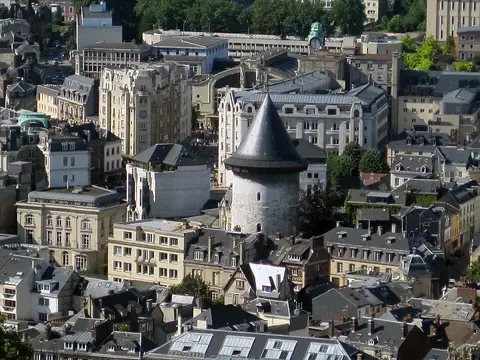
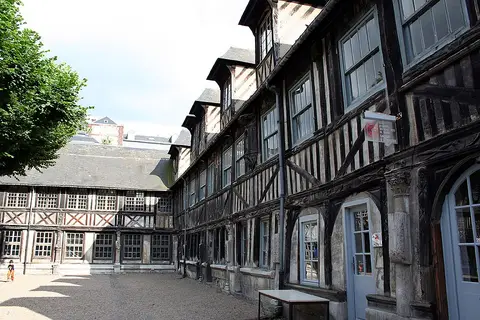
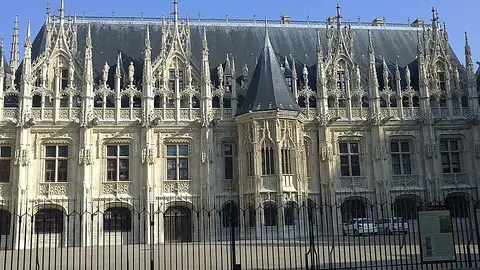
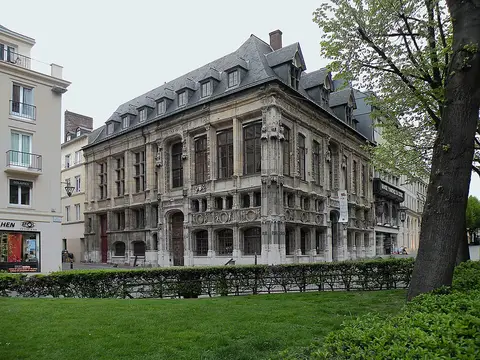
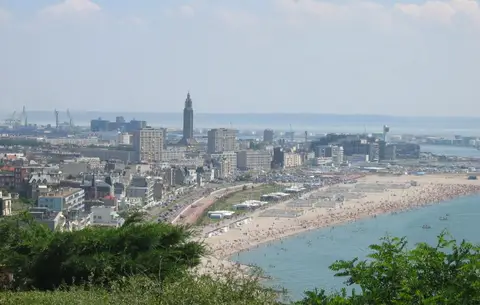
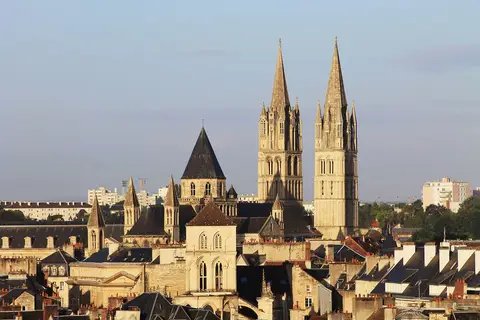
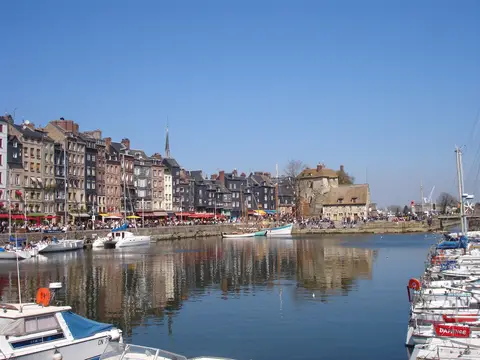
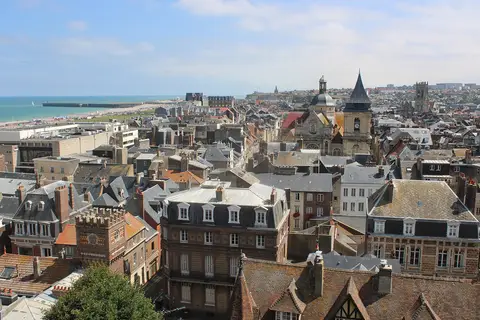
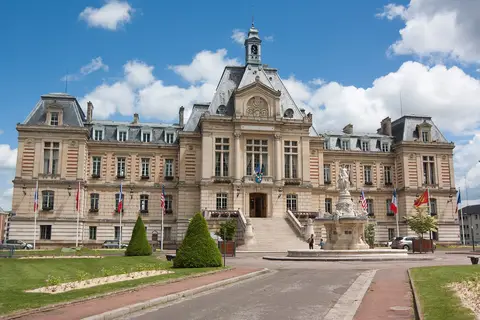
Rouen, the capital, is known as the "city of a hundred spires." Claude Monet painted its cathedral in more than 30 pictures, Joan of Arc was burned at the stake in the Old Market Square in 1431, and the half-timbered lanes around the Great Clock (Gros-Horloge) are full of life. Le Havre was rebuilt in concrete by Auguste Perret after its destruction in World War II, which earned it UNESCO World Heritage status; the Musée Malraux shows Impressionist works with a view of the harbor. Caen was the seat of William the Conqueror, who built two abbeys and a castle here; the Mémorial de Caen is a major museum on war and peace. Honfleur, with its Old Harbor and the wooden church of Sainte-Catherine, inspired Boudin and Monet. Deauville is a glamorous seaside resort with horse racing and a film festival, Dieppe a fishing port, Cherbourg-en-Cotentin a ferry port with the Cité de la Mer, and Évreux a cathedral city in the south.
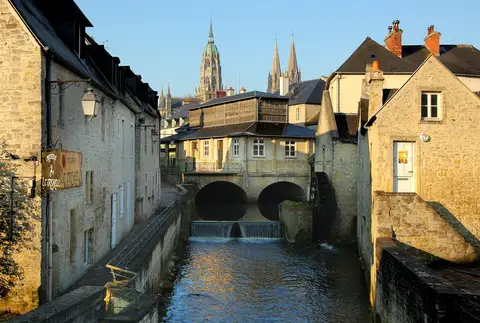
Other Normandy destinations include Varengeville-sur-Mer with its cemetery above the cliffs, Fécamp with the palace of the Bénédictine liqueur distillery, Bayeux with its cathedral and tapestry museum, Lisieux as a pilgrimage site, and Barfleur, a small granite town at the tip of the Cotentin.
Attractions in Normandy
Mont-Saint-Michel, with its abbey perched on a rock in the tidal flats, is one of the most visited sights in France; at spring tide it becomes an island. Other attractions in Normandy include the Bayeux Tapestry, an embroidery nearly 70 meters long depicting the conquest of England in 1066, Monet’s garden in Giverny, the abbeys along the Seine such as Jumièges, and the landing beaches of Omaha, Utah, Gold, Juno, and Sword, along with the American military cemetery at Colleville-sur-Mer and the cliffs of Pointe du Hoc.
History
In the 10th century, Vikings under Rollo received the land as a fief, giving rise to the duchy of the "Northmen." In 1066 Duke William conquered England, and for centuries the fates of the two countries were closely intertwined. On June 6, 1944, Allied troops landed on the coast, and the ensuing Battle of Normandy destroyed many towns. Every year in June, D-Day is commemorated.
Food and Drink
Normandy is a land of milk and apples: Camembert, Livarot, Pont-l’Évêque, and Neufchâtel are famous cheeses, and crème fraîche from Isigny and butter enrich many dishes. Apples become cider, pommeau, and the apple brandy Calvados, while pears become perry (poiré). Between courses, it’s traditional to drink a small glass of Calvados as a "trou normand." On the coast you'll find mussels, scallops from Port-en-Bessin, and oysters, and the lamb raised on the salt marshes of Mont-Saint-Michel has its own quality label.
Normandy is also a land of horses: stallions are bred at the Haras du Pin, a state stud farm dating from the 18th century, and Deauville hosts well-known auctions for thoroughbreds.
Getting There and Best Time to Visit
Rouen is about 1.5 hours from Paris by train, Caen a little over two hours; the A13 motorway runs through the region. Ferries connect Le Havre, Caen-Ouistreham, Cherbourg, and Dieppe with England and Ireland. The best time to visit is from May to September; the apple trees bloom in spring, and cider is pressed in fall.