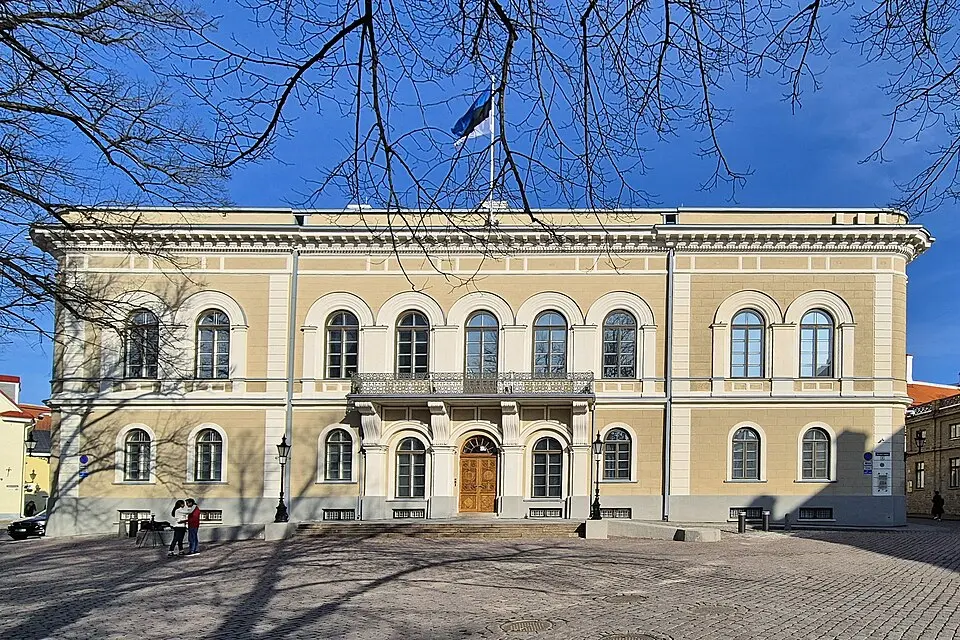
About Estonian Knighthood House
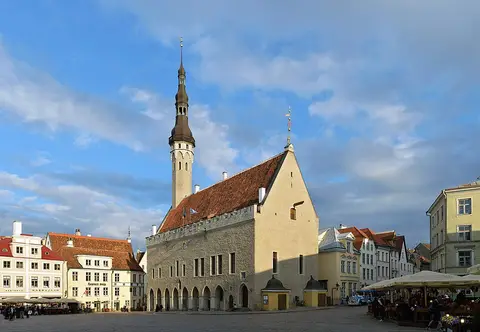
The Estonian House of the Knighthood stands on Cathedral Square in Tallinn's historic Toompea district, right next to the cathedral. The Renaissance-style building was constructed between 1845 and 1848 to designs by architect Georg Winterhalter and is the fourth house of its kind, as its predecessors were lost to fires or became too small. It originally served as a meeting place for the German knighthood, which had ruled Estonia since the 13th century. After Estonian independence, the knighthood lost its privileges in 1920, and the building became the Ministry of Foreign Affairs. During the Soviet occupation, it served as the National Library from 1948 to 1992. In the 1990s, it temporarily housed artworks from Kadriorg Palace before they were transferred to new museums. Since 2009, it has been home to the Estonian Academy of Arts, which is now moving to a historic factory building in the Kalamaja district.
At a glance
- Category
- Sight › Historic sites
- Rating
- no reviews yet · write a review
- Address
- Kiriku plats 1
10130 Tallinn, Estonia - District
- Kesklinna linnaosa
- Phone
- +3726935555
- Website
- —
- —
- Coordinates
- 59.43712° N · 24.74009° E
- Data quality
- confidence 0.85
- Identifier
- ID cf20cd15-26d…
Location & surroundings
Toggle layersFAQ about Estonian Knighthood House
quick answersWhat is the Estonian Knighthood House in Tallinn?
The Estonian Knighthood House is a historic Renaissance-style building on Toompea Hill in Tallinn. It was built between 1845 and 1848 to designs by the architect Georg Winterhalter. It is already the fourth Knighthood House on this site, as its predecessors were lost to fires or became too small.
How has the Knighthood House in Tallinn been used over the course of its history?
The Knighthood House in Tallinn has served in turn the knighthood, the state, the national library and the arts. It was originally the meeting place of the German knighthood, which had ruled Estonia since the 13th century. After Estonian independence in 1920, the knighthood lost its privileges, and the building became the Foreign Ministry and, during the Soviet occupation from 1948 to 1992, the national library. In the 1990s it temporarily displayed artworks from Kadriorg Palace, and since 2009 it has housed the Estonian Academy of Arts, which is now moving to a historic factory building in the Kalamaja district.
Where exactly is the Estonian Knighthood House in Tallinn?
The Estonian Knighthood House stands on Cathedral Square at Kiriku plats 1, in the historic Toompea district of Tallinn. It sits right next to the cathedral and belongs to the Kesklinn district, the city center of the Estonian capital, which has around 457,000 residents.
What can you see around the Estonian Knighthood House in Tallinn?
Around the Estonian Knighthood House in Tallinn, you'll find several historic sites and museums within a few minutes' walk. travelguide195 lists Toompea Hill about 20 meters away, Stenbock House about 100 meters away, and the Gate of the Short Leg (Lühike jalg) about 120 meters away. Art and museum lovers can reach the Adamson-Eric Museum after about 135 meters and the Estonian Drinking Culture Museum after about 140 meters.
Can you combine a visit to the Knighthood House in Tallinn with a tour and a restaurant stop?
Yes, the Estonian Knighthood House in Tallinn is part of the travelguide195 tour "Tallinn Old Town on Foot: From Toompea Hill to the Harbor's Edge." For a break afterward, travelguide195 lists around 153 restaurants within 500 meters of the building.
Ratings & comments
none yetNear Estonian Knighthood House
closest 5 per category · 2 kmSights
Restaurants
Museums
Hotels
More:Historic sites in Tallinn (286)Sights in Kesklinna linnaosa (126)All sights in Tallinn (303)
266 places within 2 km loaded.
You need a free account to leave reviews and photos – that keeps comments genuine and lets you edit them later.
The green Renaissance revival building was erected in mid-19th century as the fourth consecutive home of the Estonian Knighthood, a congregation of essentially German nobles who pratically controlled Estonia up to its independence in 1920s. Since 1920s, it played host to the Foreign Affairs Ministry, National Library, and the art collections on display at Kumu . As of 2014, it is home of the Estonian Academy of Arts. The building is not open to the public as it is used for instruction and faculty work.
Source: Wikivoyage, „Tallinn“ · authors per page history · CC BY-SA 4.0