About Staroměstská quartier
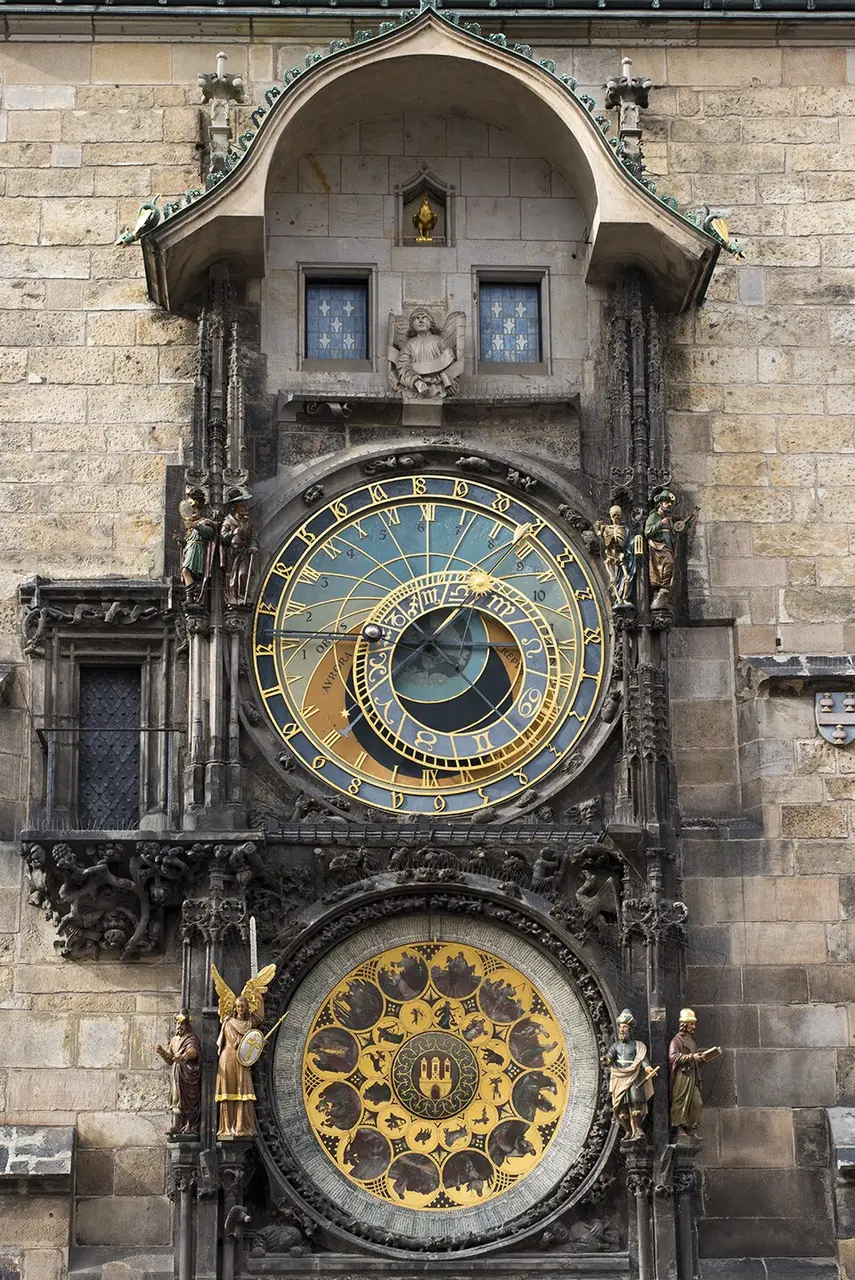
The Staroměstská district in Prague, known as Old Town, is the historic heart of the Czech capital and home to one of the world's most famous sights: the astronomical clock, also called the Prague Orloj or Apostles' Clock. This masterpiece of Gothic science and engineering is mounted on the south wall of the Old Town Hall and has been running since 1410. Together with the town hall, the clock forms a national cultural monument and is an indispensable part of old Prague. It is not only a working timekeeping instrument but also a fascinating ensemble of mechanics, astronomy, and sculpture that draws visitors from all over the world.
The story of the site begins in the 14th century, when King John of Bohemia granted the citizens of the Old Town permission in 1338 to build a town hall. The building was financed by the wine tax. The tower, nearly seventy meters (about 230 feet) high, which houses the clock, was completed in 1364 and was expanded and remodeled several times over the centuries. The clock itself was not built in one piece but developed over several centuries. It was long assumed that it was built only in 1490 by the clockmakers Jan Růže and Jakob Zech, but more recent research has corrected this error. In fact, the mechanical clockwork with the astronomical dial was constructed as early as 1410 by Nicholas of Kadaň, based on plans by the mathematician and astronomer Jan Šindel.
The artistic design of the clock is closely linked to the workshop of Peter Parler, which closed in 1419. The stonework and the sculptures framing the astronomical dial date from this period and are in the Vladislav Gothic style, a Bohemian variant of Flamboyant Gothic. In a later phase, around 1490, a calendar was added beneath the astronomical dial. The entire facade was richly decorated with striking sculptures, while the remnants of Parler's work were preserved close around the dial. In 1551, Jan Táborský of Klokotská Hora took over maintenance and introduced, among other things, the drive for the calendar dial and the half-hour strike. He also installed two sundials, which were removed during later repairs.
In the 17th century, the clock was supplemented with figures and automata mounted on either side of the dials. The astrological tables originally visible in the windows above the astronomical dial were replaced by figures of the twelve apostles, whose presence is historically documented only from 1860. The rooster figure was added in 1882. The clock remained in operation at its original location into the 20th century, and in 1957 it was fitted with electric winding to make operation easier. Despite these technical adaptations, the original going train and hand mechanism have remained largely unchanged over the past 600 years.
The clock's history is also marked by several major rescue efforts. In 1787, the clockwork was in such poor condition that the Prague city council planned to sell it as scrap. Professor Antonín Strnad recognized the work's historical value and persuaded the councilors to finance its repair. The repair was carried out between 1787 and 1791 but initially produced only poor results. Only the so-called Great Repair of 1866 put the clock back into lasting operation. In the process, the original regulator was replaced with a precision pendulum clock that gives the mechanism an impulse every minute. A mistake made while restoring the astronomical dial meant that the zodiac hand was made smaller, which was corrected with an additional golden ring that gives the clock its distinctive look.
During the Prague Uprising at the end of World War II, the clock was badly damaged by shelling and fire. Many feared the historic work could not be saved, and there were even proposals to replace it with a modern model. But the clock was successfully restored to its original form. The apostle figures visible today were newly made in 1948 by the sculptor Vojtěch Sucharda, since only two of the original figures had survived in the city museum. On July 1, 1948, the restored clock mechanism was put back into operation.
For visitors, the clock is best known for its daily show. Between 9 a.m. and 10 p.m., the twelve apostles appear in the windows above the astronomical dial on the hour. At the same time, four allegorical figures come to life at the sides: Vanity, Greed, Death (the Grim Reaper), and the Turk, symbolizing Lust. Death turns the hourglass and rings the bell, while the rooster crows and the bell strikes the hour. This theatrical performance draws large crowds eager to experience the historic significance of the place.
The astronomical dial itself is an astrolabe driven by clockwork that displays a range of time and astronomical data. It shows civil time, Old Bohemian time, sidereal time, planetary hours, and the positions of the sun and moon in the zodiac. The sun hand and moon hand move along a rotating ecliptic that indicates the current position of the celestial bodies in the zodiac. The moon sphere also rotates on its own axis to show the lunar phases. This complex arrangement makes it possible to read astronomical information in addition to the current time, which makes the clock a unique scientific instrument.
Below the astronomical dial is the calendar dial, a rotating calendar that counts the months and days. The outer rim of the disc consists of 365 segments showing the day, the Sunday letter, the name day, and the Cisiojanus. At the center of the calendar dial is the coat of arms of Prague's Old Town, while the inner medallions depict the zodiac signs. The outer medallions show typical scenes for each month, following a centuries-old European tradition. This combination of astronomical precision and cultural symbolism makes the Prague Orloj a fascinating testament to history and technology, leaving an unforgettable impression in the heart of the Old Town.
At a glance
- Category
- Sight › Historic sites
- Rating
- no reviews yet · write a review
- Address
- U Radnice 110/00
110 00 Prague, Czechia - District
- Praha 1
- Phone
- +420224482751
- Website
- www.prague.eu
- —
- Coordinates
- 50.08713° N · 14.41925° E
- Data quality
- confidence 0.96
- Identifier
- ID 99c31ed2-b37…
Location & surroundings
Toggle layersRatings & comments
none yetNear Staroměstská quartier
closest 5 per category · 2 kmSights
Restaurants
Museums
Hotels
More:Historic sites in Prague (736)Sights in Praha 1 (290)All sights in Prague (834)
300 places within 2 km loaded.
Don't miss in Prague
All sights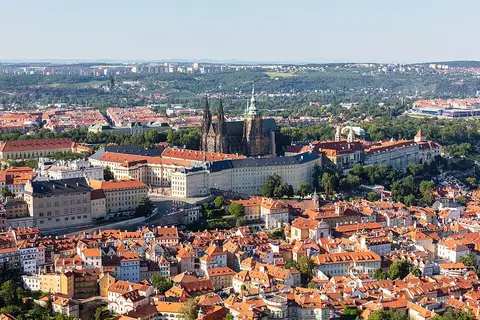 Historic sites01
Pražský hrad
Pražský hrad, 119 08 · Prague● Website● Phone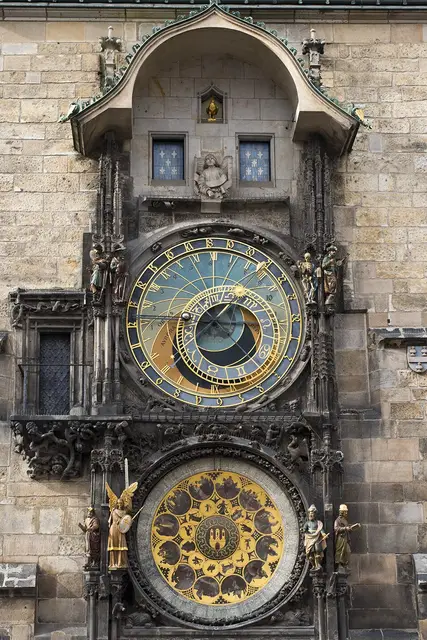 Historic sites02
Prague Astronomical Clock
Staroměstské nám. 1 · Prague● Website● Phone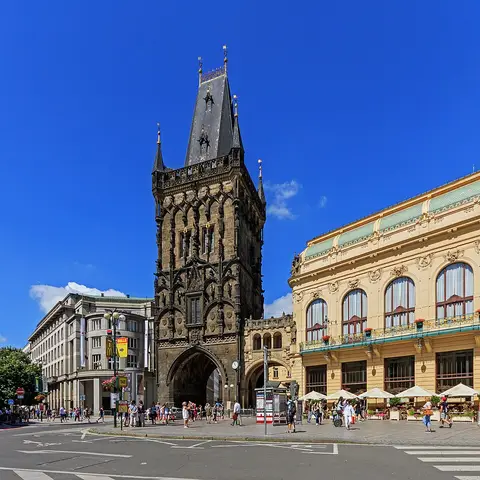 Historic sites03
Prasna brana
náměstí Republiky 1090/5 · Prague● Website● Phone Historic sites04
You need a free account to leave reviews and photos – that keeps comments genuine and lets you edit them later.