About Pomník mistra Jana Husa
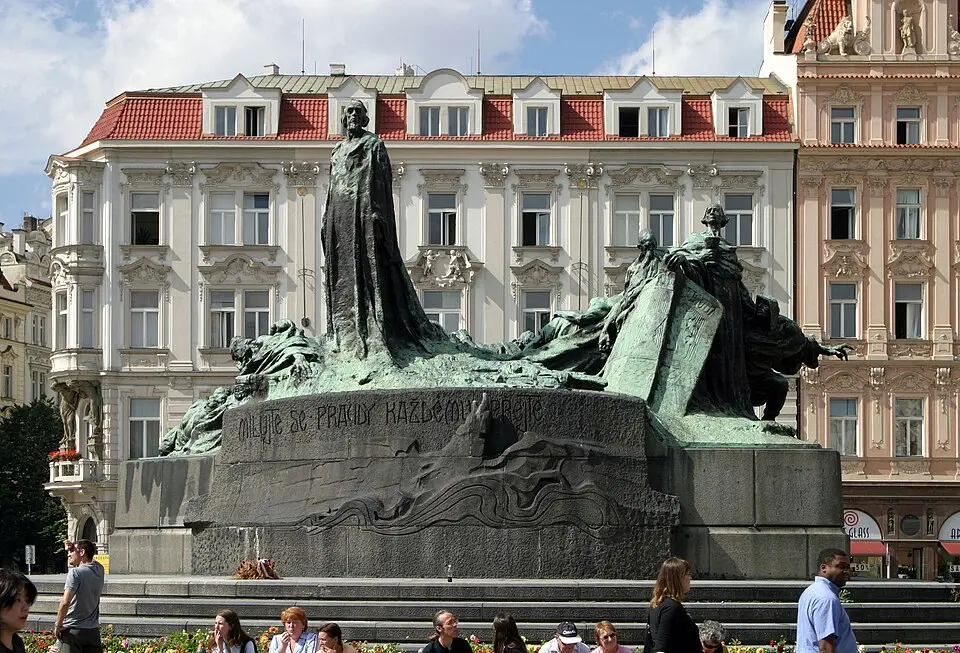
The Jan Hus Memorial on Old Town Square in Prague is an outstanding example of monumental Czech Art Nouveau sculpture. The work of the artist Ladislav Šaloun was unveiled in 1915, on the 500th anniversary of the burning of the reformer Jan Hus. Since 1962, the monument has held the protected status of a National Cultural Monument. The idea for this major memorial project emerged at the end of the 19th century from heated political and social debates. What was originally intended as a tribute to a Christian martyr gradually became a symbol of Czech national identity and the struggle for independence. The choice of location on Old Town Square was not without controversy, as a Baroque Marian Column had previously stood here; it was toppled by demonstrators in 1918 and not re-erected until 2020.
Visitors will find an impressive bronze monument resting on a massive, elliptical granite base. At its center, the figure of Jan Hus rises above the burned-down pyre. His gaze is directed toward Týn Church, which in the 15th century was the main church of the Hussites. The surrounding groups of figures carry deep symbolic meaning. On the side facing Týn Church stand victorious Hussite warriors with chalice and shield. In contrast, on the side facing the Old Town Hall is a group of humiliated people, recalling the expulsion of Protestants after the defeat at the Battle of White Mountain. On the back of the monument, a family with a nursing mother is depicted, symbolizing the hope for a spiritual rebirth of the nation.
The granite pedestal bears four significant inscriptions, which were added only after the founding of the Czechoslovak Republic. These quotations come from Jan Hus himself, as well as from John Amos Comenius and a Hussite chorale. They address love, truth, the survival of the nation, and faith in a better future. The monument underwent extensive restoration from 2007 to 2009 to preserve its historical and artistic value. It remains a central site of remembrance and national history in Prague's Old Town.
At a glance
- Category
- Sight › Monuments
- Rating
- no reviews yet · write a review
- Address
- Staroměstské nám.
110 00 Prague, Czechia - District
- Praha 1
- Phone
- —
- Website
- www.prague.eu
- —
- Coordinates
- 50.08752° N · 14.42120° E
- Data quality
- confidence 0.77
- Identifier
- ID 2a484c59-e7b…
Part of the tour
From the Old Town Across the Vltava: Prague on Foot →Location & surroundings
Toggle layersFAQ about Pomník mistra Jana Husa
quick answersWhat is the Jan Hus Memorial in Prague?
The Jan Hus Memorial (Pomník mistra Jana Husa) is a monumental bronze monument on Old Town Square (Staroměstské nám.) in Prague 1 and an outstanding example of Czech Art Nouveau sculpture. It was created by the sculptor Ladislav Šaloun and unveiled in 1915 on the 500th anniversary of the burning of the reformer Jan Hus. It has been protected as a National Cultural Monument since 1962 and underwent a comprehensive restoration from 2007 to 2009.
What do the figures on the Jan Hus Memorial in Prague represent?
At the center of the Jan Hus Memorial in Prague stands Jan Hus above the burned-out pyre, gazing toward Týn Church, which was the main church of the Hussites in the 15th century. On the side facing Týn Church stand victorious Hussite warriors with a chalice and shield; on the side facing the Old Town Hall is a group of humiliated people, recalling the expulsion of Protestants after the defeat at White Mountain. On the back, a family with a nursing mother symbolizes the hope for a spiritual rebirth of the nation. The bronze figures rest on a massive, elliptical granite base.
What inscriptions are on the Jan Hus Memorial in Prague?
The granite pedestal of the Jan Hus Memorial on Prague's Old Town Square bears four inscriptions, which were added only after the founding of the Czechoslovak Republic. The quotations come from Jan Hus himself, from John Amos Comenius, and from a Hussite chorale. They deal with love, truth, the survival of the nation, and faith in a better future.
Why was the location of the Jan Hus Memorial in Prague controversial?
The site on Old Town Square in Prague was controversial because a Baroque Marian Column had previously stood there. It was toppled by demonstrators in 1918 and not rebuilt until 2020; travelguide195 places the Marian Column (Mariánský sloup) about 19 meters from the Jan Hus Memorial. The idea for the monument emerged at the end of the 19th century from heated political debates, and over time the honoring of a Christian martyr became a symbol of Czech national identity and the struggle for independence.
What can you see around the Jan Hus Memorial in Prague?
Around the Jan Hus Memorial on Prague's Old Town Square, several well-known sights are just a few steps away. travelguide195 lists, among others, Týn Church at about 34 meters, the Kinský Palace of the National Gallery Prague at about 48 to 60 meters, the Old Town Hall at about 63 meters, and the Prague Astronomical Clock at about 66 meters. Within 500 meters, travelguide195 also lists around 415 restaurants, and the monument is part of the tour "From the Old Town across the Vltava: Prague on Foot."
Ratings & comments
none yetNear Pomník mistra Jana Husa
closest 5 per category · 2 kmSights
Restaurants
Museums
Hotels
More:Monuments in Prague (79)Sights in Praha 1 (290)All sights in Prague (834)
300 places within 2 km loaded.
Don't miss in Prague
All sights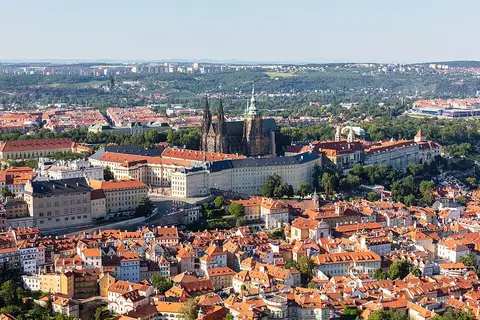 Historic sites01
Pražský hrad
Pražský hrad, 119 08 · Prague● Website● Phone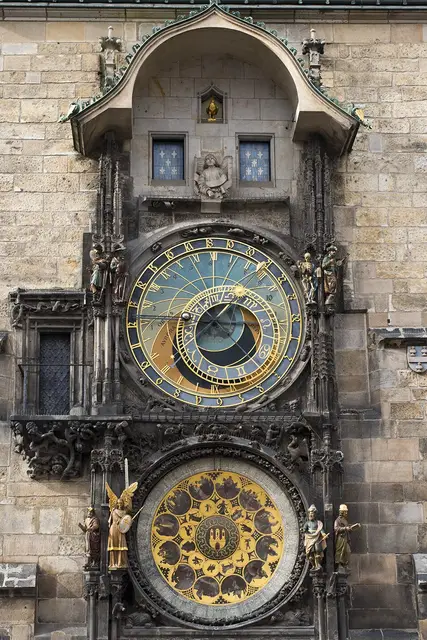 Historic sites02
Prague Astronomical Clock
Staroměstské nám. 1 · Prague● Website● Phone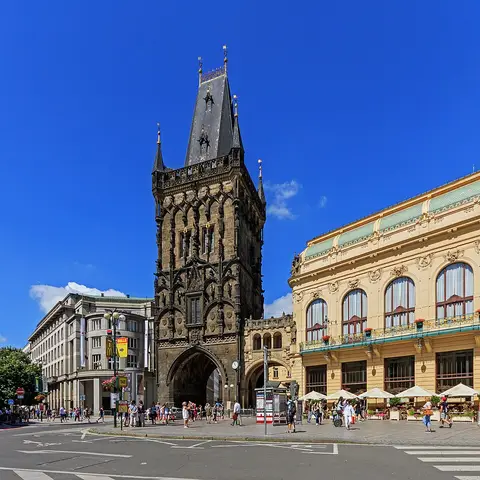 Historic sites03
Prasna brana
náměstí Republiky 1090/5 · Prague● Website● Phone Historic sites04
You need a free account to leave reviews and photos – that keeps comments genuine and lets you edit them later.
That striking man standing atop a patina-green metal mountain in the center of Old Town Square is not Jesus, though he resembles him. It's Jan Hus, the great Czech religious reformer whose Hussite movement caused as much, if not more, friction within the Christian community than Martin Luther. The statue was erected on the 500th anniversary of his death (6 July 1915). Hus preached in the Bethlehem Church in Old Town. He believed in Bibles written in the worshiper's language, in the importance of faith instead of a clergyman's intermediation with God - in other words, concepts which threatened the status quo. He was summoned to the Church's Council of Constance in Switzerland by representatives of the Emperor, and given a letter of safe conduct to get there and back. Like every member of the Habsburg family, before and after him, the Emperor was Catholic. After Hus refused to repent for his so-called sins and come back into the Church, he was burned at the stake, despite the promise of the Emperor.
Source: Wikivoyage, „Prague/Old Town and Josefov“ · authors per page history · CC BY-SA 4.0