Sofia City Province: A Capital at the Foot of Vitosha
Travel guide · editorialFew European capitals have a 2,290-meter mountain right on their doorstep: from downtown Sofia, you can be on Vitosha in half an hour. A trip to Sofia City combines Roman ruins beneath the sidewalks, golden church domes, and a surprisingly lively café and cultural scene with hiking and winter sports.
Between Basin and Mountain
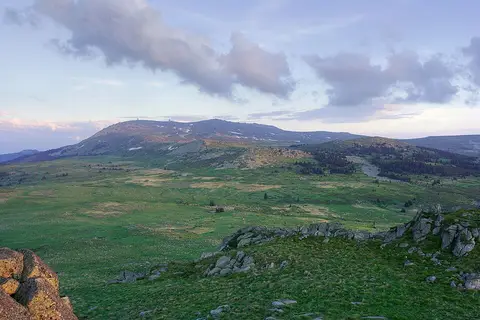
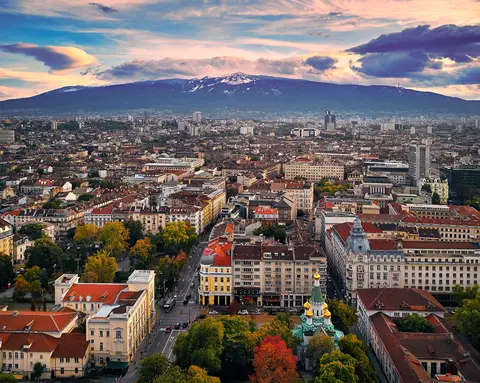
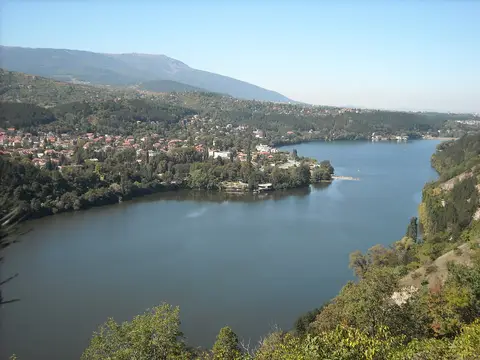
Sofia City Province covers the capital and its immediate surroundings in the Sofia Valley, at an elevation of about 550 meters. To the south rises Vitosha, a nature park since 1934 and thus the oldest in Bulgaria, with the summit of Cherni Vrah, the stone rivers of rounded granite boulders, and the Boyana Waterfall. To the east lies Pancharevo Lake, where Sofia residents go rowing and grill on the shore. The area also includes Bankya, a small spa town with mineral springs, and Novi Iskar at the entrance to the Iskar Gorge, through which the road and railway lead north into the Balkan Mountains.
Sights in Sofia
The city's landmark is the Alexander Nevsky Cathedral, built in the early 20th century in gratitude for liberation from Ottoman rule; its crypt houses an important collection of icons. Just a few steps away stands the early Christian Church of St. Sofia, which gave the city its name. How closely the eras sit side by side here is shown by the so-called Triangle of Tolerance: the Banya Bashi Mosque, the Sveta Nedelya Cathedral, the synagogue—one of the largest Sephardic synagogues in Europe—and the Catholic cathedral are all within sight of one another. In the Serdika metro station and in the courtyard of the Presidency, with the 4th-century Rotunda of St. George, the remains of Roman Serdica come to light. On the edge of the city, the Boyana Church with frescoes from 1259, which are a UNESCO World Heritage Site, and the National History Museum are worth a visit.
City Life, Markets, and Food
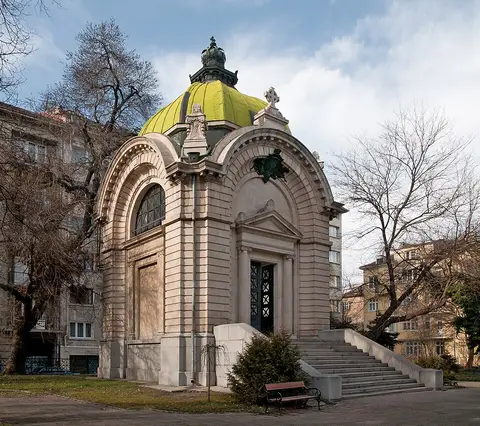
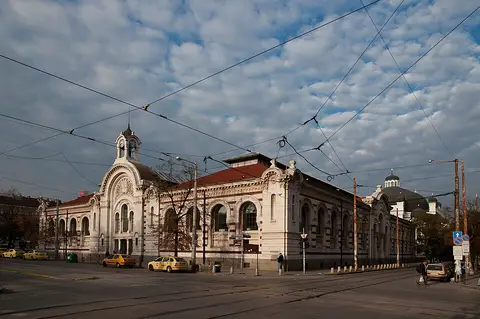
Sofia's favorite street is Vitosha Boulevard, a pedestrian zone with a view of the mountain. Around the Central Market Hall and the Women's Market (Zhenski Pazar), locals buy fruit, spices, and cheese. In the evening, people meet in the bars of Shishman Street or in the courtyard cafés around Graf Ignatiev Street. Typical dishes include banitsa, a cheese-filled phyllo pastry, for breakfast with boza or ayran, kebapche from the grill at lunch, and shkembe soup for the hardy. Young wine bars pour Mavrud, Melnik, and Rubin, and locals fill their bottles for free with mineral water from the public springs behind the Banya Bashi Mosque. If you have more time, visit the National Art Gallery in the former Royal Palace, the Church of St. Petka Samardzhiyska in the underpass at Largo, and Borisova Gradina park, the city's green lung with lakes, sports fields, and the old Vasil Levski Stadium. To the south, already on the slopes of Vitosha, lies the 14th-century Dragalevtsi Monastery, and to the east the Kremikovtsi Monastery. The spa towns of Bankya and Gorna Banya show a very different, tranquil side of the capital region.
Getting There, Getting Around, and When to Go
Sofia Airport has direct connections to many German cities, and a metro line runs to the center. The city has three metro lines, trams, and inexpensive taxis; buses go to Boyana, Dragalevtsi, or up to the Aleko hut on Vitosha. Long-distance buses and trains connect to Plovdiv, Veliko Tarnovo, and the coast. The best time to visit for sightseeing and hiking is May to June and September to October; summer is hot, but pleasantly cool on Vitosha. In winter, snow covers the Aleko ski area, and the city comes alive with Christmas markets and concerts at the National Opera.