About Trésor de Liège
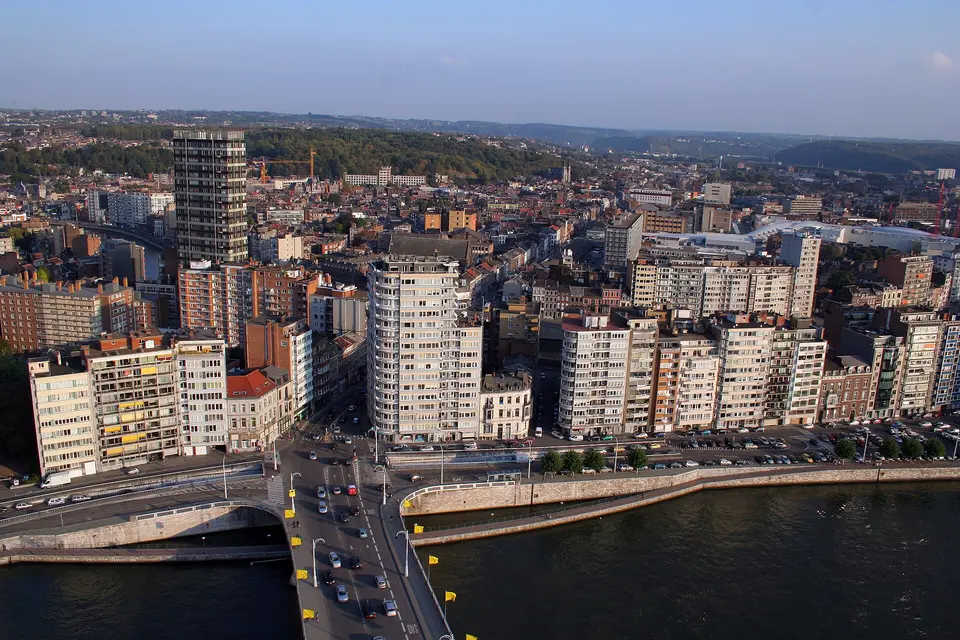
The treasury of Liège Cathedral, known as the Trésor de Liège, is one of the most significant collections of sacred art in Belgium and in Europe. It is housed in the Gothic Cathedral of Saint-Paul, which is considered the spiritual and historical heart of the city. The treasury preserves valuable relics, liturgical vessels, and masterpieces of craftsmanship that were gathered over the centuries by the prince-bishops and the cathedral chapter. As part of the cultural heritage of the Walloon region, the treasury offers a deep insight into the religious and political history of the former Prince-Bishopric of Liège, which in the Middle Ages formed a powerful territory under the rule of a prince-bishop.
The historical importance of the collection is inseparable from Liège's role as an episcopal see since the year 717. During this period, the city developed into an important political and cultural center within the Holy Roman Empire. The cathedral chapter, made up of nobles of the Empire, was one of the largest in Central Europe and had considerable resources at its disposal to acquire or commission precious objects. Many of the exhibits reflect the wealth and power of the ecclesiastical rulers who governed the city for centuries. The collection documents not only faith but also the diplomatic relations and cultural exchange made possible by the prince-bishopric's standing within the European order.
A particularly defining moment in the history of the treasury came in 1468, when the Burgundian duke Charles the Bold had the city plundered and systematically destroyed following an uprising by its inhabitants. Despite this devastating destruction and the killing of thousands of residents, parts of the church treasure survived, which points to its strategic importance and the protection afforded by the church institution. The survivors returned only after seven years to begin rebuilding. This phase of destruction and new beginnings shaped the city's awareness of its cultural treasures and the need to preserve them, an awareness that has lasted into modern times.
The 18th century brought further upheavals for the city, including the Liège Revolution of 1789, which was directed against the absolutist rule of the prince-bishop. Although the revolutionary events and the subsequent occupation by French troops in 1795 led to looting, in which St. Lambert's Cathedral was also damaged, most of the treasury's valuable objects were saved. The city's political affiliation changed several times, yet the church institutions remained the guardians of its cultural identity. The collection served as a constant point of reference for the local population, who recognized their history and traditions in the preserved artifacts.
The architecture of the Cathedral of Saint-Paul itself provides an impressive setting for the display of the treasures. The Gothic building is a testament to the architectural and artistic achievements of the Middle Ages. The combination of the monumental church and the fine detail of the liturgical objects creates an atmosphere of reverence and wonder. You can experience the close connection between the architectural space and the relics kept within it, which were often used for solemn occasions and processions. The treasury is not merely a museum in the strict sense but remains a living part of the diocese's liturgical practice.
Highlights of the collection include numerous relics from holy figures, as well as elaborate vessels made of gold, silver, and enamel. These objects attest to the great skill of the goldsmiths and craftsmen who worked in the region. The workmanship of the materials and the iconographic depictions offer insights into the theological ideas and aesthetic ideals of their respective eras. From the Romanesque through the Gothic and Baroque periods, the continuous development of sacred art can be traced in the treasury's exhibits.
The significance of the treasury extends beyond its purely religious function. It is an important site for historical research and cultural education. The objects help deepen our understanding of the social structure of the prince-bishopric, in which the prince-bishops and the cathedral chapter played a central role. The collection also documents the economic aspects of church life, since acquiring such works of art often required substantial financial resources drawn from the revenues of the territory.
For visitors, a trip to the treasury is a chance to discover the cultural depth of Liège. The city, which today is regarded as the cultural center of the Walloon region and has numerous other museums and cultural institutions, benefits from this historic collection. The treasury adds a layer of spiritual and artistic tradition to the image of a city once shaped by its industrial past as a center of heavy industry. The contrast between the modern, multicultural city and the ancient treasures of the cathedral underscores Liège's long and multifaceted history.
All in all, the treasury of Liège Cathedral is an indispensable part of the region's cultural heritage. It links the medieval history of the prince-bishopric with the city's identity today and offers a fascinating glimpse into sacred art and the political history of Belgium. The preservation of these objects reflects the value placed on cultural traditions and the city's efforts to safeguard its historical heritage for future generations.
At a glance
- Category
- Museum › Museums (general)
- Rating
- no reviews yet · write a review
- Address
- Rue Bonne Fortune 6
4000 Liège, Belgium - Phone
- +3242326132
- Website
- www.instagram.com
- info@tresordeliege.be
- Coordinates
- 50.63973° N · 5.57160° E
- Data quality
- confidence 0.99
- Identifier
- ID 3eae77f9-f8b…
Location & surroundings
Toggle layersRatings & comments
none yetNear Trésor de Liège
closest 5 per category · 2 kmSights
Museums
Hotels
More:All museums in Liège (41)
237 places within 2 km loaded.

You need a free account to leave reviews and photos – that keeps comments genuine and lets you edit them later.