Sight · Historic sites
Lincoln Memorial Reflecting Pool
2 Lincoln Memorial Cir NW, 20024 Washington
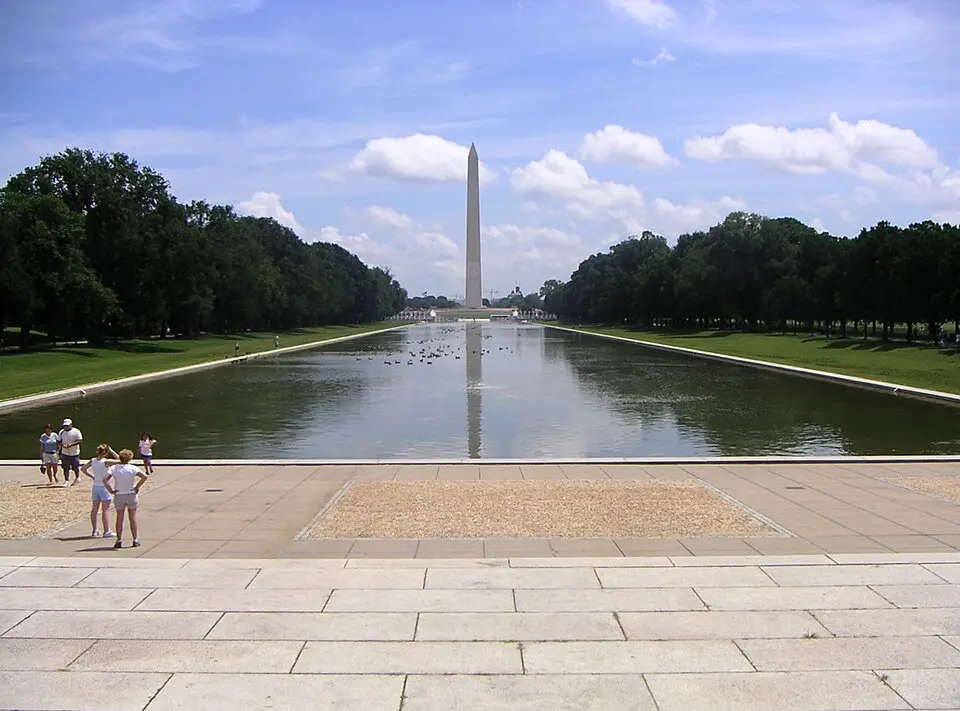
About Lincoln Memorial Reflecting Pool
The Lincoln Memorial Reflecting Pool is the largest of the many reflecting pools in Washington, D.C., and sits on the National Mall between the Lincoln Memorial and the Washington Monument. Designed by Henry Bacon and dedicated in 1922, the pool measures about 2,028 feet (618 meters) long and 167 feet (51 meters) wide. It was originally part of the McMillan Plan and was inspired by the canals at Versailles and the reflecting pools of the Taj Mahal. It was built on former marshland, and the pool is stabilized by wooden and concrete piles that reach down to bedrock. The bottom consists of concrete slabs resting on wooden piles, while the surrounding walkways and the edge are made of granite. Today the water is supplied from the Tidal Basin; in the past it was fed from the city's drinking water system.
Visitors find the pool a calm spot where, depending on the angle, the Washington Monument, the Lincoln Memorial, the trees of the Mall, and the sky are reflected in the water. Around 24 million people visit the site each year, which is lined with walking paths and trees. The historical significance of the place is enormous, as numerous important events have taken place here. These include the 1963 March on Washington, where Martin Luther King Jr. gave his famous speech, as well as the inaugural celebrations for Barack Obama in 2009. Protests against the Vietnam War and memorial events for the victims of the COVID-19 pandemic were also held in this area.
After a comprehensive renovation between 2010 and 2012, during which the floor was replaced and the water system modernized, the pool underwent a controversial redesign in 2026. A new blue coating and a nanobubble filtration system were installed, but this led to problems with algae blooms and peeling of the surface. Despite these technical challenges, the Reflecting Pool remains a central venue for political gatherings and cultural events in the U.S. capital.
At a glance
- Category
- Sight › Historic sites
- Rating
- no reviews yet · write a review
- Address
- 2 Lincoln Memorial Cir NW
20024 Washington, USA - District
- Ward 2
- Phone
- +12024266841
- Website
- en.wikipedia.org
- —
- Coordinates
- 38.88934° N · -77.04471° E
- Data quality
- confidence 0.97
- Identifier
- ID 5fcfba2c-035…
Location & surroundings
Toggle layersFAQ about Lincoln Memorial Reflecting Pool
quick answersWhat is the Lincoln Memorial Reflecting Pool?
The Lincoln Memorial Reflecting Pool is the largest of the many reflecting pools in Washington, D.C., located on the National Mall between the Lincoln Memorial and the Washington Monument. Designed by Henry Bacon, the pool was dedicated in 1922 and measures about 618 meters (2,030 feet) long and 51 meters (167 feet) wide. It was part of the McMillan Plan and was inspired by the canals at Versailles and the reflecting pools of the Taj Mahal.
What can you see in the Lincoln Memorial Reflecting Pool in Washington?
Depending on your vantage point, the Lincoln Memorial Reflecting Pool mirrors the Washington Monument, the Lincoln Memorial, the trees of the National Mall, and the sky. Lined with walking paths and trees, the pool in Washington, D.C. is considered a peaceful spot. Around 24 million people visit this historic site every year.
What historic events have taken place at the Lincoln Memorial Reflecting Pool?
The Lincoln Memorial Reflecting Pool in Washington, D.C. has been the setting for numerous important events. These include the 1963 March on Washington, where Martin Luther King Jr. delivered his famous speech, and the inauguration celebrations for Barack Obama in 2009. Protests against the Vietnam War and memorial events for the victims of the COVID-19 pandemic have also been held here, and to this day the pool remains a central venue for political gatherings and cultural events.
How is the Lincoln Memorial Reflecting Pool built, and where does its water come from?
The Lincoln Memorial Reflecting Pool in Washington, D.C. was built on former marshland and is stabilized by wooden and concrete piles that reach down to bedrock. The floor consists of concrete slabs on wooden piles, while the edge and surrounding walkways are granite. The water now comes from the Tidal Basin; in the past it was supplied by the city's drinking water system. After a renovation from 2010 to 2012, the pool underwent a controversial redesign in 2026 with a blue coating and nanobubble filtration, which led to algae blooms and a peeling surface.
What can you visit around the Lincoln Memorial Reflecting Pool?
Several memorials are within walking distance of the Lincoln Memorial Reflecting Pool in Washington, D.C. travelguide195 lists the District of Columbia War Memorial (about 221 m), the D.C. World War I Memorial (about 224 m), the Vietnam Women's Memorial (about 239 m), the Signers' Memorial (about 248 m), the Korean War Veterans Memorial (about 304 m), and the WWII Memorial (about 337 m), among others. Within 500 meters, travelguide195 also lists 2 restaurants, and the site is part of the tour "Washington Compact: Capitol, National Mall, and White House in One Day."
Ratings & comments
none yetNear Lincoln Memorial Reflecting Pool
closest 5 per category · 2 kmSights
Restaurants
Museums
Hotels
More:Historic sites in Washington (1,173)Sights in Ward 2 (122)All sights in Washington (1,350)
264 places within 2 km loaded.
Don't miss in Washington
All sights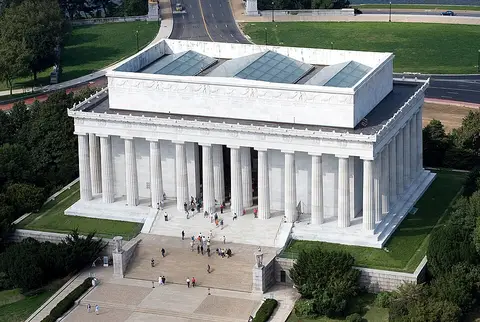 Monuments01
Lincoln Memorial
2 Lincoln Memorial Cir NW · Washington● Website● Phone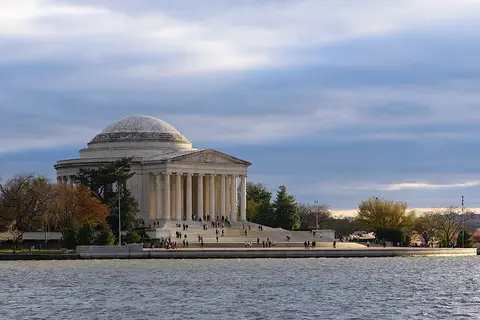 Monuments02
Thomas Jefferson Memorial
16 E Basin Dr SW · Washington● Website● Phone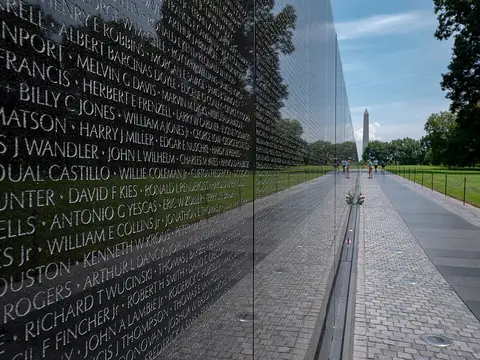 Monuments03
Vietnam Veterans Memorial
5 Henry Bacon Dr NW · Washington● Website● Phone Historic sites04
You need a free account to leave reviews and photos – that keeps comments genuine and lets you edit them later.
The view from the Lincoln Memorial, with the 2,000 ft Reflecting Pool in the foreground and the Washington Monument just behind, and the Capitol Building in the distance, is famous and not to be missed. This was the setting for Dr. Martin Luther King Jr.'s I Have a Dream speech, which he gave from the steps of the memorial over a crowd of 200,000 that didn't fit very well—many of them stood in the pool itself!
Source: Wikivoyage, „Washington, D.C./National Mall“ · authors per page history · CC BY-SA 4.0