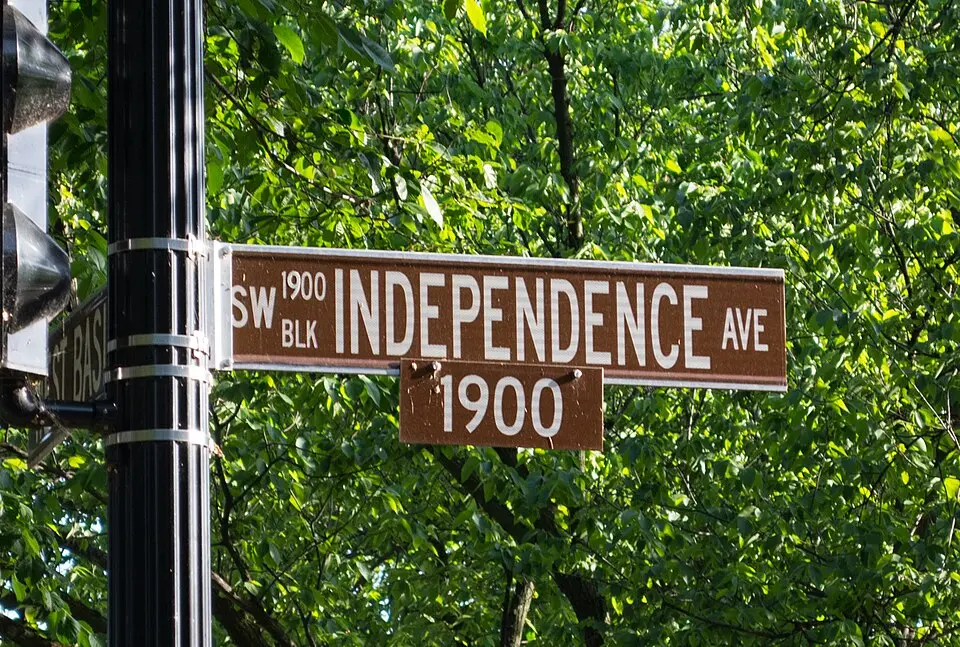
About Independence Avenue (Washington, D.C.)
Independence Avenue is one of the most important east-west thoroughfares in Washington, D.C., running directly south of the United States Capitol. Originally known as South B Street, the road was reconfigured and renamed in 1934 to establish it as a ceremonial boulevard. The western section, Independence Avenue SW, stretches from the Lincoln Memorial to the Capitol and forms an important boundary along the National Mall. Along this stretch, visitors stroll past numerous major landmarks, including the Korean War Veterans Memorial, the Martin Luther King, Jr. Memorial, and the John Paul Jones Memorial. The avenue crosses the Tidal Basin via the Kutz Memorial Bridge and passes other historic sites such as the John Ericsson National Memorial.
The eastern section, Independence Avenue SE, marks the southern edge of the Capitol grounds. On the north side you'll find the House of Representatives office buildings, while the south side is lined with additional government buildings. Farther east, the avenue runs between the buildings of the Library of Congress, notably the Thomas Jefferson Building and the James Madison Memorial Building. Between 14th Street and 2nd Street SW, the road is also flanked by a dense row of museums and federal agencies. Cultural highlights include the Freer Gallery of Art, the Arthur M. Sackler Gallery, the Smithsonian Institution Building, the National Museum of African Art, the Hirshhorn Museum and Sculpture Garden, the National Air and Space Museum, and the National Museum of the American Indian. The United States Botanic Garden is also close by.
For travelers, Independence Avenue is more than a traffic artery: it is a central walking route linking the capital's most important political and cultural institutions. While it can be congested with car traffic during rush hour, at other times it offers an impressive walk through the heart of Washington. The wide roadway, separated by green spaces, and the monumental architecture on both sides give the avenue its distinctive, ceremonial character, making it an indispensable part of the city's identity.
At a glance
- Category
- Sight › Historic sites
- Rating
- no reviews yet · write a review
- Address
- —
Washington, USA - District
- Southwest Employment Area
- Phone
- —
- Website
- —
- —
- Coordinates
- 38.88739° N · -77.00914° E
- Data quality
- confidence 0.75
- Identifier
- ID 8ab8e9f0-70b…
Location & surroundings
Toggle layersFAQ about Independence Avenue (Washington, D.C.)
quick answersWhat is Independence Avenue in Washington, D.C.?
Independence Avenue is one of the most important east-west thoroughfares in Washington, D.C., running just south of the United States Capitol. It was originally called South B Street; in 1934 it was redesigned and renamed to establish it as a ceremonial boulevard. The western section, Independence Avenue SW, runs from the Lincoln Memorial to the Capitol and forms an important boundary of the National Mall. The eastern section, Independence Avenue SE, marks the southern edge of the Capitol grounds.
Which museums are located on Independence Avenue in Washington, D.C.?
Between 14th Street and 2nd Street SW, Independence Avenue in Washington, D.C. is lined with a dense row of museums and federal agencies. These include the Freer Gallery of Art, the Arthur M. Sackler Gallery, the Smithsonian Institution Building, the National Museum of African Art, the Hirshhorn Museum and Sculpture Garden, the National Air and Space Museum, and the National Museum of the American Indian. The United States Botanic Garden is also just steps away.
Which monuments and buildings do you pass on Independence Avenue in Washington, D.C.?
On Independence Avenue SW in Washington, D.C., you pass the Korean War Veterans Memorial, the Martin Luther King, Jr. Memorial, and the John Paul Jones Memorial, among others. The road crosses the Tidal Basin via the Kutz Memorial Bridge and passes the John Ericsson National Memorial. On Independence Avenue SE, the House office buildings sit on the north side, and farther east the street runs between the Thomas Jefferson Building and the James Madison Memorial Building of the Library of Congress.
What can you see around Independence Avenue in Washington, D.C.?
travelguide195 lists several historic sites and monuments around the Capitol within roughly 1 km of Independence Avenue in Washington, D.C. These include the Rosa Parks Statue, the Cannon Rotunda, Capitol Hill, the National Statuary Hall, the United States Capitol Rotunda, the Old Senate Chamber, and the James A. Garfield Monument. For a break, travelguide195 also lists about 18 restaurants within 500 meters.
Is a walk along Independence Avenue in Washington, D.C. worth it?
Yes, Independence Avenue in Washington, D.C. is not just a traffic route but a central walking route linking the capital's most important political and cultural institutions. The wide roadway, separated by green spaces, and the monumental architecture on both sides give it its ceremonial character. Keep in mind that the street is heavily congested with car traffic during rush hour; at other times, the walk is far more pleasant.
Ratings & comments
none yetNear Independence Avenue (Washington, D.C.)
closest 5 per category · 2 kmSights
Restaurants
Museums
Hotels
More:Historic sites in Washington (1,173)All sights in Washington (1,350)
273 places within 2 km loaded.
Don't miss in Washington
All sights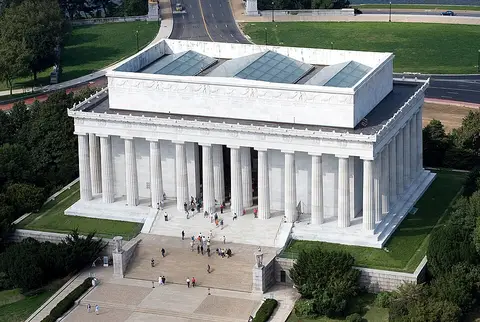 Monuments01
Lincoln Memorial
2 Lincoln Memorial Cir NW · Washington● Website● Phone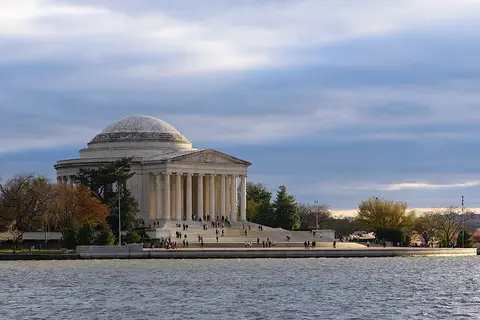 Monuments02
Thomas Jefferson Memorial
16 E Basin Dr SW · Washington● Website● Phone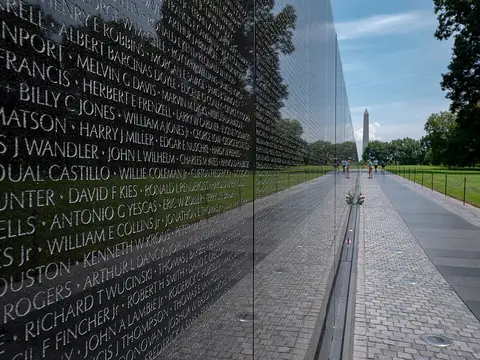 Monuments03
Vietnam Veterans Memorial
5 Henry Bacon Dr NW · Washington● Website● Phone Historic sites04
You need a free account to leave reviews and photos – that keeps comments genuine and lets you edit them later.