










Tennessee: The Music State Between Nashville and Memphis
Travel guide · editorialHardly any other state has shaped the world's music like Tennessee: Nashville is the capital of country music, and Memphis is the cradle of blues and rock 'n' roll. If you vacation in Tennessee, you'll follow these sounds from honky-tonk bars to Graceland, hike in the Great Smoky Mountains, and sample whiskey in Lynchburg. The long, narrow state stretches from the Appalachians to the Mississippi River.
Landscape and Location
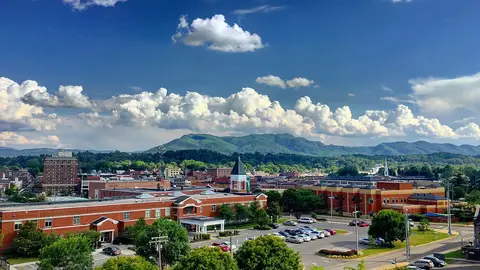
Tennessee is traditionally divided into three "Grand Divisions," which also appear as three stars on the state flag. East Tennessee is mountainous, with the Great Smoky Mountains on the border with North Carolina and the Tennessee River valley. Middle Tennessee around Nashville consists of gently rolling hills with horse pastures and limestone basins. West Tennessee is flat alluvial land that ends at the Mississippi River near Memphis. Numerous reservoirs built by the Tennessee Valley Authority in the 1930s shape the landscape today and serve as swimming and fishing spots.
Nashville and Memphis
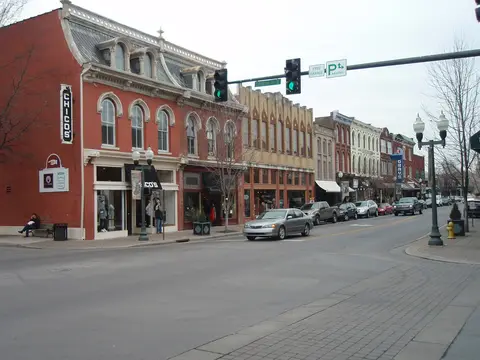
Nashville revolves around Lower Broadway, where live bands play in the honky-tonks from noon until late at night. The Ryman Auditorium, once a church, and the Grand Ole Opry, the longest continuously running radio broadcast in the U.S., are places of pilgrimage, as is the Country Music Hall of Fame. In the surrounding area you'll find Franklin with its Main Street and the fast-growing city of Murfreesboro. Memphis on the Mississippi offers Beale Street with its blues clubs, the Sun Studios, where Elvis Presley, Johnny Cash, and B. B. King made their first recordings, and Stax, the soul label of Otis Redding. The National Civil Rights Museum is located in the Lorraine Motel, where Martin Luther King Jr. was assassinated in 1968.
Sights in Tennessee
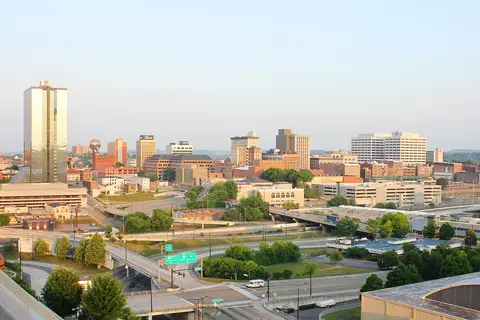
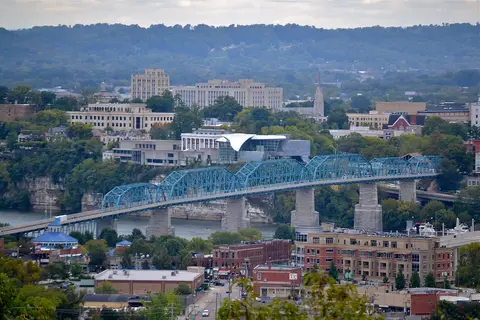
Graceland, Elvis Presley's estate in Memphis, draws hundreds of thousands of fans every year. Great Smoky Mountains National Park is the most-visited national park in the U.S.; trails lead to waterfalls and up to Clingmans Dome, while Cades Cove offers deer, black bears, and old log cabins. On the edge of the park lie Gatlinburg and Pigeon Forge, home to Dolly Parton's theme park Dollywood. Chattanooga scores with the Tennessee Aquarium, Lookout Mountain, the Incline Railway, and the Walnut Street Bridge for pedestrians. In Knoxville, the university and Market Square form the center of town. Other Tennessee destinations include the Jack Daniel's Distillery in Lynchburg and Johnson City in the far east, near Bristol, the birthplace of country music.
History and Culture
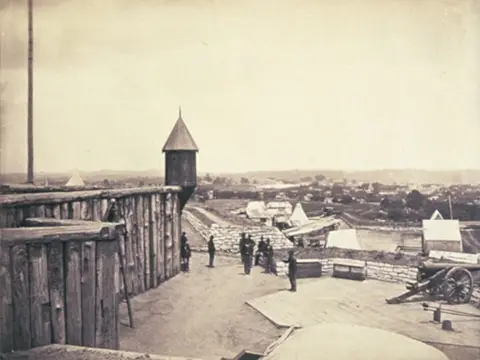
The Cherokee and Chickasaw originally lived here before they were forced out on the "Trail of Tears" in the 1830s. Tennessee became the 16th state in 1796, and Andrew Jackson built his estate, The Hermitage, near Nashville. During the Civil War, the state was the last to join the Confederacy and, after the war, the first to be readmitted. In World War II, a secret city arose in Oak Ridge near Knoxville, where uranium was enriched for the Manhattan Project. Clarksville in the north is closely tied to the Fort Campbell army base.
Food and Drink
Nashville hot chicken is fried chicken coated in a blazing-hot cayenne paste, served on white bread with pickles. Memphis is famous for barbecue, especially ribs with a dry rub or with sauce. Tennessee whiskey is defined by filtration through maple charcoal; besides Jack Daniel's, George Dickel also produces in Tullahoma. MoonPies from Chattanooga and Goo Goo Clusters from Nashville are sweet classics, and meat-and-three restaurants serve one meat and three sides.
Getting There and Best Time to Visit
Nashville (BNA) is the main airport and now also offers nonstop flights to Europe; Memphis (MEM) is a huge FedEx cargo hub. A rental car is ideal for road trips following the music trail; the drive from Memphis to Nashville takes a good three hours. The best times to visit are spring and fall: wildflowers bloom in the Smokies in April and May, and the forests turn colors in October. Summers are hot and humid, and winters are mostly mild, though snow falls in the mountains.