
Iowa: Cornfields, River Towns, and Wide-Open Prairie
Travel guide · editorialIf you think of Iowa as nothing more than a state to drive through, you haven't yet seen the bluffs along the Mississippi, the covered wooden bridges of Madison County, or a state fair with a life-size butter cow. A vacation in Iowa is a trip to the rural heart of the Midwest – with surprisingly rich culture in the cities in between.
A Land Between Two Great Rivers
Iowa is the only state whose eastern and western borders are both formed entirely by rivers: the Mississippi flows along the east, the Missouri along the west. In between lies gently rolling farmland with some of the most fertile soil on earth. Corn and soybeans grow to the horizon, and Iowa raises more hogs than any other U.S. state. The landscape gets more exciting along the edges: in the northeast, the Ice Age glaciers bypassed the Driftless Area, where wooded bluffs rise above the Mississippi. Along the Missouri run the Loess Hills, windblown silt hills found in this form almost nowhere else but China. In the northwest, the Iowa Great Lakes around Okoboji invite you to a summer getaway. If you're looking for a break from the farmland, you'll find it at Maquoketa Caves State Park, with caves you can walk through, or at Pikes Peak State Park near McGregor, where you can look far out over the confluence of the Wisconsin and Mississippi Rivers.
Cities: Des Moines, Cedar Rapids, and the Quad Cities
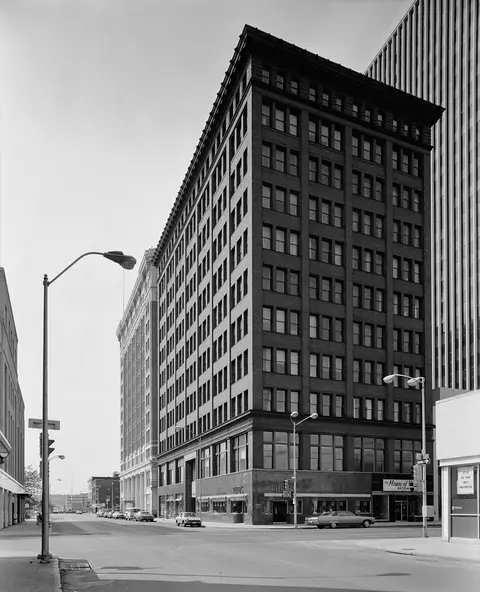
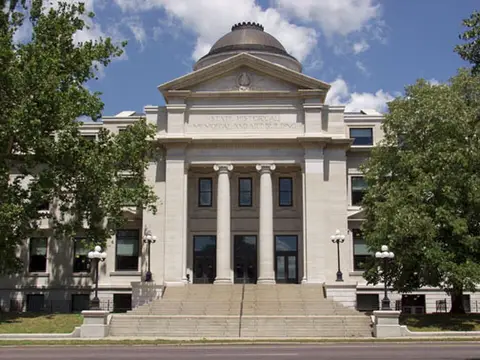
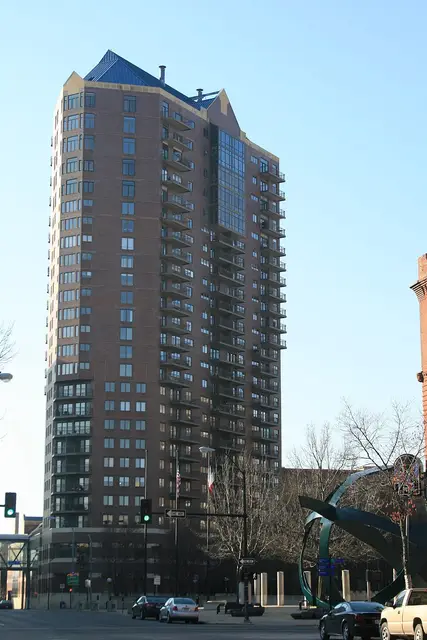
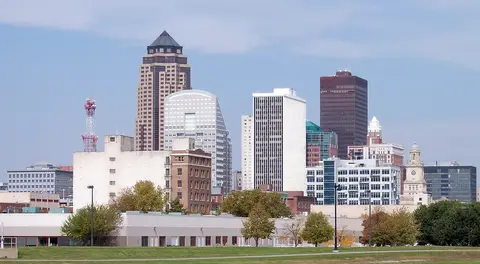
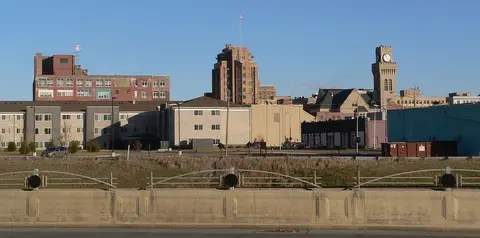
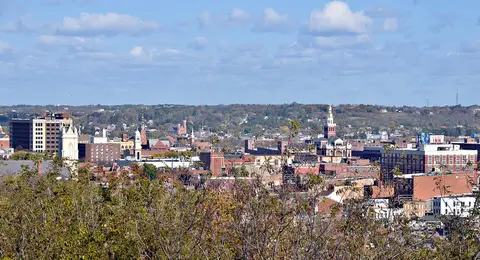
Des Moines, the capital with its golden-domed Capitol, surprises with the Pappajohn Sculpture Park, a lively farmers market in the East Village neighborhood, and a growing restaurant scene; West Des Moines forms the modern suburban ring. Cedar Rapids has been shaped by Czech and Slovak immigrants, whose story is told at the National Czech & Slovak Museum. Davenport is one of the Quad Cities on the Mississippi, where paddlewheel steamers and riverfront promenades recall the days of river shipping. Iowa City, home to the university and the famous Iowa Writers' Workshop, has been designated a UNESCO City of Literature. Ames is home to Iowa State University, while Dubuque scores with steep streets, a short funicular railway, and the National Mississippi River Museum. Sioux City in the west sits where Iowa, Nebraska, and South Dakota meet.
Sights in Iowa
A must is the Iowa State Fair in Des Moines each August: eleven days of livestock shows, fried food on a stick, concerts, and the legendary cow made of butter. In Madison County near Winterset stand the covered bridges made famous by the novel and film "The Bridges of Madison County." Near Dyersville, the baseball field from "Field of Dreams" still sits among the cornfields. The Amana Colonies, founded by German Pietists, preserve traditional crafts, wine taverns, and hearty cooking. Effigy Mounds National Monument in the northeast protects hundreds of prehistoric earthen mounds, some shaped like bears and birds. In Eldon stands the wooden house with the Gothic window from Grant Wood's painting "American Gothic," and every spring Pella celebrates its Dutch heritage with a tulip festival and a windmill.
History and Everyday Life
The territory became part of the United States with the Louisiana Purchase in 1803 and achieved statehood in 1846. Germans, Scandinavians, the Dutch, and Czechs settled the prairie, and their traces can be found in place names and churches. Every four years, Iowa moves into the political spotlight when the caucuses traditionally kick off the presidential primaries. Today, alongside the cornfields, countless wind turbines turn; wind power supplies a large share of the state's electricity.
Food and Drink
The unofficial state dish is the pork tenderloin sandwich, a pounded, breaded pork cutlet that extends far beyond the bun. Then there's the Maid-Rite, a sandwich of loose-cooked ground beef, and in late summer, fresh sweet corn from roadside stands. In the Amana Colonies you'll find bratwurst, sauerkraut, and rhubarb wine; in Pella, Dutch pastries.
Getting There and Best Time to Visit
The main airport is Des Moines; connections from Europe run through Chicago, Minneapolis, or Denver. Interstate 80 crosses the state from east to west, but the Great River Road along the Mississippi is the more scenic route. The best time to visit is May through October: early summer is green, August belongs to the State Fair, and in October the forests along the riverbanks change color. Winters are cold and windy.