
Alaska: Glaciers, Bears, and the Midnight Sun
Travel guide · editorialAlaska is larger than Texas, California, and Montana combined, yet only a few roads open up this land of glaciers, fjords, and tundra. A vacation in Alaska means grizzlies catching salmon, calving walls of ice, and summer nights that barely get dark.
Landscape in the Far North
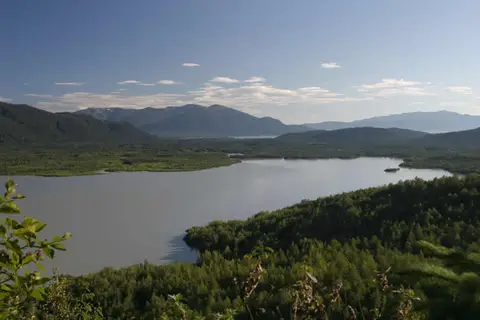
In the south, the Alaska Range and the Chugach Mountains stretch across the state, overshadowed by Denali, at 20,310 feet North America's highest peak. The Southeast, known as the Inside Passage, is a labyrinth of forested islands and fjords. North of the Arctic Circle come the Brooks Range and the Arctic coastal plain, where caribou herds migrate. The Aleutians reach almost to Asia as a volcanic arc. Roughly a third of the state is protected, including eight national parks. In Utqiaġvik, formerly Barrow, at the very top of the state, the sun does not rise for about two months in winter and does not set for almost three months in summer.
Sights in Alaska
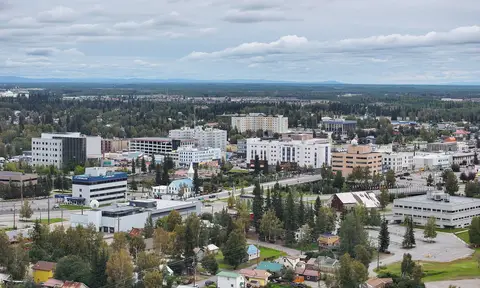
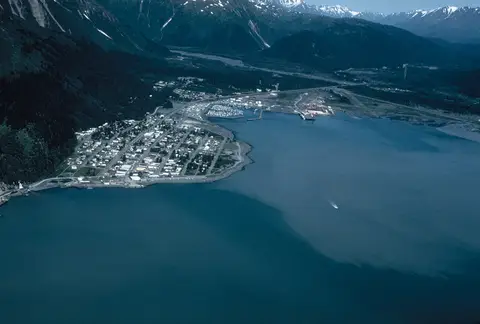
In Denali National Park, a single road leads into the interior; shuttle buses take visitors to moose, bears, and, in clear weather, views of the summit. In Kenai Fjords National Park near Seward, boats head out to tidewater glaciers, humpback whales, and orcas. Glacier Bay in the Southeast is a highlight of many cruises, and in Katmai National Park, brown bears stand at Brooks Falls catching leaping salmon. If you're looking for the northern lights, head to Fairbanks in winter, which sits beneath the auroral oval. The drive from Anchorage to Seward is one of the most beautiful roads in the country, and from Whittier, which is reachable only through a single-lane tunnel, boat tours depart into Prince William Sound.
Cities and Towns
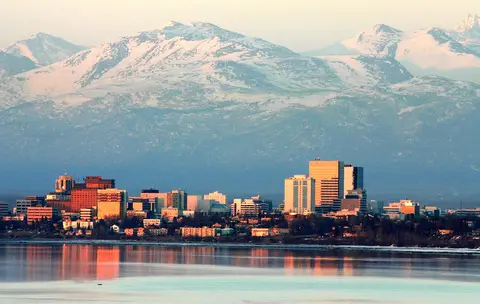
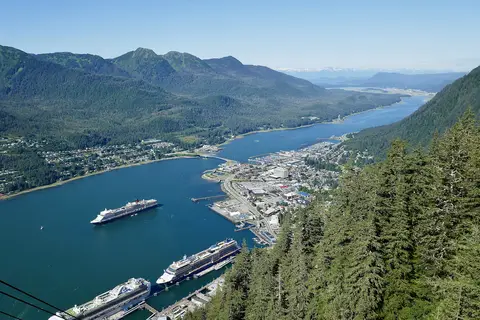
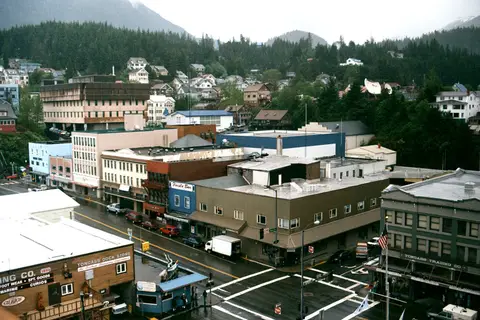
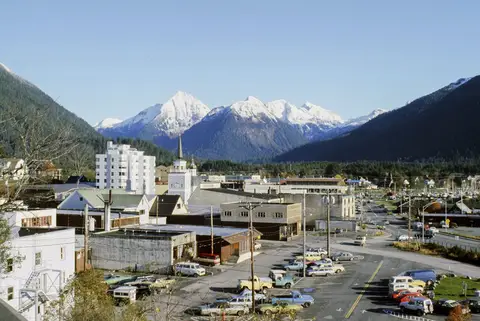
Anchorage is home to about 40 percent of the population and is the starting point for almost every trip; the Alaska Native Heritage Center introduces the cultures of the Native peoples, and the Tony Knowles Coastal Trail runs along Cook Inlet. Juneau is the only US state capital that can't be reached by road; Mendenhall Glacier is practically on its doorstep. Ketchikan has one of the largest collections of totem poles, Homer at the end of the Kenai Peninsula is known for halibut fishing, and Wasilla in the Matanuska Valley is the finish point of the famous Iditarod sled dog race, which starts in Anchorage. Skagway, once the gateway to the Klondike Gold Rush of 1898, preserves wooden storefronts and saloons; the White Pass Railway climbs from there up to the Canadian border.
Culture and Food
The Inupiat, Yupik, Athabaskans, Tlingit, Haida, and other peoples shape the culture, from wood carving to the World Eskimo-Indian Olympics in Fairbanks. Russian traces show up in the onion-domed churches in Sitka and Kodiak; until 1867, Alaska belonged to the Russian Empire. On the table you'll find wild salmon, king crab, halibut, and reindeer sausage, and in summer, berries from the wilderness.
Getting There and Best Time to Visit
Direct flights from Europe are rare; most itineraries go through Seattle to Anchorage, though in summer there are also seasonal connections from Frankfurt. The Alaska Railroad links Seward, Anchorage, Denali, and Fairbanks, and Alaska Marine Highway ferries serve the coast. The best time to visit is June through August, with long days and open park roads; May and September are quieter and cheaper. From September to March, the northern lights beckon.